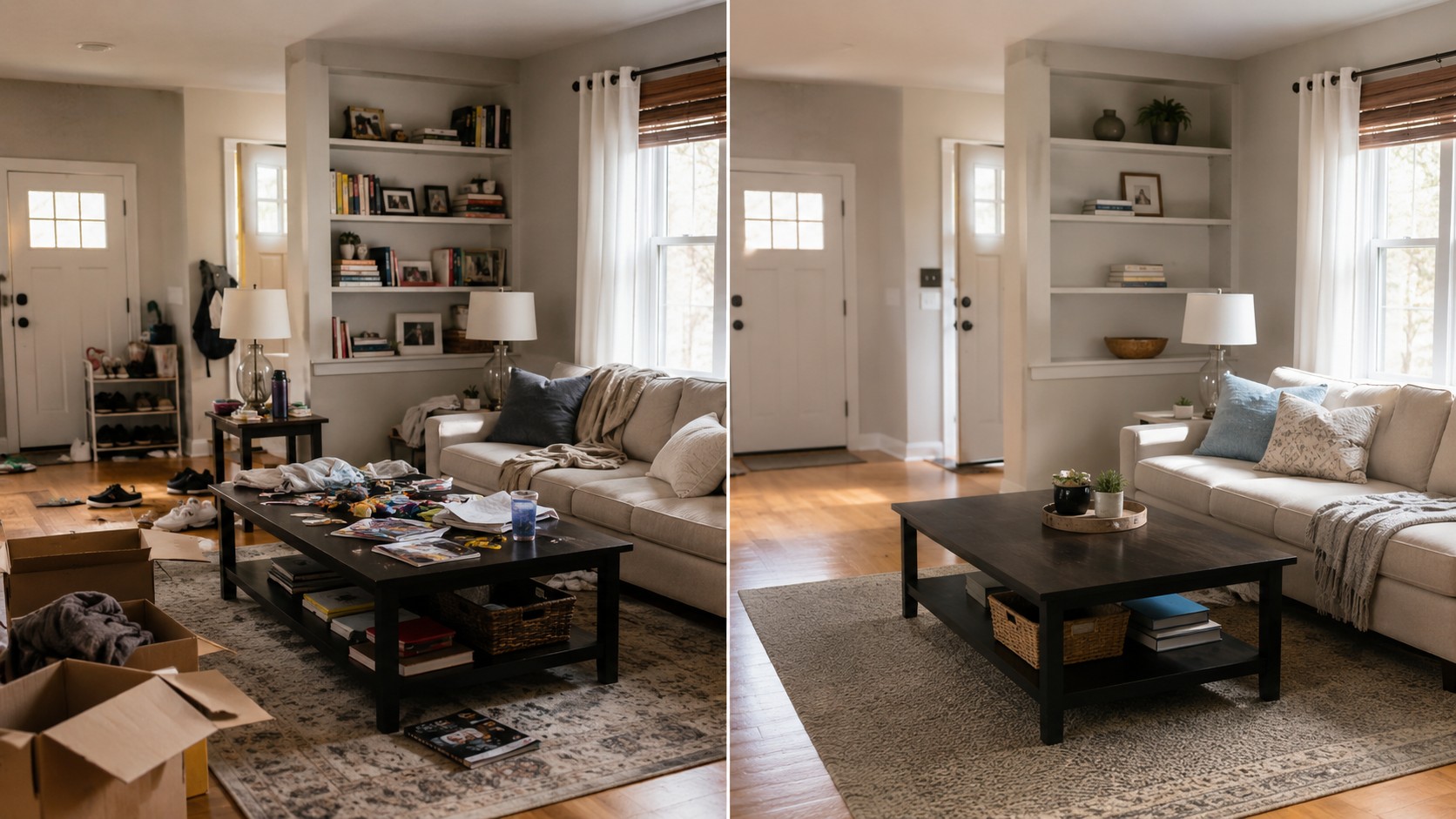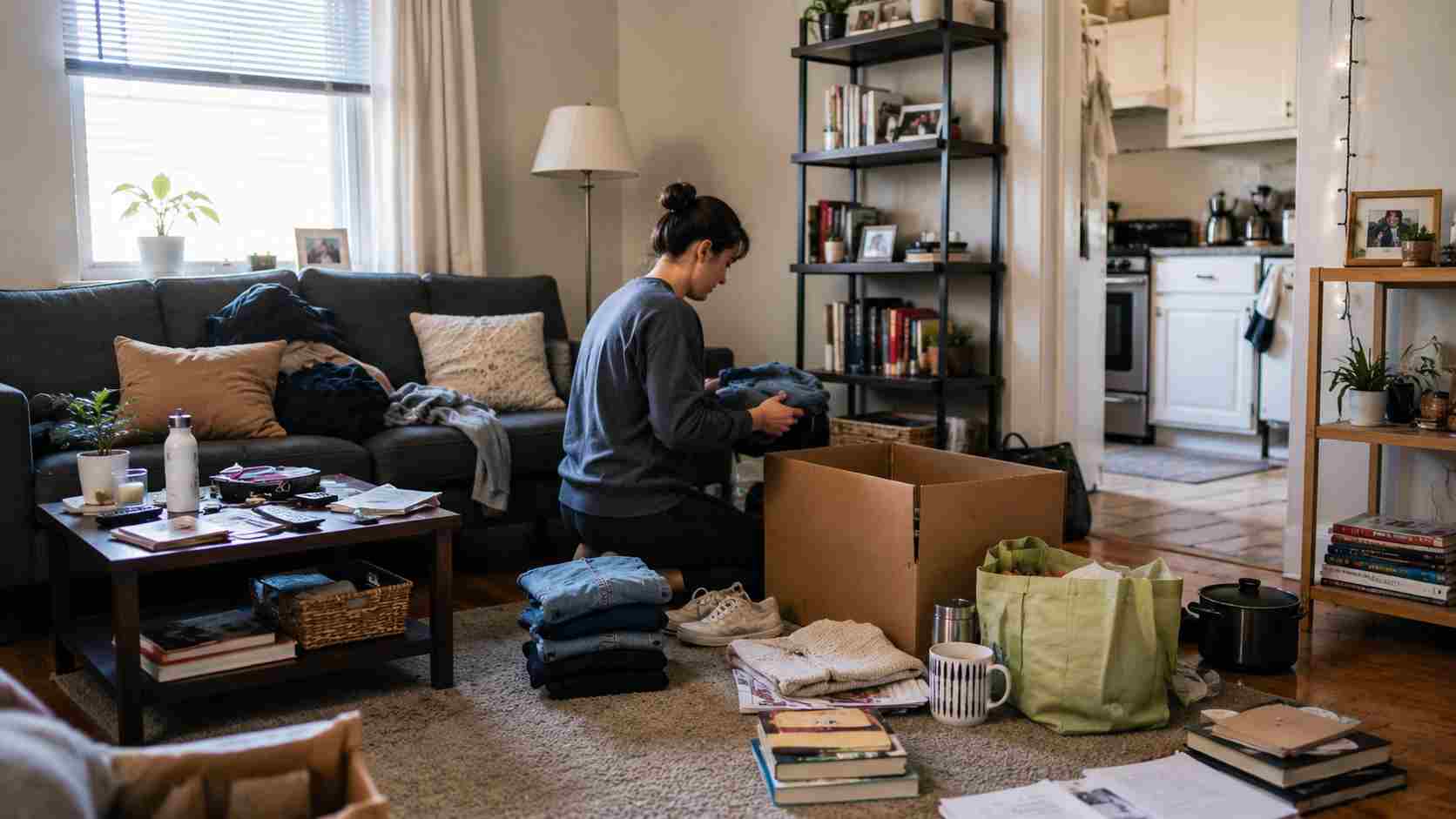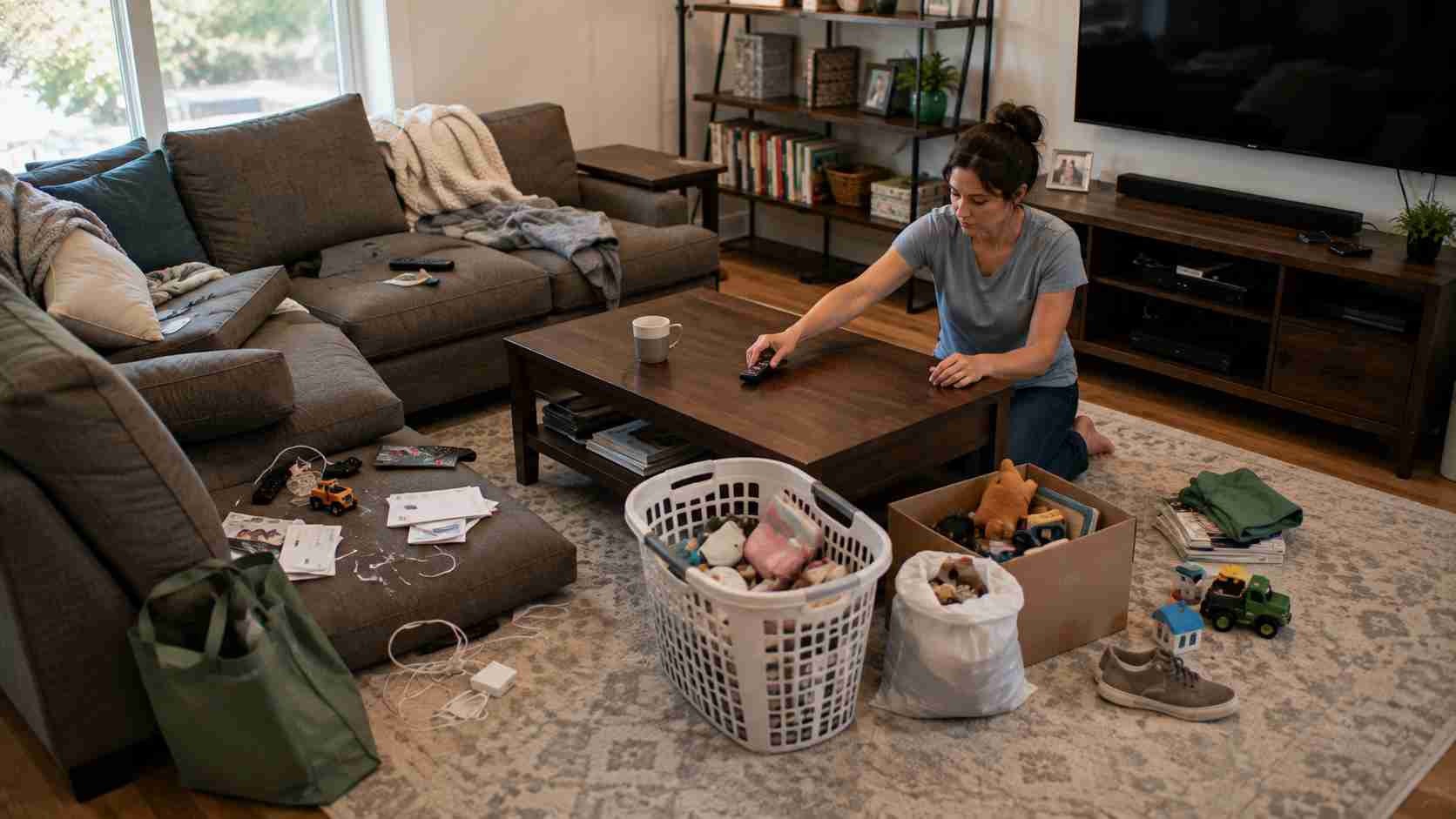
Your living room gets more use than any other room in the house, and it shows. The coffee table gets filled much faster than anywhere else, with mail piling up on the table, remotes finding their way into couch cushions, and toys getting lost in the playroom. You’re not alone if you’ve typed in “how to declutter my living room” into Google at 11 p.m. while gazing at a mountain of stuff.
This guide takes you step-by-step through the process that you can complete. You’ll discover a method that’s proven to declutter, learn a practical, step-by-step checklist for each clutter category from electronics to furniture to blankets to cables and more, and gain organizing strategies to keep the space tidy long after your decluttering is done. No guilt trips, no 24-hour makeovers, just a realistic solution for creating a clean, comfortable living room that you’ll want to spend time in.
Why Your Living Room Gets Cluttered Faster Than Any Other Room
The living room is not a single room, but typically three or four rooms acting as one. It’s where people watch TV, work on a laptop, fold laundry, let kids play, and charge phones. Each of those actions leaves behind something: a charger cord, a loose sock, or a book that isn’t being read. This overlap of activities is one reason living rooms can fill up faster than bedrooms or bathrooms. When you declutter your apartment, think about how many functions your living room serves and whether each zone has a place for the items used there. If a room has five functions but only one place for storage, there is nowhere to put things other than on flat surfaces.
The Psychological Cost of a Cluttered Living Room
A 2011 study, published in the Journal of Neuroscience, reported that removing distracting visual information significantly enhanced concentration and task performance. In simple terms: When a living room is cluttered, it sucks the energy from you every time you come in.
Signs Your Living Room Needs a Real Reset
- The remote is hidden and only accessible after removing the couch cushions.
- Surfaces are covered, but you cannot say what half of the items are.
- You don’t have people over because the room is not looking nice.
- The time it takes to clean “the mess” takes longer than the time it takes to clean “the room”.
If two or more of the above resonate, then it’s time to do more than tidy; it’s time to declutter.
The 4-Step Framework for Decluttering a Living Room
The general rule for decluttering is “just get rid of stuff,” and that’s as helpful as the weight loss motto of “just lose weight”. Follow this step-by-step method, whether you have 30 minutes or a whole weekend!
Step 1: Empty the Surfaces First
Empty all flat surfaces into one spot or laundry basket, such as the coffee table, side tables, TV stand, or mantel. This allows you to visualize the room’s layout and will ensure that all items must make a case for returning.
Step 2: Sort into Four Categories
Separate items into keep and display, keep but store, donate or sell, or trash or recycle. One of the best beginner tips: if you take longer than 10 seconds to decide whether an item is a must-have, put it in a box that is sealed off and return to it in 30 days. If it isn’t opened, give it away.
Step 3: Clean Before You Reorganize
When the room is clear of loose objects, vacuum, dust, and wipe all surfaces. When there’s nothing to distract you, it’s so much easier to follow a deep-clean living room checklist, and a truly clean base is the difference between an organized living room that feels drastically different.
Step 4: Reintroduce Only What Earns Its Place
Introduce one thing at a time, whether it’s books, remotes, decorations, or anything else, and designate a specific spot for each. If it has no apparent place, it doesn’t return to the living room.
Pro tip: The “one-touch rule” is when professional organizers pick up one item at a time and put it in its “home” without moving it from pile to pile. That reduces the amount of time spent decluttering by almost half.
Living Room Decluttering Checklist
Complete this checklist, space zone by zone.
Seating area: remove items that have been wedged into cushions, vacuum under and behind furniture, vacuum extra throws when washing or storing, plus limit decorative pillows to 2-3 per seat.
Coffee and side tables: clear mail and papers, limit decor to one tray or centerpiece, relocate remotes to a holder, remove used dishes and wrappers.
Entertainment center: label and untangle cables, donate or recycle old electronics, put media in a bin or donation pile, hide power strips.
Shelving: remove all books and determine what is used and displayed; sort books by subject and/or type, leave about 20% of shelf space blank for visual breathing room.
Floors: clear away toys, shoes, or bags that may be left out, roll up any extra rugs that seem to be occupying the space, inspect corners for any loose cords, vacuum or sweep last.
You can use this checklist for either a small living room in an apartment or a large open-concept area; simply change the number of zones in the checklist.
How to Declutter Specific Problem Items
Certain types of clutter can be found in most living rooms. These are the steps you can take to deal with the worst offenders.
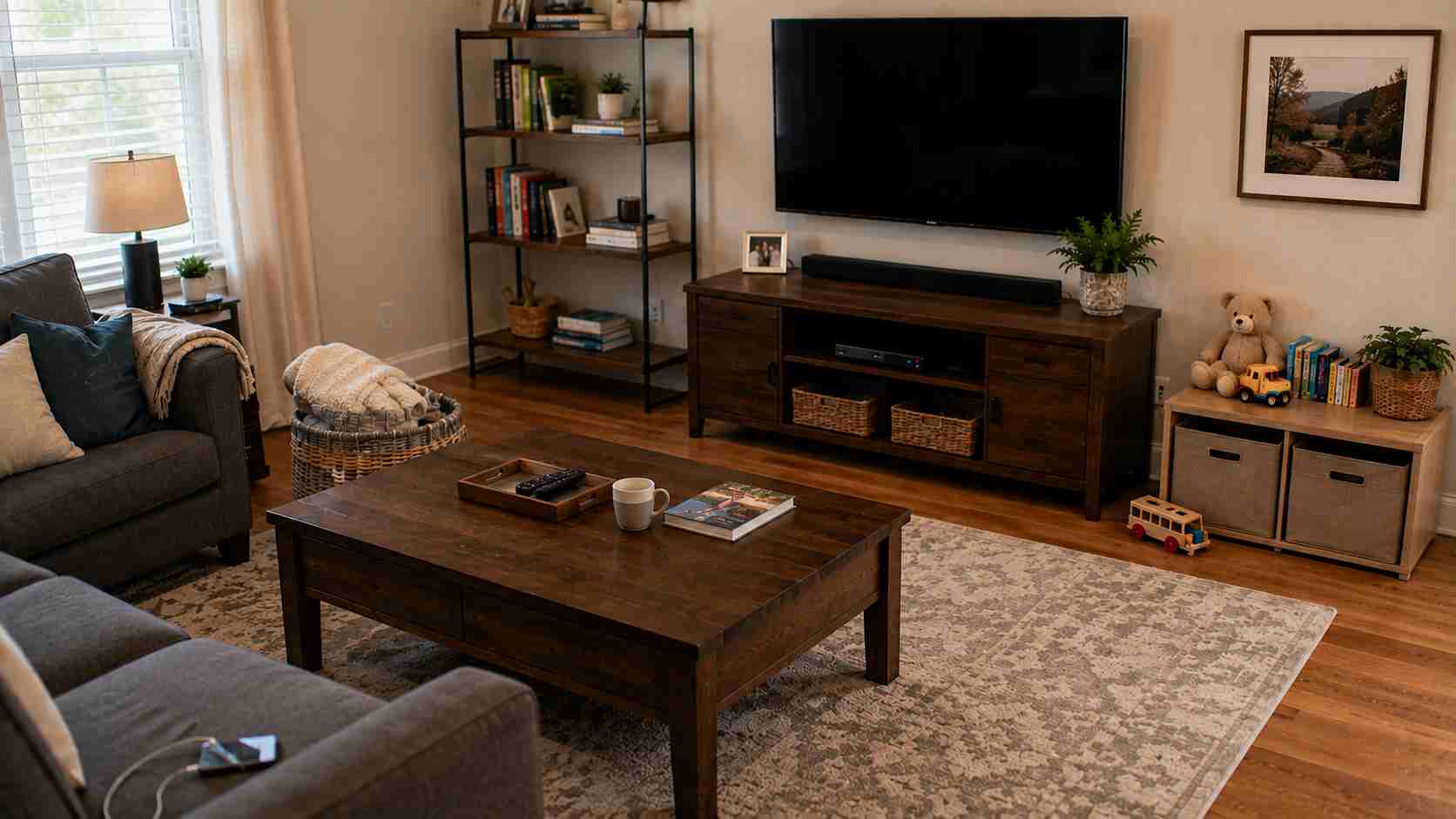
Decluttering Old Furniture
Even if a room is otherwise uncluttered, oversized or mismatched furniture can make the space seem cluttered. Determine walking routes by trying to make sure that there is a minimum clearance of 30 inches between large components. Even if it’s still in good condition, if there’s a couch or bookshelf that blocks the flow, it’s worth selling or moving it. The furniture might be too big for the room, and it can look messy without any loose objects in sight.
Hiding Electronics Clutter
Cords, routers, and streaming boxes generate visual clutter, which is a difficult distraction to miss. Use adhesive clips to route cords behind furniture, store power strips inside a cable management box, store routers inside a ventilated cabinet, and label all charging cables so you don’t have to search for the right one.
Organizing Blankets, Pillows, and Cables
Textiles multiply fast. Utilize one blanket for each regular seat, in a basket or ottoman, and give away the rest. Try to rotate seasonal throws rather than showing them all year round. Label both ends of each cord with washi tape for organizing cables in the living room, so that in the future you don’t have to spend time figuring out what’s what when moving furniture.
Managing Toys and Kids’ Items
If the living room is used by children, use one closed bin for toys and establish a house rule that toys go in that bin, not on the floor! By changing the toys that are available to play with each week, there is less clutter without anything being ripped from the walls.
Minimalist Living Room Ideas That Actually Stick
Clean living room style is not a no-ownership mentality; it is a less-ownership mentality. These simple living room design ideas are perfect for the ‘less is more’ approach to home design, but they still don’t make the space feel cold.
Choose a Focal Point, Not Five
Usually, there are too many items in a cluttered room vying for attention. Choose one focal point, whether it’s a piece of art, a fireplace, or a statement chair, and have everything else fall in harmony with it rather than clash with it.
Leave Visual Rest Space
Negative space is used by designers to refer to space that is intentionally left. A shelf that isn’t packed, a wall that doesn’t have five frames, a table that has breathing room. These little things make an empty room an organized room.
Stick to a Simple Color Palette
Even a moderately-sized room feels quieter when decor is limited to just two or three colors, since the eye isn’t dealing with as much variation as it would be in a more eclectic space.
Decluttering Methods Compared
There’s no single “correct” decluttering method. The right one depends on your personality, time, and how much clutter you’re dealing with.
| Method | Best For | Time Required | Approach |
| KonMari Method | Sentimental clutter, deep resets | Long (weeks) | Keep only items that “spark joy,” organized by category |
| Four-Box Method | Quick, decisive sorting | Short (hours) | Keep, donate, trash, relocate boxes for fast decisions |
| 15-Minute Method | Busy schedules, beginners | Very short (daily) | Small daily sessions instead of one big overhaul |
| Minimalist Game | Gradual, gamified decluttering | Medium (30 days) | Remove one item on day one, two items on day two, and so on |
| Zone Cleaning | Large or multi-purpose rooms | Medium (days) | Tackle one section fully before moving to the next |
If you’re new to decluttering, the 15-minute method or four-box method will have the quickest results without being overwhelming. The KonMari method is for those who have emotional clutter such as gifts, keepsakes, and inherited items, as that takes more time.
Maintaining a Clutter-Free Living Room Long-Term
A one-time clean-out is easy. The problem is keeping it organized. These habits make living room organization easier to maintain, rather than letting the space fall into chaos in just a month.
Do a Nightly 5-Minute Reset
Take 5 minutes before bed to return items to their places, cups to the kitchen, blankets folded, remotes put away. This little habit will help avoid little messes from becoming big overhauls next weekend.
Set a Monthly Mini-Declutter
Walk through the room once a month with fresh eyes and remove anything that has reappeared on surfaces. Clutter doesn’t all fall at once; it adds up little by little, so a periodic inspection is more effective than an annual deep clean.
Create Landing Zones for Common Clutter
Items like mail, keys, and bags are more likely to accumulate in places where they are easiest. Rather than fight this urge, set up a small tray or basket near the front door so that they don’t even end up in the living room in the first place.
Involve Everyone in the Household
An organized living room for a family of four is a losing battle for one person. Delegate simple and specific tasks so that no one is solely responsible for maintaining it.
Frequently Asked Questions
How do I declutter my living room fast?
First, remove all surfaces and store them in one pile, then categorize them quickly into keep, donate, and trash without getting too detailed on each item. Start with the easy trash decisions, then the harder ones. This method can make a significant difference in most rooms within 2 hours.
What is the 15-minute decluttering rule?
It’s a technique that involves setting a timer for 15 minutes, then focusing on one area of the room, such as a coffee table or shelf, instead of the entire room. The need to declutter is made manageable with short, focused sessions, helping to prevent burnout, particularly among newbies.
How do I organize a small living room with a lot of stuff?
Invest in multi-purpose furniture with storage features such as storage ottomans or coffee tables. Only retain items that have a direct function to the room’s main purpose, and store all others in another area of the house to maintain the integrity of the space.
What should I get rid of first when decluttering a living room?
Begin with the easily identifiable trash and broken items because they don’t need any emotional judgment. Then, proceed to duplicates: additional remotes, chargers, before going to sentimental or non-specific items.
When is it the best time to clean my living room?
It’s generally sufficient to declutter once or twice a year, combined with a five-minute nightly reset and a monthly mini check-in. Families that have children or have a lot of guests might require a little more regular upkeep.
Why does my living room get messy so fast?
Living rooms tend to be multi-purpose spaces that don’t have sufficient storage for every function. Common items, such as remotes, chargers, and mail, are not assigned a home, so they accumulate on the nearest flat surface.
What’s the difference between cleaning and decluttering a living room?
Cleaning gets rid of dirt and dust; decluttering eliminates excess items that have no use or need. The best time to use a deep-clean living room checklist is after decluttering, as it will be easier to clean a room with fewer items in the way.
Should I buy storage bins before or after decluttering?
Always declutter first. Prior to purchasing storage, it might be difficult not to end up with bins that don’t match the items you put in them. If you know what will remain in the home, then go shopping for storage that will accommodate these items.
Final Thoughts
A cluttered living room doesn’t just happen overnight and won’t be fixed overnight either, but it doesn’t have to. Using the four-step framework and going through each zone in turn, using the checklist above, and developing some small habits each day will result in a really organized living room without the weekend chaos.
It’s not a perfect, blank room; it’s a living room that suits your family’s lifestyle and has enough room to relax and not feel cluttered. Let’s begin with one surface today. The remainder of the room will follow.