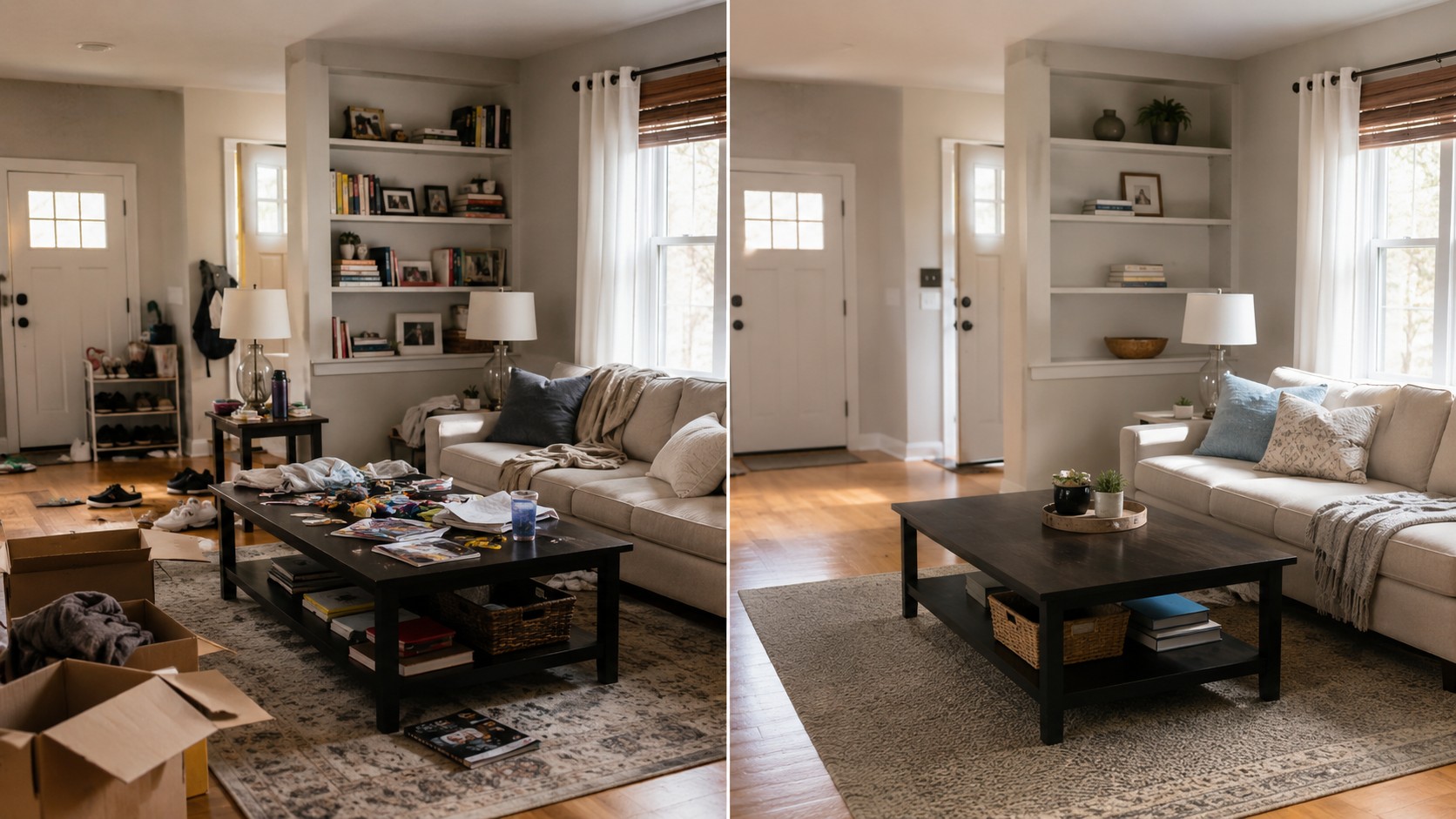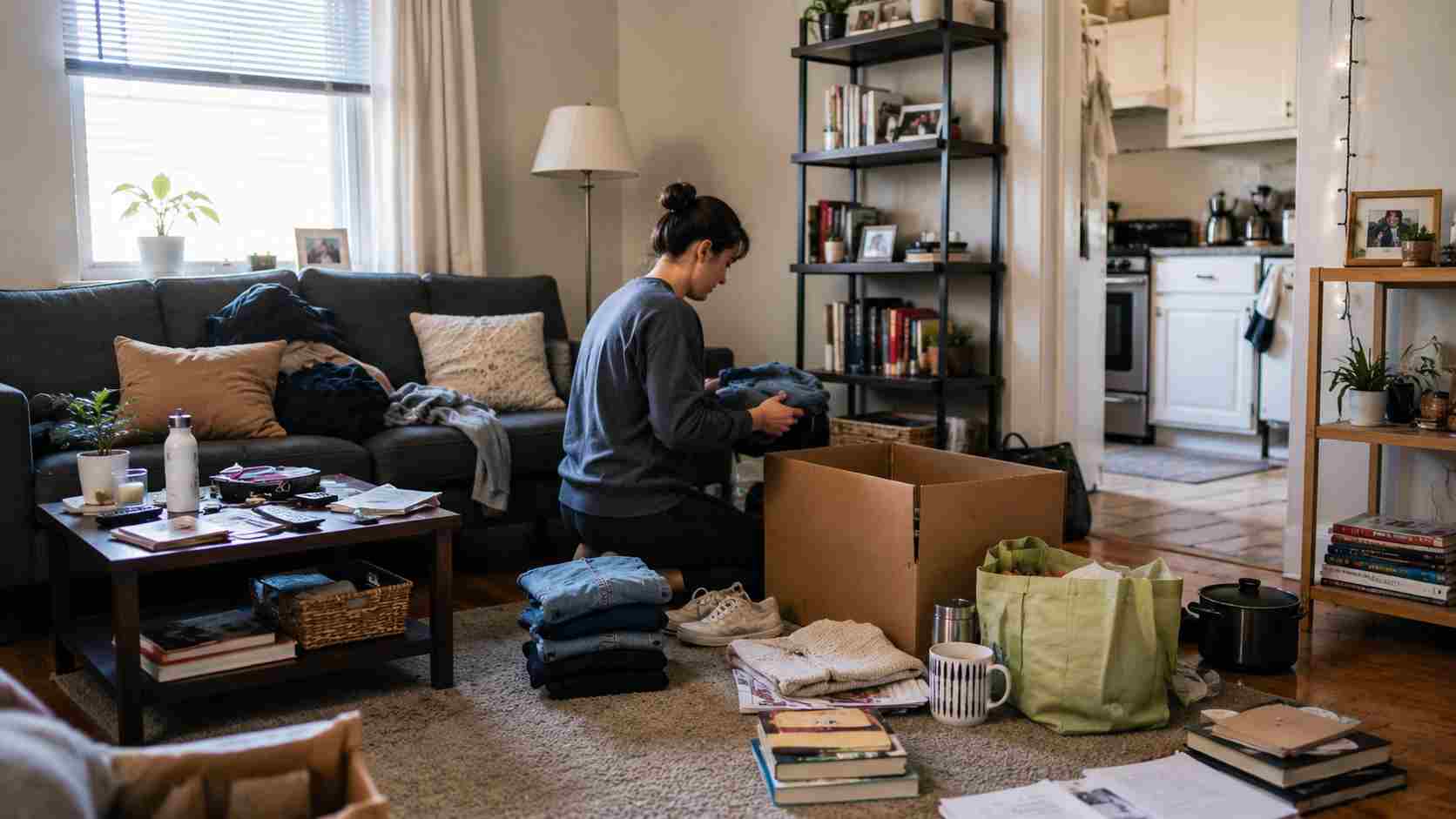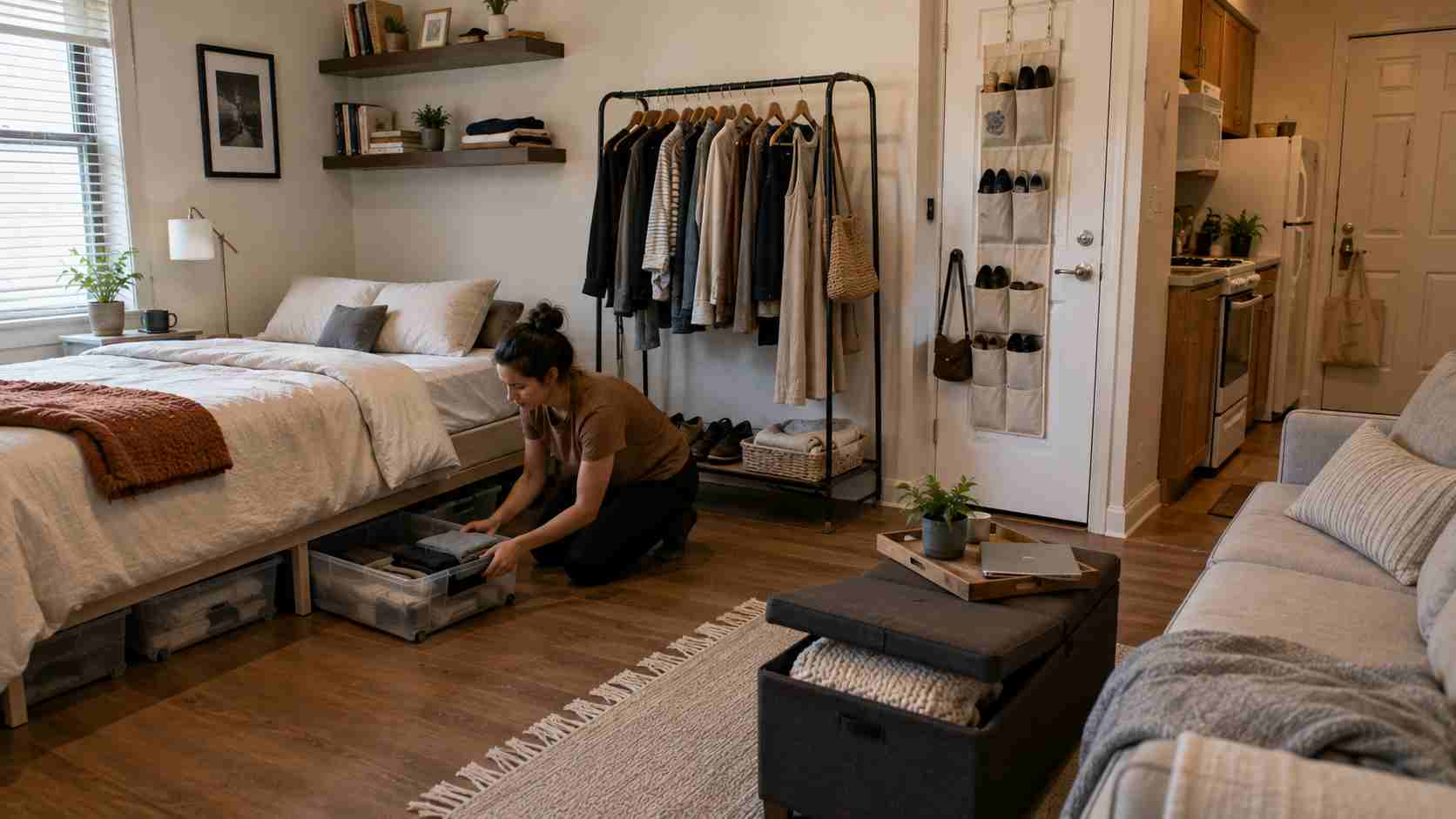
If you have the space but you don’t have the strategy, what is your storage problem?
A 2023 RentCafe analysis of Yardi Matrix data found that the average newly built U.S. apartment was just 887 square feet in 2022, down 54 square feet from a decade earlier. You’re not the only person who has had a stack of clothes in front of you on the floor, wondering where to start, and you’re not without choices.
The good news is you don’t need to spend a ton of money, buy something ugly, or make it overly complicated to find storage solutions for your small apartment if you don’t have a closet. Smart renters and homeowners are getting the most out of every square inch of space, from $10 closet shelves and rods to under-bed systems that reclaim 30+ cubic feet.
You will find out about:
- What real tenants did to address the no-closet dilemma (specifically what products they used, and how much they cost)
- Some affordable storage solutions for small apartments and not just a hodgepodge of random items.
- I will be sharing some ideas on how to do your own storage in a weekend for less than $30.
1. The Closet-Free Reality: What the Data Actually Shows
Why More Apartments Are Shipping Without Closets
Pre-war buildings in New York, Chicago, and San Francisco, and other older building stock, were built prior to the days of closets as a building code requirement. In most states in the United States, a room does not have to have a closet to be considered a bedroom. The outcome: millions of tenants are paying the full price for a room with no built-in storage.
The Hidden Cost of Disorganization
Aesthetics aren’t the only reason disorganization is a bad idea: it can cost you money! The National Soap and Detergent Association says clutter would cut cleaning time in the home by 40%. In the meantime, the average American wastes 2.5 days a year looking for lost objects (Brother International, 2022).
It is estimated that the cost of purchasing duplicate items when the original is not found is $300 to $500 a year for small apartment and studio dwellers.
What Most Guides Don’t Tell You
Most articles on this topic are superficial lists of products (rack, wardrobe, shelf) and don’t provide any direction or advice on what to buy, how much, or the order in which to buy them. Popular roundups from real estate blogs are the same. Shallow lists of products (rack, wardrobe, shelf) and no help with choosing among them, pricing, or order. In this guide, you’ll consider the problem from the systems point of view, rather than the shopping list perspective.
2. How to Increase Storage in a Small Apartment Before Buying Anything
Start With a Ruthless Audit (The Step Most People Skip)
Before paying to rent a storage unit, know exactly what you’re storing. When you declutter your apartment, try the “Sorted in 90 Minutes” approach:
- Remove it from where it is resting.
- Divide into three groups: Keep, Donate, Discard.
- Use the one-year rule: If it hasn’t been used for a year or more and it doesn’t have any significant sentimental value, it moves out.
There are more than thousands of objects in the average American household, and they can be easily accommodated in a small studio. If you reduce your number of items by 30% prior to organizing, you have a much smaller problem to solve.
Think Vertically, Not Horizontally
Vertical Space is Your Untapped Treasure Chest! People who live in apartments consider space horizontally to fill it up first. The proper mental image is that your walls are a vertical grid from the ground to the ceiling. The typical ceiling height is 8–9 feet. The typical person only stores up to approximately 5 feet. This means that there is no usable, first-floor storage space left above eye level that isn’t being used.
A single shelf at the 7-foot level over a 10-foot wall provides about 20 square feet of extra storage space, which can accommodate 30+ sweaters or a whole season’s wardrobe.
Find Your Empty Spaces
We all have “dead spaces” in our apartments: under the bed, behind the refrigerator, above the kitchen cabinets, back of the bathroom door. Prior to buying any apartment storage system, stroll your space with a notepad and note all dead zones. A 50-80 cubic foot volume will be found in most 400-600 sq. ft. apartments.
3. Cheap Storage Ideas for Small Apartments Without Closets
Simple Cost Comparison
| Solution | Avg. Cost | Benefit |
| Over-door storage | Low | Quick organization |
| Clothing rack | Low–mid | Closet replacement |
| Under-bed bins | Low | Hidden storage |
| Floating shelves | Low–mid | Wall storage |
| Storage ottoman | Mid | Multi-use furniture |
The $50 No-Clothing Starter Kit
If you’re on a budget, this is a time-tested setup for an average room without a closet that won’t break the bank for under $50:
- 1 freestanding clothes rack (~$30): This rack is freestanding and can be used for all hanging items: jackets, blouses, dress pants.
- 2 over-door organizers (~$15 total): 1 on the back of the bedroom door (accessories, shoes) and 1 on the bathroom door (hair tools, toiletries).
- Vacuum storage bags (~$12 for 6): Store large items (sweaters, coats) in vacuum storage bags to reduce the size of bulky items to one-third of their normal size.
It’s a combination that doesn’t need any tools, doesn’t involve permanent installation, and can easily be taken down at the end of the lease, perfect for renters who need affordable storage solutions for their small apartments without having to risk losing their deposit.
Smart Budget Tricks
Many people overlook simple hacks like using bookshelves as wardrobes or adding tension rods inside cabinets. These small changes often create more space than expensive furniture.
4. DIY Storage Ideas for Small Spaces: Build It for Under $30
The Weekend Project that changes everything: DIY Closet Shelves and Rods
One of the most effective and easy-to-make storage solutions for a bedroom without a closet is to install a hanging area with a curtain rod, two wall brackets, and a piece of lumber.
Materials needed:
- 1 tension curtain rod or standard closet rod: $8-$15
- 2 L-brackets (if wall-mounting): $4–$8
- 1 wooden board (1″x10″x36″): $8–$12
- Cloths, sandpaper, paint, and stain: $3-$5
Total cost: $23–$40
How to build DIY closet shelves and rods:
- Select a wall space or corner with a minimum width of 24 inches that is recessed.
- Install the L brackets at the desired height for the clothesline (around 6-7 feet up).
- Place the wooden board on the brackets and screw it in place.
- Attach the closet rod 2-3” from the shelf with rod brackets.
- Sand, paint, or stain, and let it dry before loading.
It provides a complete clothes hanging area and shelf for folded clothes, shoes, or baskets above it, similar to a professionally installed closet system, but at about 10% of the price.
DIY Clothes Shelf: The Floating Version
A pegboard clothes shelf is an alternative solution that is not damaging if wall anchors are not allowed. They can be found at hardware stores for under $1,d don’t require any mounting to lean against a wall, and can be used to hang all sorts of hooks, shelves, and baskets.
A few urban renters (NYC, SF, Chicago) have embraced the “pegboard wardrobe wall,” which is a full wall of pegboard panels from your hardware store side by side with an entire wardrobe system. The investment is approximately $60-$90 for an entire wall system, which is movable and can be disassembled.
DIY Under-Bed Platform with Storage Drawers
The single biggest piece of furniture, and the single biggest untapped storage opportunity, in the small bedroom with no closet, is the bed itself.
This DIY bed riser project (total cost: $15-$25) will lift a standard bed frame 6-8 inches to provide adequate clearance for rolling storage bins. A regular queen bed platform will occupy about 30 sq. ft. of floor space, all of which is available for use as storage.
Label fabric storage bins and you have a no-questions-asked closet for your guests.
5. Small Bedroom No Closet Solutions That Actually Work
Create a “Faux Closet”
The “Faux Closet” Method is a technique that helps individuals who lack a closet or a wardrobe. It’s a strategy for those who don’t have a closet or a wardrobe.
The best way to solve a small bedroom no-closet problem is not to purchase furniture; it’s to identify a space. Professional organizers refer to this as the “faux closet” method:
- Choose a corner or alcove of your bedroom.
- Place a freestanding closet or clothes rack in that area.
- Install a ceiling-to-floor curtain rod in front.
When you wish to give the space a clean look, draw the curtain; open it when dressing.
The result is a closet-like space that performs exactly like a built-in, costs $80-$150 to build, and offers a soft, intentional touch to the space.
How to Store Clothes Without a Closet or Dresser
This is one of the most searched sub-questions of this topic,c and most guides have a partial answer. Here is the complete method for how to store clothes without a closet or dresser:
Hanging Clothing (Jackets, Blouses, pants, dresses): Clothing rack or tension rod in a designated corner. Slim velour hangers (not plastic) will occupy 30–40% less rod space.
Folded items (T-shirts, sweaters, underwear): Fold them up, not down, with the KonMari vertical folding method (stand up items in drawers and bins). This way, 2-3X more items can fit in one shallow bin.
Shoes: An over-the-door shoe organizer fits up to 24 pairs of shoes. A double shoe rack can accommodate 20–30 pairs of shoes in a 12″ x 12″ area.
Off-season items: Vacuum storage bags compressed and stored under the bed. Seasonally rotate (fall/winter with spring/summer), or use the back of a door handle.
Accessories (belts, scarves, jewelry): This category, with zero floor space, uses adhesive hooks on the inside of a cabinet door.
Small Spaces Bedroom: The Zone System
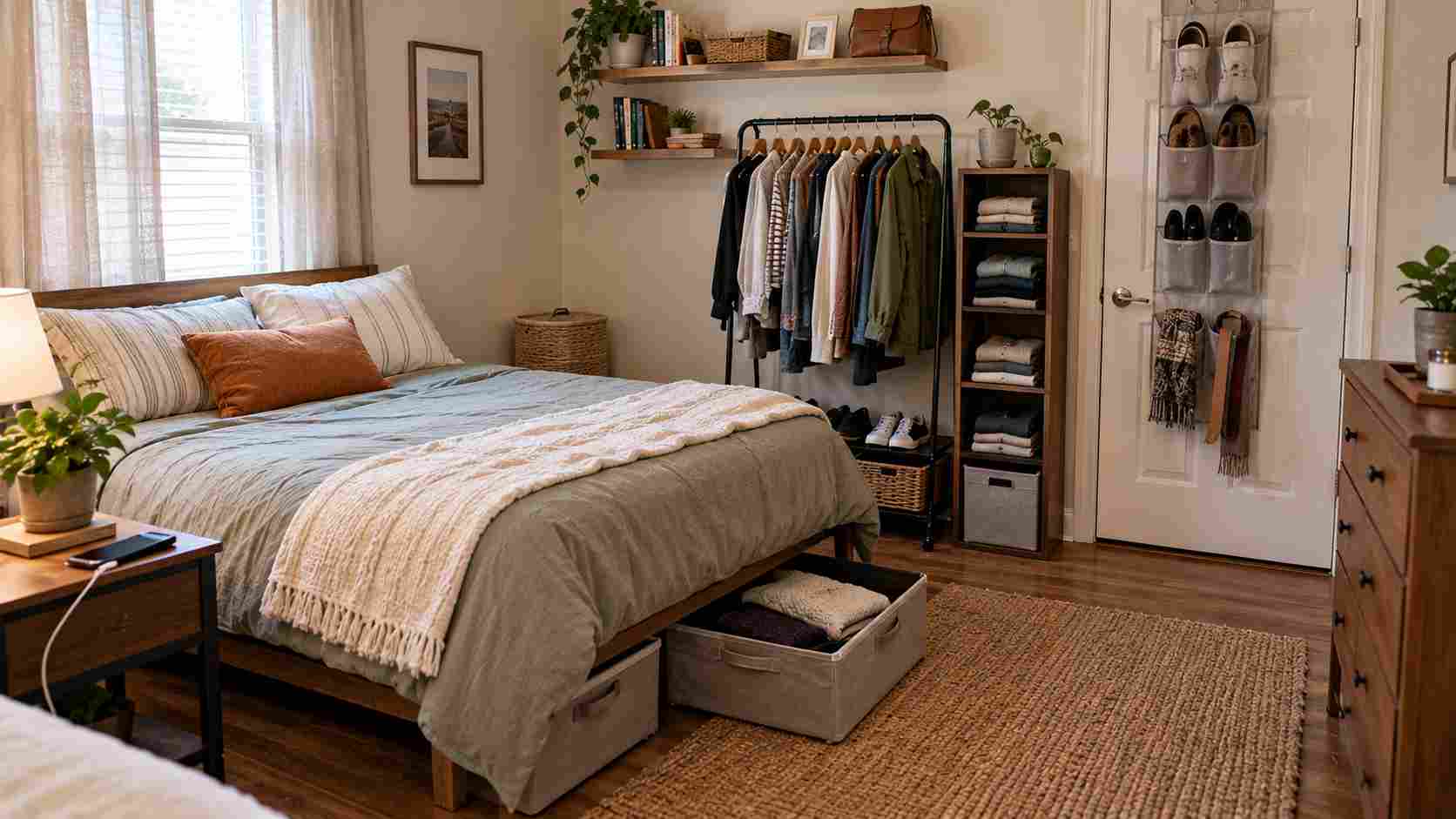
Rather than having solutions everywhere, designate a space in your bedroom for each type of solution:
- The Hanging Zone: Clothing rack or DIY rod in a corner (clothes will be used weekly)
- The Fold Zone: T-shirts, sweaters, basic items, shelf unit or storage ottoman
- The Floor Zone: Under-bed storage (off-season, bulky items)
- The Door Zone: Over-door organizers (shoes, accessories, small items)
- The Wall Zone: Floating shelves above the clothing zone (bags, boxes, display).
This zone system can turn a chaotic bedroom with no closet into a functional space. When you declutter your bedroom, give every item a designated home instead of saving it wherever it fits.
6. Storage Hacks for Small Apartments and Studios: Room by Room
Living Area
In a studio apartment, the living area and bedroom are the same room. Every piece of furniture must earn double duty.
Sofa beds and daybeds with storage drawers under the bed provide the sofa and bed space with an additional 15-25 cubic feet of under-frame storage. IKEA’s FRIHETEN or Amazon’s DHP are examples of brands that provide choices in the $200-$400 price range.
Storage ottomans replace coffee tables to store blankets, board games, remote controls, and seasonal accessories out of sight. The average storage ottoman contains 15-30 objects.
The “Gallery Wall with Shelves” Combo is a room space saver idea. Use floating shelves in combination with a curated display: books at the bottom, decoratively placed objects at eye level, and baskets with closed tops and doors for hidden storage on the highest shelf. This is a great way to give any wall 10-15 cubic feet of space that is both visible and visually appealing.
Declutter Studio Apartment: The Kitchen and Bathroom
Mount a magnetic knife strip to free up a whole knife drawer. Reduce cabinet volume by up to 40% by using stackable containers (not original packaging). Install a tension rod under the sink to make a second shelf for cleaning supplies.
The back of the bathroom door is one of the most underused surfaces in any apartment. As part of decluttering a bathroom, a single over-door organizer with distinct pockets can hold toiletries, beauty products, and medications without taking up valuable counter or cabinet space.
Apartment Space Saving Ideas: Unique Storage No One Talks About
The “bed skirt curtain” trick: Tension rod around bed frame at mattress level. Hang a long floor-length curtain. Your under-bed area turns into a hidden storage room. No one can see it; it’s instantly tidy.
Clothes for off-season use in luggage: Pack your suitcases with clothes that will not be worn during the off-season. Set a large hardside suitcase on a side table, and place a piece of glass or a cutting board on top of it. It is functional, not out of sight,t and gives a real amount of storage.
Hollow ottomans as nightstands: A medium-sized storage ottoman can serve as a nightstand that takes up less floor space and provides more storage for books, chargers, night creams, ms and many other items.
Unique storage idea: Install a pegboard in the kitchen. A pegboard is a vertical board that is used to hang pots, pans, utensils, and spice jars, thus freeing all kitchen cabinets for food and dishes. This single action can recover 20-30% of the space in the kitchen cabinet.
7. Minimalism Decluttering Mistakes That Sabotage Your Storage System
Minimalism can make your home feel more organized, but some decluttering mistakes can quickly undo your progress. One of the biggest mistakes to avoid when decluttering is getting rid of useful items too quickly or buying storage before sorting what you actually need.
Mistake #1: Organizing Before Decluttering
This is the most frequently made and most expensive minimalism decluttering error. If you have to purchase bins, shelves, and organizers before you have reduced your quantity of items, you are just making an organized version of the same problem. The principle: Clean up, then organize, then purchase storage.
Mistake #2: Clinging to ‘Aspirational’ Items.
The main reason for small apartment overcrowding is aspirational clutter: the dress you will wear again, the hobby kit you will use, the gift you’ll feel guilty about giving away. One of the biggest stressors among family members, especially in smaller households, was having too many possessions to manage, according to the UCLA Center on Everyday Lives of Families.
The solution is to use a 90-day rule, particularly for aspirational items. It goes: if you have not used it in 90 days.
Mistake #3: Buying Matching Sets of Organizers Before Testing One.
In a video on YouTube, a collection of 20 identical storage bins appears to be a satisfying set. However, in an actual apartment and real closet, you might be using 8 bins in one category and 2 in another. Purchase one bin and test it for two weeks, then purchase the number required.
Mistake #4: Ignoring Maintenance
If a storage system is not maintained, it will degrade in 30-60 days. Set up a monthly “reset” time of 15 minutes to return items to their zones, get rid of old products, and review items occupying space. Treat it like a subscription: little maintenance over a long period of time is better than large maintenance once a year.
Mistake #5: Making it pretty instead of useful
Pinterest-perfect storage systems fail to work in the real world because it was created for photos, not real life. The best storage solutions for small spaces are those that are easy to access (you can reach daily) and quick to store (you can stow in under 5 seconds).
8. FAQ: People Also Ask
What is the best storage solution for a small bedroom with no closet?
The most effective solution is to use a freestanding rack to hang clothes, under-bed storage bins to store folded clothes and off-season items, and an over-door shoe and accessory organizer. This is a 3-part system that covers all items of clothing without any permanent installation and costs $50-$80 total.
How do you store clothes without a closet or dresser?
Hang clothes on a hanger, vertically fold T-shirts and sweaters in labeled bins, store out-of-season clothes in vacuum bags under the bed, and stick accessories to the back of doors. This system saves not only space in a closet, but also in a dresser, and it is entirely vertical and under the bed.
What are the cheapest storage ideas for small apartments?
The least expensive are over-the-door organizers ($10 to $20), tension rods for cabinet dividers ($5), vacuum storage bags (a 6-pack is $12 if purchased), and, as long as you already have them, repurposed bookshelves as wardrobes ($0). As a team, they clear up most storage issues for less than $50 and don’t need to be permanently installed.
Can I build a closet in an apartment?
Yes. The cost of a DIY closet with a wall-mounted rod, two L-brackets, and a wooden shelf is $25-$4,0 and the time it takes to build is 2-3 hours. If you don’t have room to fit the rack to the wall, use a freestanding rack and hang a curtain to create the closet effect without any permanent installation.
How do I maximize space in a studio apartment?
Pay attention to multi-function furniture (storage ottomans, sofa beds with drawers), vertical wall shelving above eye level, and dead zones (under bed, behind doors, above cabinets). The most powerful step is to first declutter, which saves more than any product purchase: declutter by 30%.
What are the most common minimalism decluttering mistakes?
The biggest error is to purchase storage solutions before decluttering. Others are retaining aspirational items that will never be used, purchasing full sets of organizers before testing one, and refusing to pay for monthly resets of the organizers. These errors make storage systems seem like they are not working, when in fact it is because there is too much to store.
How much does it cost to set up storage in a no-closet apartment?
The cost of creating a functional no-closet storage system is $50-$150 with the use of a clothing rack, under-bed bins, over-door organizers, and floating shelves. The cost of a premium system is $200-$400 for a freestanding wardrobe, pegboard wall, and storage ottoman. The DIY methods can cut down costs by 40-60%.
What’s the best way to store clothes in a small bedroom long-term?
A zone-based system (hanging zone, fold zone, under-bed zone, door zone, wall zone), seasonal rotation of items (swap out-of-season clothes to under-bed every 6 months), and a monthly 15-minute reset to maintain the system are essential for long-term success. It is better to have a good product than to neglect it.
Conclusion
Small apartments that don’t have any built-in closets can use storage ideas utilizing a smarter system.
The most effective approach is simple:
- Remove what you don’t need
- Use vertical space
- Assign clear storage zones.
- Start with low-cost solutions.
Once you build even one organized corner, the rest of the space becomes easier to manage.
Start small, stay consistent, and your apartment will naturally become more functional over time.