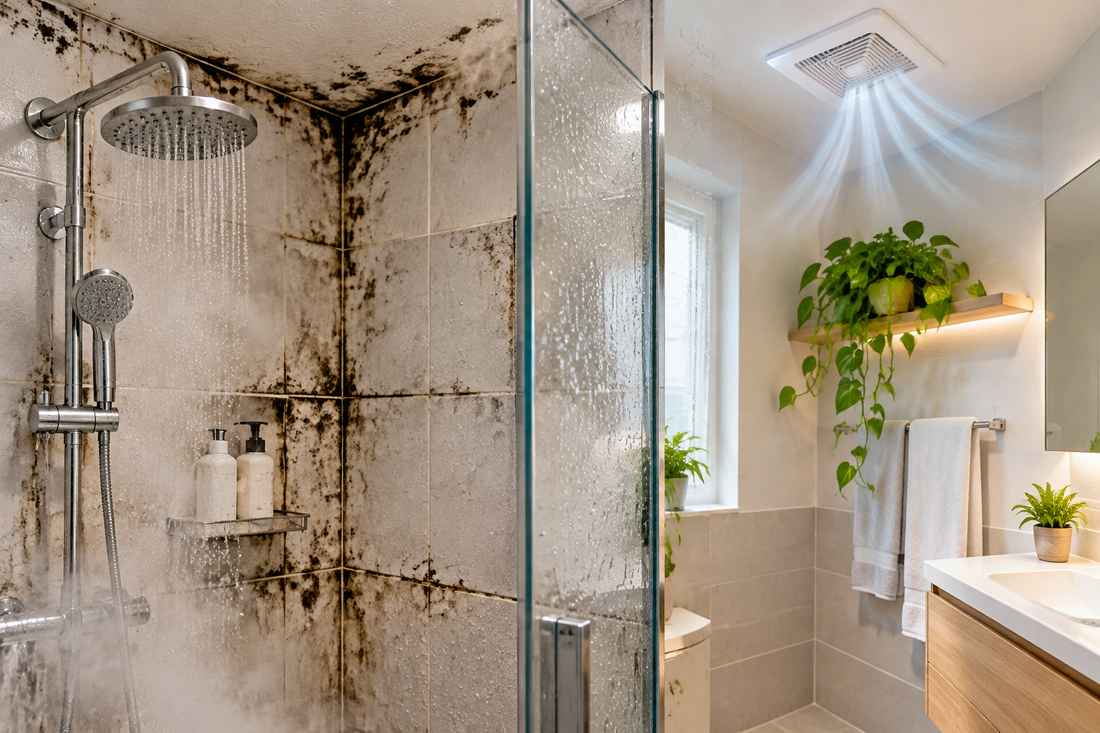
A single bathroom mold colony can release millions of spores into the air you breathe every day, yet many homeowners don’t realize there is a problem until dark patches appear across grout lines, walls, or ceilings. If you are searching for how to stop mold in the bathroom, you are dealing with a common household issue: bathrooms create some of the best conditions for mold growth because of constant moisture, steam, standing water, and limited airflow.
The good news is that bathroom mold can usually be prevented, and even areas with established growth can often be treated effectively when the right steps are followed.
This guide explains why bathroom mold develops, whether it can affect your health, how to remove it safely from tile, grout, and ceilings, and how to prevent it from returning even in bathrooms with no window, no fan, or weak ventilation. It also covers related mold problems in basements, bedrooms, and drywall so you can deal with moisture issues throughout your home.
Why Mold Grows in Bathrooms: The Root Causes
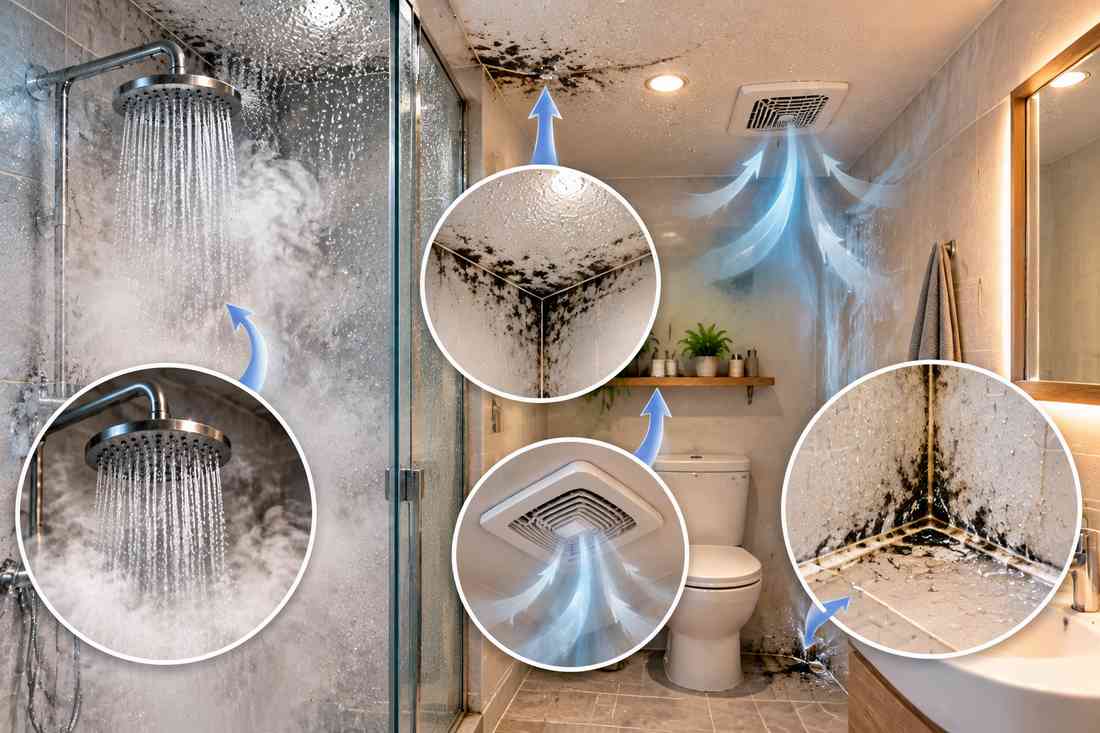
Stopping mold permanently starts with understanding what allows it to grow. Mold appears when three things come together: moisture, warmth, and an organic material it can use as a food source. In bathrooms, that food source can be soap residue, skin particles, dust, grout sealant, or the paper layer found on drywall.
The Moisture Problem
A hot shower can raise bathroom humidity above 90% within minutes. Mold spores already exist naturally in the air inside most homes, but they need a damp surface to begin growing. Research on indoor air conditions shows that mold can start developing on wet materials within 24 to 48 hours. Since bathrooms are used regularly, surfaces often stay damp long enough for mold to establish itself.
Poor Air Circulation
Bathrooms are often the smallest and most enclosed rooms in a house. When there is not enough airflow, warm, humid air stays trapped and settles on colder surfaces such as ceilings, shower corners, and window frames.
This is why understanding how to prevent mould in bathrooms without windows is important. Without a window, natural air exchange is limited, allowing moisture to remain in the room for much longer than it should.
Organic Buildup
Mold needs a source of nutrients, and bathrooms provide plenty. Soap scum, shampoo residue, skin flakes, and cellulose found in grout sealant and drywall paper can all support mold growth.
Even a bathroom with decent ventilation can develop mold when buildup collects around tile grout or silicone caulking because spores can quickly attach to these damp surfaces.
Temperature Consistency
Bathrooms often remain within the ideal mold-growth range of 60–80°F (15–27°C) throughout the year because they are heated with the rest of the home. Unlike a cold basement or hot attic, bathrooms usually do not experience conditions dry or extreme enough to naturally stop mold growth.
That is why prevention requires regular moisture control rather than relying on temperature changes alone.
Is Bathroom Mold Dangerous? The Health Risks Explained
Is bathroom mold dangerous? Yes. While not every exposure leads to serious health problems, understanding the health effects associated with mold exposure is important. Long-term contact with bathroom mold may contribute to respiratory irritation, allergy symptoms, and worsening asthma issues. Children, older adults, and people with existing sensitivities may need to take extra precautions.
Short-Term Symptoms
Many people exposed to bathroom mold experience ongoing but mild symptoms, including sneezing, a blocked or runny nose, itchy or watery eyes, throat irritation, and skin reactions after direct contact.
Because these symptoms can be constant and less obvious, people often mistake them for seasonal allergies rather than noticing a possible mold source inside the home.
Is Mold in the Shower Dangerous for Daily Use?
Is mold in the shower dangerous specifically? The shower area creates a higher exposure risk because hot water can send mold spores into the air while you are standing inside an enclosed space.
Even mold that appears limited to grout, including pink or black growth, should not be ignored. Treating it early prevents it from spreading deeper into surfaces that become harder to clean.
Is Mold on the Bathroom Ceiling Dangerous?
Is mold on a bathroom ceiling dangerous in a different way from shower mold? Ceiling mold can be more difficult to identify and reach, and it often indicates an ongoing moisture problem above the surface.
Possible causes include roof leaks, damaged exhaust ducts, or moisture trapped around ventilation systems. Visible ceiling mold may mean the growth has been developing unnoticed for weeks.
At-Risk Groups Who Need Extra Caution
| Group | Why They’re More Vulnerable | Recommended Action |
| Infants and young children | Developing lungs, more time spent close to floor-level mold | Address any visible mold immediately |
| People with asthma or allergies | Mold spores are a common asthma trigger | Use HEPA filtration + strict ventilation |
| Elderly individuals | Weaker immune and respiratory response | Schedule regular bathroom mold inspections |
| Pet owners | Pets can inhale spores at floor level and track them elsewhere | Clean floor-level grout and baseboards often |
| Immunocompromised individuals | Higher risk of fungal infection, not just irritation | Consult a doctor if exposure is prolonged |
If mold covers an area larger than roughly 10 square feet, most health authorities recommend professional remediation instead of DIY cleaning. Large colonies can release a concentrated amount of spores when disturbed, increasing exposure during removal.
How to Stop Mold in the Bathroom Ceiling
Ceiling mold is one of the most common bathroom problems, but it often goes unnoticed because it sits above eye level.
Why the Ceiling Is a Mold Hotspot
Warm air rises and carries moisture upward toward the ceiling. When that humid air reaches a cooler surface, condensation forms and slowly affects ceiling paint and drywall.
This process explains why mold in the bathroom ceiling develops so often and why it can return after cleaning if the moisture source is not corrected.
How to Remove Mold in a Bathroom Ceiling Safely
- Ventilate the room completely by turning on the fan and opening the door for at least 30 minutes before starting.
- Wear an N95 mask and gloves because disturbing ceiling mold can release airborne spores.
- Apply a mold-specific cleaner or a diluted bleach/water solution (1 cup bleach per gallon of water) directly to the affected area.
- Allow it to sit for 10–15 minutes, then gently scrub with a soft-bristled brush.
- Rinse and dry the area completely, then keep the fan running for another hour.
Prevent Mould in Bathroom Ceiling for Good
To truly prevent mould growth in the bathroom ceiling, removing the stain is not enough. The humidity problem has to be controlled.
Install or upgrade an exhaust fan rated for at least 1 CFM (cubic feet per minute) per square foot of bathroom space. Run it during every shower and continue using it for 20–30 minutes afterward. A mold-resistant, moisture-tolerant bathroom ceiling paint can provide additional protection.
When Ceiling Mold Signals a Bigger Problem
If the same ceiling area becomes moldy again within weeks despite cleaning and improved ventilation, there may be a hidden moisture issue. Roof problems, damaged duct connections, or condensation inside the fan housing can keep feeding mold growth.
Cleaning the surface alone will not solve the problem until the underlying moisture source is fixed.
How to Get Rid of Mold in the Bathroom: Step-by-Step Removal
Whether mold has appeared on grout, caulk, tile, or drywall, the basic removal process is the same: eliminate the mold, remove leftover residue, and make sure the surface dries completely.
Step 1: Choose the Right Cleaning Solution
| Solution | Best For | Effectiveness | Notes |
| Diluted bleach (1:10 with water) | Non-porous tile and grout | High | Do not mix with ammonia; ventilate well |
| White vinegar (undiluted) | Light mold, natural preference | Moderate | Safe for most surfaces, milder smell |
| Hydrogen peroxide (3%) | Grout lines, caulk | Moderate-High | Non-toxic, safe alternative to bleach |
| Borax solution | Porous surfaces, drywall | Moderate | Also inhibits future regrowth |
| Commercial mold spray | General bathroom surfaces | High | Fastest and most convenient option |
Step 2: Scrub, Don’t Just Wipe
Simply wiping mold with a damp cloth often spreads spores instead of removing them. Grout and other textured surfaces need physical scrubbing to lift mold growth from the material.
Use a stiff-bristled brush for grout and a softer scrub sponge for tile or fiberglass surfaces. The goal is to remove the visible growth and the residue left behind.
Step 3: Rinse and Fully Dry
Moisture allows mold to restart its growth cycle. After scrubbing, rinse the surface thoroughly and remove any remaining water with a dry towel or squeegee.
Pay close attention to areas where water collects, including tile edges, glass surfaces, and grout lines. A completely dry surface is much less likely to develop new mold.
Step 4: Treat Silicone Caulk Separately
Caulk around bathtubs and showers is one of the most difficult places to clean once mold has moved beneath the surface. Silicone can hold mold below the visible layer, which means surface cleaning may only remove the appearance temporarily.
If discoloration returns within a few weeks after cleaning, replacing the affected caulk is usually more effective than repeated treatments. Remove the old material and apply fresh caulk to prevent the mold from returning.
How to Get Rid of Mould in Bathroom Permanently
The difference between temporary cleaning and learning how to get rid of mould in the bathroom permanently comes down to what happens after removal.
Regular ventilation, weekly squeegee use, and monthly deep cleaning of grout lines help prevent regrowth. The cleaning solution removes existing mold, but moisture control is what keeps it away.
How to Prevent Mold in a Bathroom Without a Fan or Window
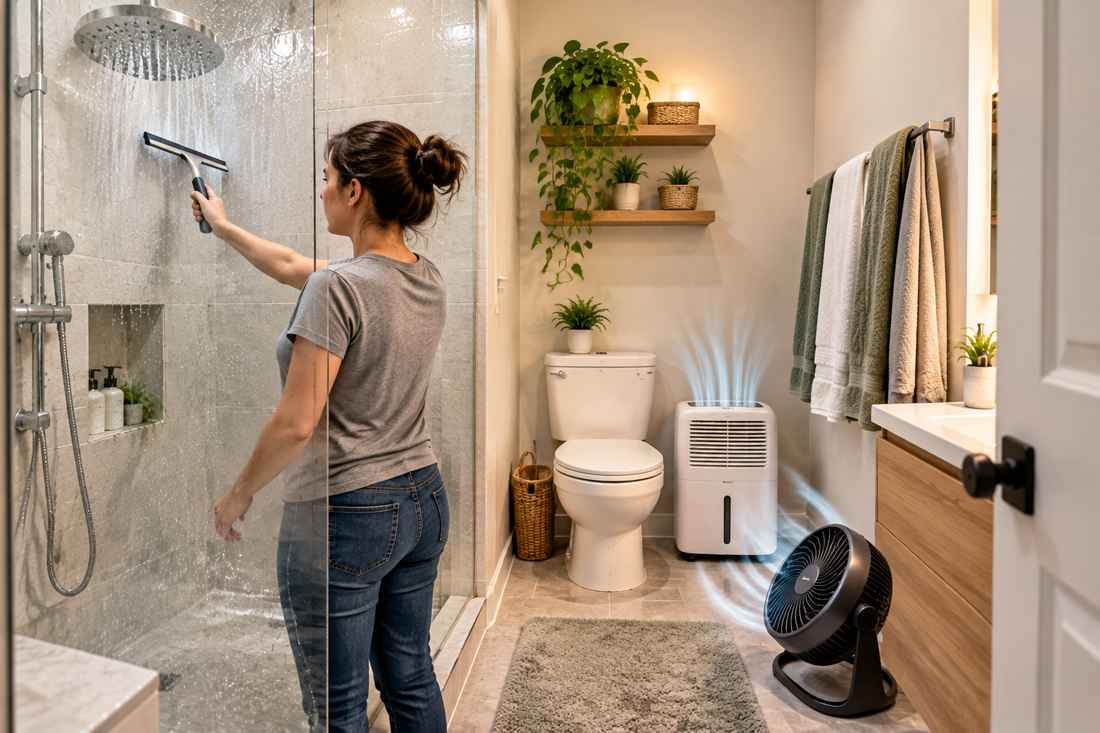
This is one of the most common mold concerns because many apartments, older homes, and interior bathrooms were built without strong ventilation systems.
How to Prevent Mold in a Bathroom Without a Fan
If you are looking for how to prevent mold in a bathroom without a fan, the goal is to replace the moisture control that an exhaust fan would normally provide.
- Portable dehumidifier: A small unit placed near the bathroom can remove moisture from the air after showers.
- Door left ajar: Keeping the door open by 2–3 inches during and after showers allows humid air to escape into other areas where it can spread out more easily.
- Absorbent bath mats and towels rotated daily: Wet fabrics can hold moisture and become a hidden source of mold growth in bathrooms without fans.
How to Prevent Mold in a Bathroom Without Ventilation Entirely
For bathrooms with no ventilation at all (no fan, no window, and no vent), controlling moisture immediately becomes the main priority.
- Take shorter, cooler showers (steam volume drops significantly below 105°F/40°C).
- Use a squeegee on wet surfaces immediately after each shower.
- Place a small standalone fan toward wet areas to improve evaporation.
- Keep a moisture-absorbing product, such as calcium chloride crystals, in the bathroom.
How to Prevent Mold in a Bathroom With No Windows
Bathrooms with no windows have less natural airflow and reduced exposure to daylight, both of which can affect how quickly surfaces dry.
To compensate, use a daylight-spectrum or UV bulb (UV light has mild antimicrobial properties) and add a circulating fan that can run on a timer after showers.
How to Prevent Mold in a Bathroom Without a Vent
When a bathroom does not have a proper vent duct, a window-mounted or through-wall ventless dehumidifying fan unit can be added without major renovation.
These units do not exhaust air outside. Instead, they filter and recirculate air, which can make them useful in interior bathrooms where installing ductwork is difficult.
Daily and Weekly Habits That Reduce Mold Long-Term
Long-term mold control usually comes from small habits repeated consistently rather than occasional deep cleaning.
Daily Habits
- Squeegee shower walls and glass doors after every use.
- Hang towels and bath mats so they dry fully instead of leaving them gathered on the floor.
- Wipe the sink and counter after brushing teeth or washing hands.
- Keep the exhaust fan running (or leave the door slightly open) for 20–30 minutes after showers.
Weekly Habits
- Spray tile and grout with a vinegar or mold-preventive solution once a week, even if no visible mold is present.
- Wash bath mats and shower curtains because fabric can hold moisture longer than hard surfaces.
- Check under sinks and around toilet bases for hidden damp areas.
How to Reduce Mold in the Bathroom Through Airflow Alone
Reducing mold in the bathroom does not always require new equipment. Better use of existing airflow can make a difference.
Keep the shower curtain spread open after use, leave the bathroom door open when possible, and avoid drying laundry inside the bathroom because damp clothing increases humidity.
How to Stop Mildew in the Bathroom Before It Spreads
Mildew is an early form of mold growth and often appears as a thin gray or white layer. Knowing how to stop mildew in the bathroom early makes removal easier before it develops into deeper black mold.
Treat the first signs of discoloration before the surface becomes darker or develops a thicker texture.
Special Situations: Toilets, Apartments, and Rentals
How to Stop Mold in a Toilet
Mold and mildew can develop under the toilet rim, around the base, and inside the tank. To understand how to stop mold in a toilet, focus on the areas that normal cleaning often misses.
Use a toilet brush under the rim every week, inspect the tank interior monthly, and check the floor seam around the base where moisture can collect. Condensation around the outside of the tank is another common moisture source that is easy to overlook.
How to Prevent Mold in Apartment Bathroom Settings
Renters often cannot make major ventilation changes, so learning how to prevent mold in apartment bathroom spaces usually involves portable moisture-control solutions.
A compact dehumidifier, a door-mounted fan, and quick reporting of leaks to the landlord can help. Structural moisture problems generally require repairs that are outside a tenant’s control.
What Landlords and Rental Owners Should Know
For rental property owners, unresolved bathroom mold can create maintenance problems and affect tenant satisfaction.
Installing a properly rated exhaust fan and checking caulk and grout between tenants costs far less than dealing with extensive mold remediation after a complaint.
Beyond the Bathroom: Mold in Basements, Bedrooms, and Drywall
The same moisture-control principles that prevent bathroom mold also apply to other areas of the home. Any space with trapped humidity, poor airflow, or damp materials can become a place where mold develops.
How to Eliminate Black Mold in Basement Spaces
Basements have a similar moisture problem to bathrooms, but they often dry much more slowly because they usually have limited airflow and less direct heat.
The best way to get rid of mold in basement areas is to control humidity with a dedicated dehumidifier running continuously. If groundwater seepage is contributing to moisture, solutions such as a sump pump or vapor barrier may also be needed.
How to Treat Mold on Basement Walls
Concrete basement walls may look solid, but they are still porous and can hold moisture. Cleaning only the visible surface often does not solve the problem for long.
To learn how to treat mold on basement walls, use a concrete-specific mold treatment and allow the wall to dry completely. After drying, sealing the surface with masonry waterproofing paint can provide additional protection against future moisture problems.
How to Prevent Mold in Bedroom Environments
Bedrooms usually do not experience the same humidity levels as bathrooms, but mold can still develop when airflow is poor or moisture remains trapped.
Learning how to prevent mold in bedroom spaces mainly involves keeping humidity below 50% with a small dehumidifier and avoiding conditions that block air movement. Furniture placed directly against exterior walls can trap condensation and reduce airflow behind it.
Mouldy Walls in Bedroom Corners and Windows
Mouldy walls in bedroom corners often appear where warm indoor air meets a cold surface. This is especially common on exterior-facing walls during colder months.
Repeated cleaning may remove the visible growth, but improving airflow around the area or addressing insulation issues is usually more effective for preventing it from returning.
Removing Black Mold From Drywall
Drywall absorbs moisture easily, which makes mold removal more complicated than cleaning hard surfaces. Removing black mold from drywall and cleaning mold off sheetrock may only provide a temporary solution if mold has already moved beneath the paper surface.
A light chalky residue after cleaning can be a sign that the affected section needs replacement rather than additional treatment.
How Do You Get Rid of Black Mold on Drywall Permanently?
The answer to how do you get rid of black mold on drywall permanently depends on how deeply the mold has spread.
Once mold has moved beyond the surface layer, replacement is usually the solution. Cut out a section at least 12 inches beyond the visible mold, replace the damaged drywall, and treat nearby studs with a mold-inhibiting primer before installing new material.
For small surface-level spots, the best way to kill mold on drywall is a borax or hydrogen peroxide solution applied carefully with minimal water. Avoid soaking the drywall paper because extra moisture can encourage further growth.
DIY vs. Professional Mold Removal: Which Do You Need?
| Factor | DIY Cleaning | Professional Remediation |
| Affected area | Under 10 sq ft | Over 10 sq ft |
| Mold location | Visible, hard surfaces | Inside walls, HVAC, or ceiling cavities |
| Recurrence | First-time or occasional | Returns repeatedly after cleaning |
| Health symptoms | None reported | Ongoing respiratory symptoms in household |
| Cost | 10–50 in supplies | 500–3,000+ depending on scope |
| Time investment | 1–2 hours | 1–5 days |
If your situation matches more than two items in the right-hand column, a professional inspection may be more useful than repeating DIY cleaning that does not solve the underlying moisture issue.
FAQ: People Also Ask
Is bathroom mold dangerous to breathe long-term?
Yes, prolonged exposure can worsen allergies, asthma symptoms, and general respiratory irritation. It is rarely life-threatening for healthy adults, but children, seniors, and people with existing respiratory conditions should treat visible mold as something that needs attention.
How often should I clean my bathroom to prevent mold?
Wet surfaces should be wiped daily, while grout, caulk, and tile should receive a deeper cleaning weekly. This routine removes moisture and organic buildup before spores have the 24–48 hour period they need to begin forming a colony.
Can I paint over mold instead of removing it?
No. Painting over mold traps moisture and spores underneath the new coating. The growth can continue and may appear through the paint again within weeks. The surface should always be cleaned and completely dried before repainting.
Does vinegar really kill bathroom mold?
Yes, undiluted white vinegar kills many common household mold species on contact and provides a safer maintenance option than bleach for many situations. However, bleach may be more effective on stubborn mold that has deeply settled into surfaces.
How do I stop mold from coming back after cleaning?
The most important factor is controlling moisture. Running a fan or dehumidifier after showers, drying wet surfaces quickly, and using weekly preventive cleaning methods reduce the conditions mold needs to return.
Is black mold worse than other bathroom mold types?
Black mold (often Stachybotrys or Cladosporium) can cause stronger reactions in some sensitive individuals, but any untreated mold can create health concerns. The color alone does not determine how serious the problem is; the size and location of the growth are more important factors.
What humidity level prevents mold growth in bathrooms?
Keeping indoor humidity below 50% significantly slows mold development, while below 60% is generally considered the safe threshold recommended for bathrooms.
Can mold in the bathroom spread to other rooms?
Yes, mold spores can move through open doors, shared HVAC systems, clothing, and towels. Untreated bathroom mold can eventually contribute to mold problems in nearby bedrooms, hallways, and other areas of the home.
Conclusion
Stopping mold in the bathroom depends on controlling moisture, improving airflow, and dealing with growth before it spreads. Whether the issue is ceiling mold, toilet-base mildew, or a bathroom without a fan or window, the solution follows the same principle: reduce the moisture that allows mold to survive.
Key takeaways:
- Ventilation (fan, dehumidifier, or open door) is the single most effective long-term fix.
- Weekly grout and caulk maintenance prevents 90% of recurring mold issues.
- Mold larger than 10 square feet or returning repeatedly warrants professional remediation.
Start with one simple habit today, such as drying your shower walls after each use. Small moisture-control steps can make a noticeable difference within two weeks. If mold is already present, follow the removal process above and continue with prevention habits to reduce the chance of it returning.