The average person wastes almost half of his cabinet space simply because it is not set up correctly and not because it is too small. If you’ve ever dug through a cluttered cabinet looking for a matching lid, or seen your counters slide under little appliances, you’re familiar with the issue: No lack of space, just a lack of system.
Learn real, budget-friendly DIY kitchen organization strategies for every corner of your kitchen (including the sink!). You’ll learn how to declutter strategically, what to store and what to build, how to get counter space in a small kitchen, and how to organize the most difficult areas- those in corners and deep drawers- most guides never bother with at all!
From first-time homeowners to busy parents and downsizers, these ideas are designed to fit any kitchen size and budget.
1. How to Start Your DIY Kitchen Organization Project
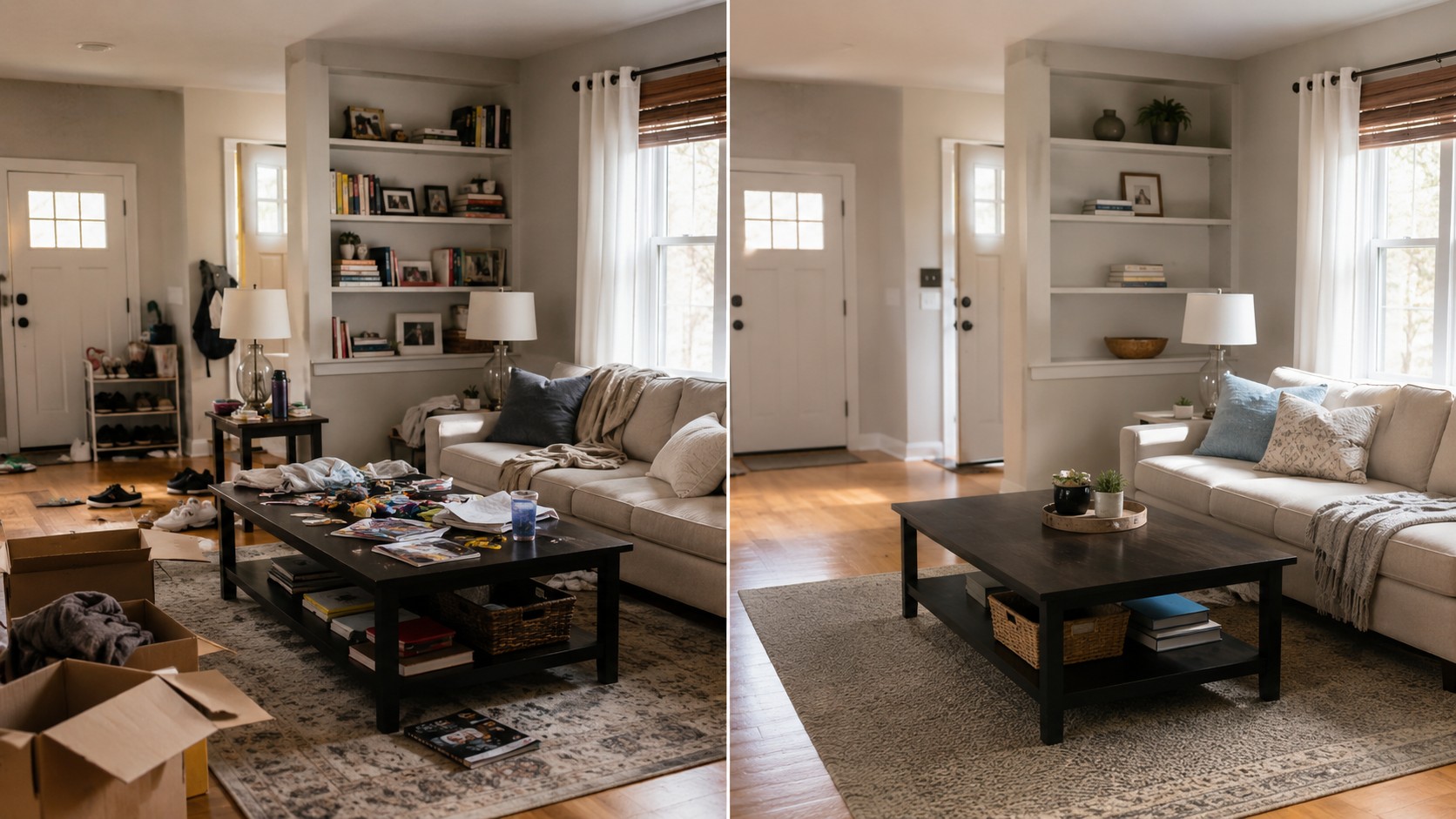
Most DIY kitchen organization ideas don’t last past a month because people purchase bins before they do the work to declutter. No system is effective unless you sort first, measure second, and buy last.
Audit Every Zone Before You Buy Anything
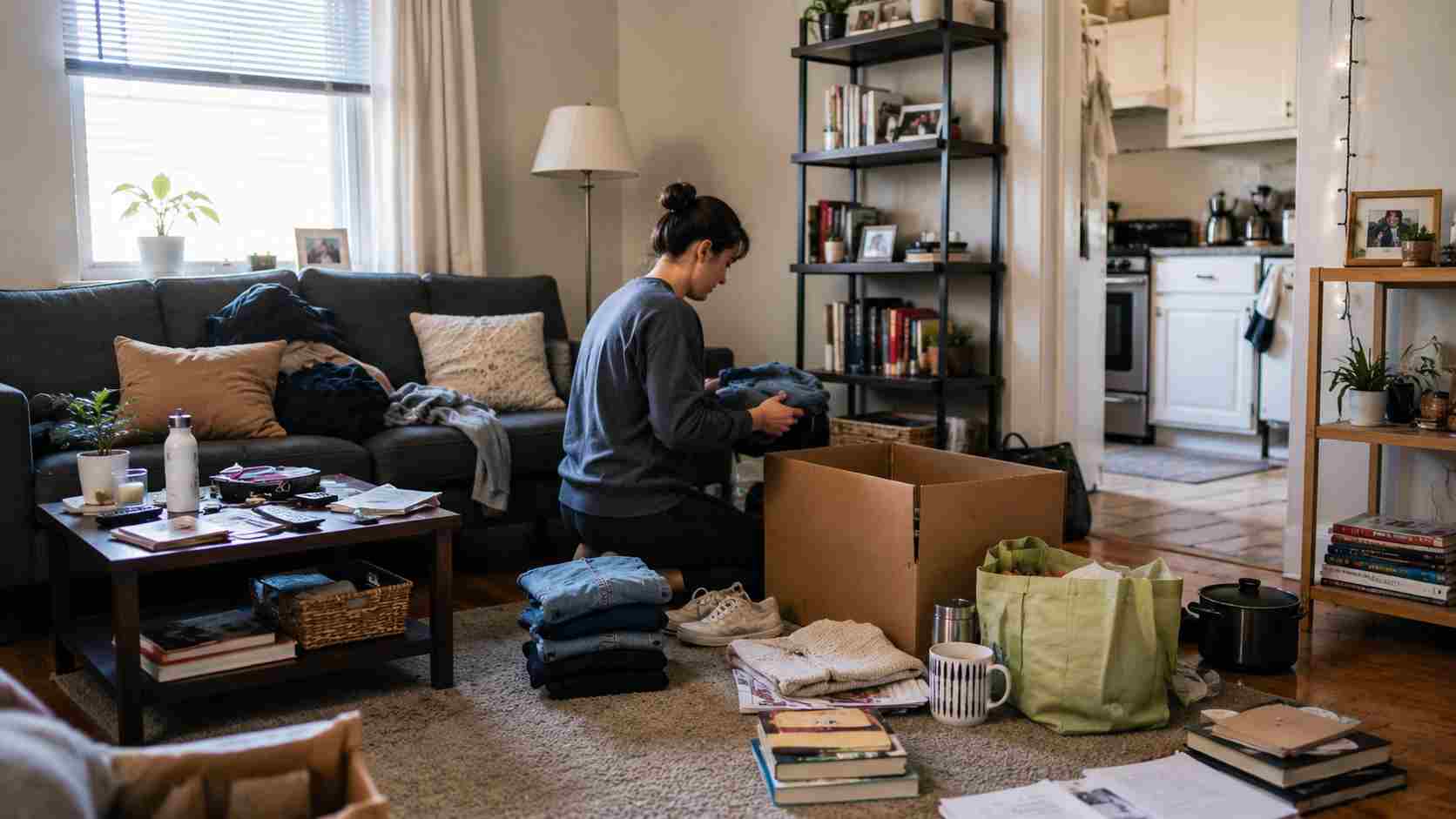
Do not empty the entire kitchen at once; do one cabinet or drawer at a time. Divide items into four piles: keep, relocate, donate, and toss. Kitchens usually have 30-50% more cookware and gadgets than a household uses in a month, so please be aware that the “donate” pile may be bigger than expected.
Measure Before You Shop
Record the inside dimensions of each cabinet and drawer. This one tip can avoid the most commonly made organizational error: purchasing a bin or riser that is too big or too small, and the number one reason for DIY organization projects to fail midway through.
Group by Frequency of Use, Not Category
Organize in reverse order of the type of item, rather than by item type. Items used daily should be stored at eye level and in top drawers; items used seasonally or occasionally (holiday bakeware, fondue pots) should be stored in high cabinets or in the back of deep storage.
2. DIY Kitchen Cabinet Organization Ideas
Kitchen cabinet organization is the area in which most people observe the most change, as kitchen base cabinets and upper cabinets make up more than 60% of kitchen space.
DIY Kitchen Storage Cabinet Risers and Shelves
No installation required to instantly double the usable shelf space with stackable wire or acrylic risers above plates or mugs. If you want to make it a true DIY, cut the plywood into shelf-size platforms and prop them up with wooden dowels or simple shelf brackets.
Pull-Out Cabinet Drawers for Heavy Cookware
One of the best diy kitchen cabinet ideas for organizing pots, pans, and small appliances such as stand mixers is to turn a fixed-shelf cabinet into a pull-out drawer system. Slide-out drawer kits install with as few as 4 screws and usually can hold 35-50 lbs per drawer; this means that the entire cabinet doesn’t need to be unstacked to access the drawer in the back.
Vertical Tray and Cutting Board Dividers
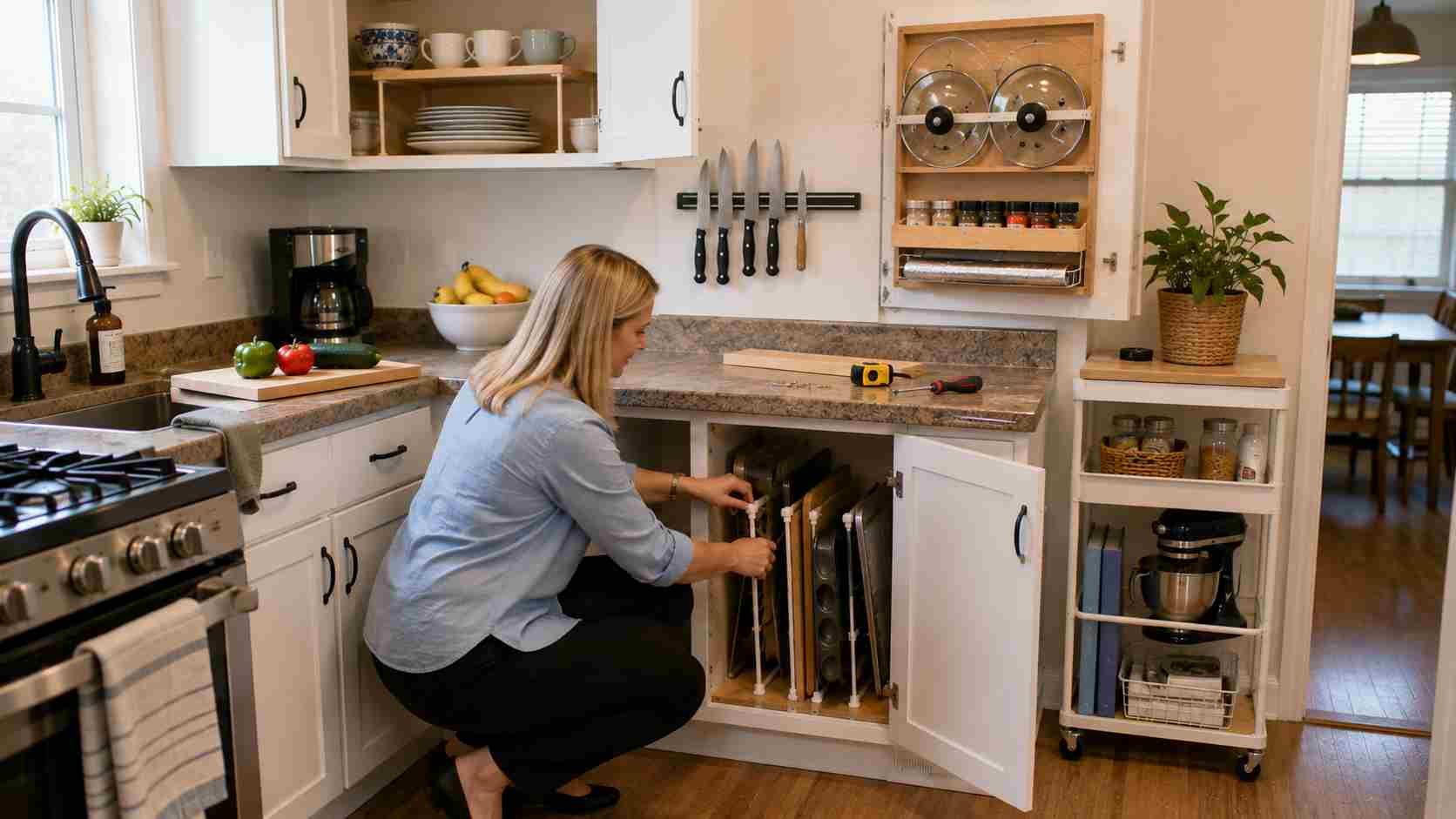
When stored flat, baking sheets, cutting boards, and serving trays are stacked together. That stack becomes individual vertical slots with a simple DIY divider, which can be made from tension rods, an old file organizer, or a piece of scrap wood.
Door-Mounted Storage
It is virtually always a waste of cabinet space to have anything inside the cabinet door. Spice racks, lid organizers, cutting board holders, and more can be mounted here without disturbing existing shelving, and are particularly suitable for cabinets with limited depth.
| Cabinet Organization Method | Best For | Approx. DIY Cost | Install Time |
| Stackable risers | Plates, mugs, canned goods | $10-$25 | 5 minutes |
| Pull-out drawer kit | Pots, pans, mixers | $25-$60 per cabinet | 30-45 minutes |
| Vertical tray dividers | Baking sheets, cutting boards | $8-$30 | 15-20 minutes |
| Door-mounted racks | Spices, lids, foil/wrap | $10-$20 | 10 minutes |
| Lazy Susan / turntable | Corner or deep cabinets | $15-$35 | 5 minutes |
3. DIY Kitchen Drawer Organization Ideas
Drawers get messy quicker than cabinets, since gravity doesn’t seem to help stop anything from falling out of them. Effective DIY kitchen drawer organization is based on dividing the drawer in half to prevent items from moving or piling up. These simple hacks for kitchen organization can help keep each section tidy and make everyday items easier to find.
Custom-Fit Drawer Dividers
The pre-made adjustable dividers will fit standard drawers, but a true custom diy kitchen drawer organization idea is to cut thin strips of plywood or MDF and glue them into a grid in the drawer’s interior. This is particularly helpful for the deep drawers used for the storage of pots or small appliances, but not utensils.
Pegboard Drawer Inserts for Dishes
Adjustable drawer compartments are another advantage with this pegboard base since they can be easily changed to fit the diameter of plates and bowls without them ever shifting or chipping, a common problem in fixed slot organizers.
Layered Utensil Trays
If you have a junk drawer or a utensil drawer, place 2 shallow trays: one for everyday utensils such as spatulas and can openers, and a second one underneath for the gadgets you don’t use as often. This is a ‘layered’ approach that increases capacity by approximately 100%.
Labeling for Shared Kitchens
If you have children or several cooks in the house, label each drawer compartment. Of course, this is a small step, but it makes a significant difference in the rate at which drawers fall back into disarray; everyone, not just the drawer’s organizer, knows where everything belongs.
4. DIY Kitchen Countertop Organization Hacks
The DIY kitchen countertop organization hacks address a different issue than cabinets: it’s the clutter that’s visible and makes the kitchen appear smaller and messier than it really is, even if all the items on the counter “have a place”.
How to Create More Counter Space in a Small Kitchen
When it comes to additional counter space in the kitchen, the obvious solution is to go up. Under-cabinet shelves, wall-mounted magnetic strips for knives, and hanging rail systems for utensils do not require any extra inches of space.
DIY Rolling Cart as a Counter Space Saver
A kitchen counter space saver that can roll away when not in use to store in a pantry or against a wall, then roll out when you need to prepare meals or cook during a holiday.
Appliance Garage for Small Kitchen Counter Space
The number one cause of visual clutter is small toasters, coffee makers, blenders, etc., on the counter. They are hidden under upper cabinets in a DIY ‘appliance garage’ (a tambour door or curtain track) without having to lift anything into the cabinets every day.
Tiered Risers for Small Items
Tiered stands for fruit, oils, or spice jars bring multiple units to a single vertical space and are among the easiest small kitchen counter space wins to find for less than $15.
5. How to Organize a Small Pantry
Organising a small pantry is all about visibility and zoning, the first two elements to be lost in a cramped pantry.
Clear Containers for Visibility
One of the most successful pantry organization ideas is to change the containers where dry goods are stored into uniform, labeled, clear containers, where you can easily tell how full they are and where space is not being wasted on odd-shaped boxes.
Zone Your Pantry by Category
A little-known pantry organization tip is to organize items by use (breakfast, baking, snacks, canned goods) rather than alphabet or random order. This reflects the actual purchasing and cooking habits of consumers, and restocking is quicker.
Door-Back Storage for Small Pantries
If you don’t have a lot of space in your pantry, then an over-the-door shoe organizer or shallow wire rack is a great way to get an extra “shelf” of storage that can hold spice packets, snack bags, or condiments in apartment-sized pantries.
Lazy Susans for Deep Pantry Shelves
Items are absorbed by deep pantry shelves at the back. With a spin from a turntable, everything is within reach, not three items to reach a fourth.
6. Corner Cabinet and Awkward Space Solutions
The most underutilized storage in any kitchen, and none of the big storage guides for kitchen spaces mention them.
Corner Cabinet Storage Ideas: Lazy Susans vs. Pull-Outs
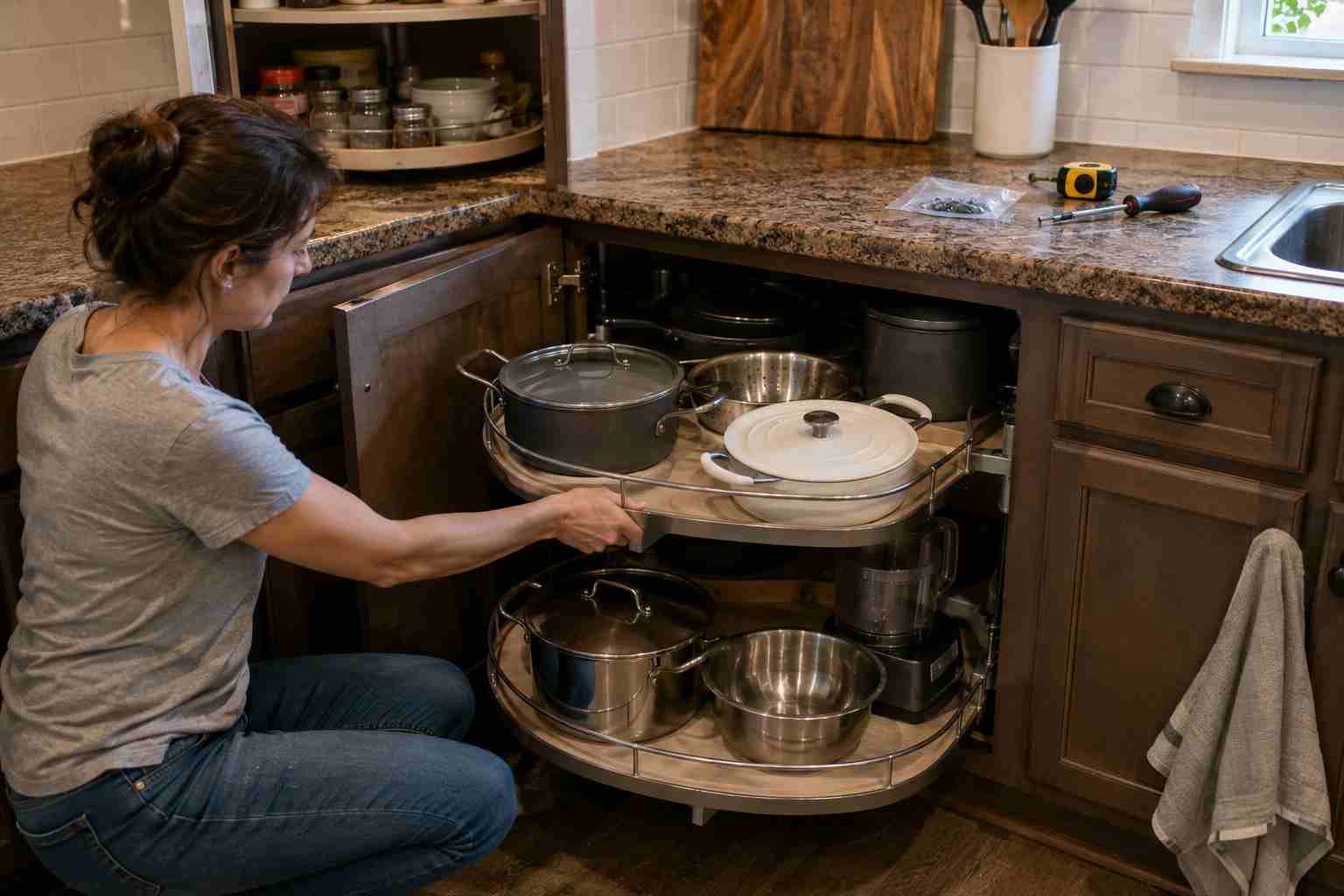
When it comes to corner cabinet storage ideas, you can choose to install a rotating Lazy Susan (which is great for round, lighter objects such as mixing bowls) or a swing-out/pullout shelf system (which is better for heavier cookware, as it isn’t dependent on spinning).
Building Kitchen Cabinet Corner Shelves
If there is no shelving in your corner cabinet, you can make simple L-shaped kitchen cabinet corner shelves with plywood cut to fit the interior of the corner cabinet, which you can support with a few cleats, and which can be assembled in under an hour for a beginner-level project.
Corner Countertop Storage
An L-shaped or tiered corner shelf unit takes advantage of the space between two counters, which is often wasted because normal appliances and containers will not fit into the corner.
| Corner Solution | Difficulty | Weight Capacity | Best For |
| Lazy Susan turntable | Beginner | Light-medium | Bowls, spices, canned goods |
| Swing-out pull-out shelf | Intermediate | Medium-heavy | Pots, small appliances |
| Built-in corner shelf | Intermediate | Medium | Plates, glassware |
| Corner countertop tier | Beginner | Light | Oils, small jars, coffee gear |
7. DIY Kitchen Food and Appliance Storage
DIY Kitchen Food Storage Systems
The key to diy kitchen food storage is “first in, first out.” New items should be stored in the back, and the oldest should be taken first. In addition, use clearly marked bins in the fridge and freezer to help prevent forgotten food from going to waste. The USDA estimates that 30–40% of all available food in the U.S. goes uneaten through food loss or waste.
DIY Kitchen Appliance Storage for Small Kitchens
A counter-height pull-out shelf in a lower cabinet enables you to reach heavy items such as stand mixers or other appliances without lifting them from the low cabinet, saving your back and counter space while you’re storing them.
General DIY Kitchen Storage Hacks Roundup
Here are a few more DIY kitchen storage hacks that are easy to incorporate into any system: hang spray bottles upright with tension rods under the sink, attach magnetic strips inside cabinet doors for metal lids, and use repurposed shoe organizers to organize shallow, light items in the pantry.
8. Kitchen Sink Organizer DIY Ideas
The under, in, and around the sink area is one of the busiest and most cluttered areas of the kitchen.
Kitchen Sink Organizer DIY for the Countertop
The basic diy kitchen sink organizer is a small caddy or tension-mounted tray that is placed over the divider of a double-basin sink, keeping sponges and brushes off the wet side, allowing them to dry faster and remain cleaner.
Under-Sink Pull-Out Trays
The U-shaped pipe beneath most sinks takes up a third of the cabinet space, so a single fixed shelf isn’t much space, but two shallow pull-out trays on either side will allow almost all of that cabinet to be used.
Vertical Storage for cleaning supplies.
A tension rod is attached a few inches from the top of the under-sink cabinet so that you can hang spray bottles by the trigger handle, leaving the entire cabinet floor clear for bins or trash bags.
FAQ: People Also Ask
What’s the cheapest way to start a DIY kitchen organization?
You don’t have to spend a penny to declutter, and it is the most obvious change you can make. Then, drawers, under-sink storage, and pantry zoning can be done with tension rods, repurposed jars, and cardboard or shoebox dividers for less than $5 before you invest in purchased organizers.
How do I organize kitchen cabinets that are too deep?
Install a pull-out shelf or lazy Susan so that things in the back can be easily reached without having to take out all the items in front of it. Deep cabinets are also great for items that are used sparingly, such as stockpots, as depth doesn’t matter when they’re used every day.
What should go in kitchen drawers versus cabinets?
Flat or stackable items you use every day (utensils, dish towels, small tools) will fit into drawers best because they open wide and display everything at once. Cabinets are ideal for taller things and items that you don’t need to access right away, such as pots or bulk pantry items.
How can I get more counter space in a small kitchen?
Store small appliances in an appliance garage or cabinet shelf; store items typically on the counter under a cabinet or on a wall; use a rolling cart for a movable prep space rather than a fixed table.
What’s the best way to organize a small pantry?
Use clear, labeled containers and zone shelves by category rather than randomly. Door-mounted racks and turntables also add meaningful storage without any structural changes.
How do I fix a wasted corner cabinet?
Install a Lazy Susan for lighter round items or a swing-out/pull-out shelf system for heavier cookware. Both retrofit into most standard corner cabinets without replacing the cabinet itself.
Do I need special tools for DIY kitchen organization projects?
Most projects in this guide need only a screwdriver, tape measure, and basic saw for cut-to-fit shelving. Adhesive-mounted products need no tools at all, though screws generally hold up better for heavier items.
How often should I redo my kitchen organization system?
Reassess drawers and the pantry every 3-6 months and full cabinets annually, since usage patterns shift with seasons, new appliances, or changes in household size.
Conclusion
The trick to getting DIY kitchen organization right is not increasing the number of bins; it’s creating a system that works for how you use each area. Three tips to take home and put in your own kitchen: clear out and measure before you purchase anything, focus on the areas you use every day (drawers, counters, sink), and don’t overlook corner cabinets; they are the most underused space in the kitchen.