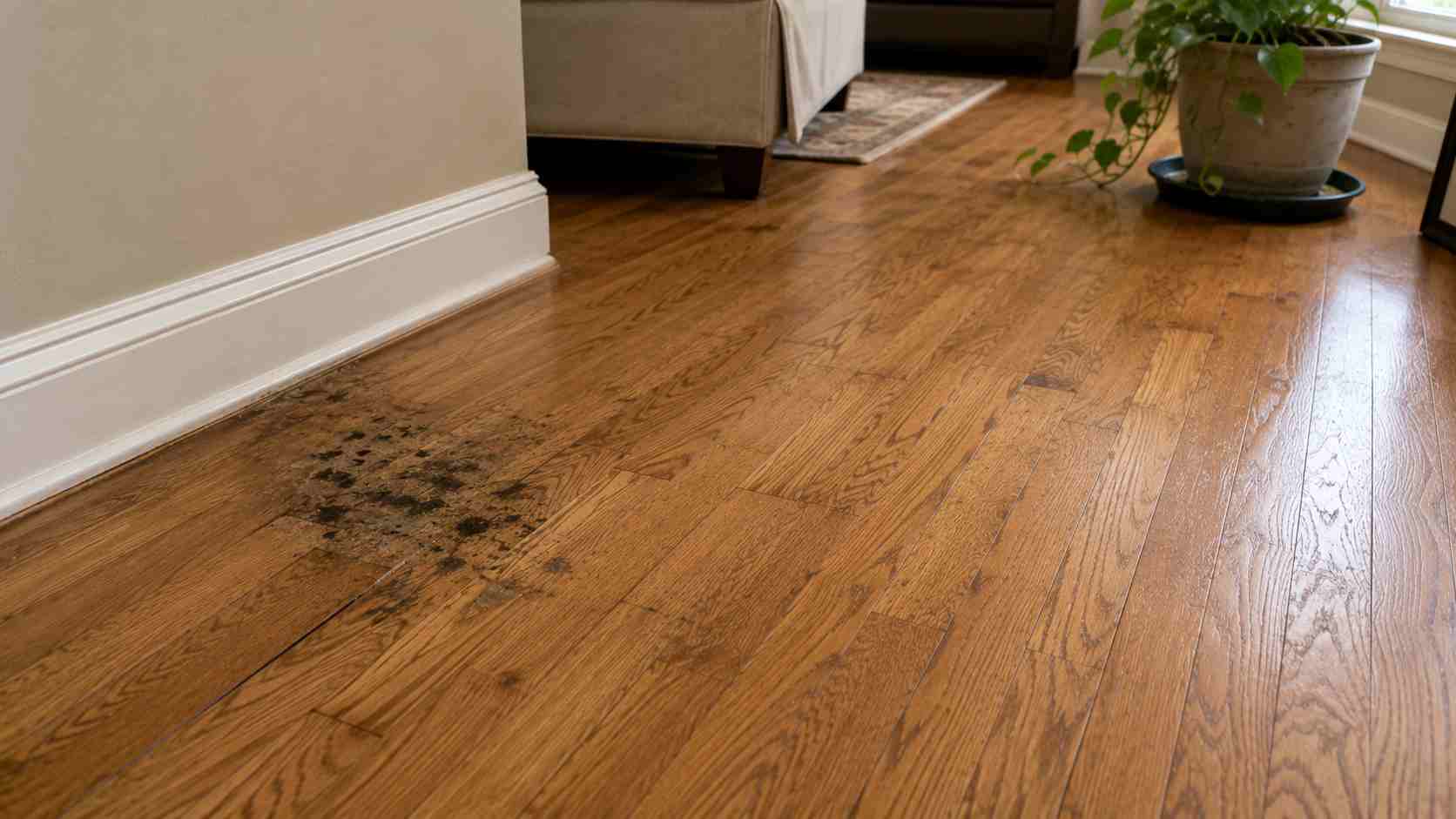
About 70% of homes have moisture intrusion that can allow mold to grow, and hardwood floors are the most porous and organic surface in the home, supporting mold growth. If you notice any dark spots, musty odors, or soft, discolored areas near a hardwood floor’s baseboard, you have a problem with mold spots on the hardwood floor’s surface, and you will save money the sooner you do something about it.
You’ll discover what makes hardwood floors moldy, how you can find mold under hardwood boards, if it’s safe, how to treat and remove hardwood mold, hardwood mold vs. mold on concrete, mold on bathroom surfaces and how to prevent it, the truth about bleach, and more.
What Causes Mold on Hardwood Floors
Mold requires food, air, and moisture. The first two are provided by wood: cellulose is a readily available food source, and floors are exposed to air. This means moisture is the final factor to determine if mold spots on hardwood floor sections will occur.
Hidden Leaks, Flooding, and Humidity
A slow, unnoticed leak, such as a dishwasher line, a toilet seal, or a roof leak dripping through the roof, is the most common cause. These leaks may be slow and subtle enough that homeowners may not realize a problem exists until a musty odor is detected or boards cup. Excess moisture in the subfloor material can also cause mold to start growing if it has not been dried within 24-48 hours after the flooding. When relative humidity remains high for prolonged periods (usually above 60%), mold spores germinate and grow on their own, typically in basements, laundry rooms, and poorly ventilated enclosed sunrooms.
Poor Subfloor Ventilation and Installation
Where crawl spaces are underneath houses that are not covered with a vapor barrier, the moisture rises from the ground into the subfloor, which typically is not visible. Hardwood installed over an uncured subfloor, or finished without sealant at seams, also gives water an easy entry point.
Signs of Mold Under Hardwood Floors
Not all mold shows itself with visible spots. In most cases, mold growth between the hardwood and subfloor is more destructive as it is hidden from sight. Look for these signs of mold under hardwood floors: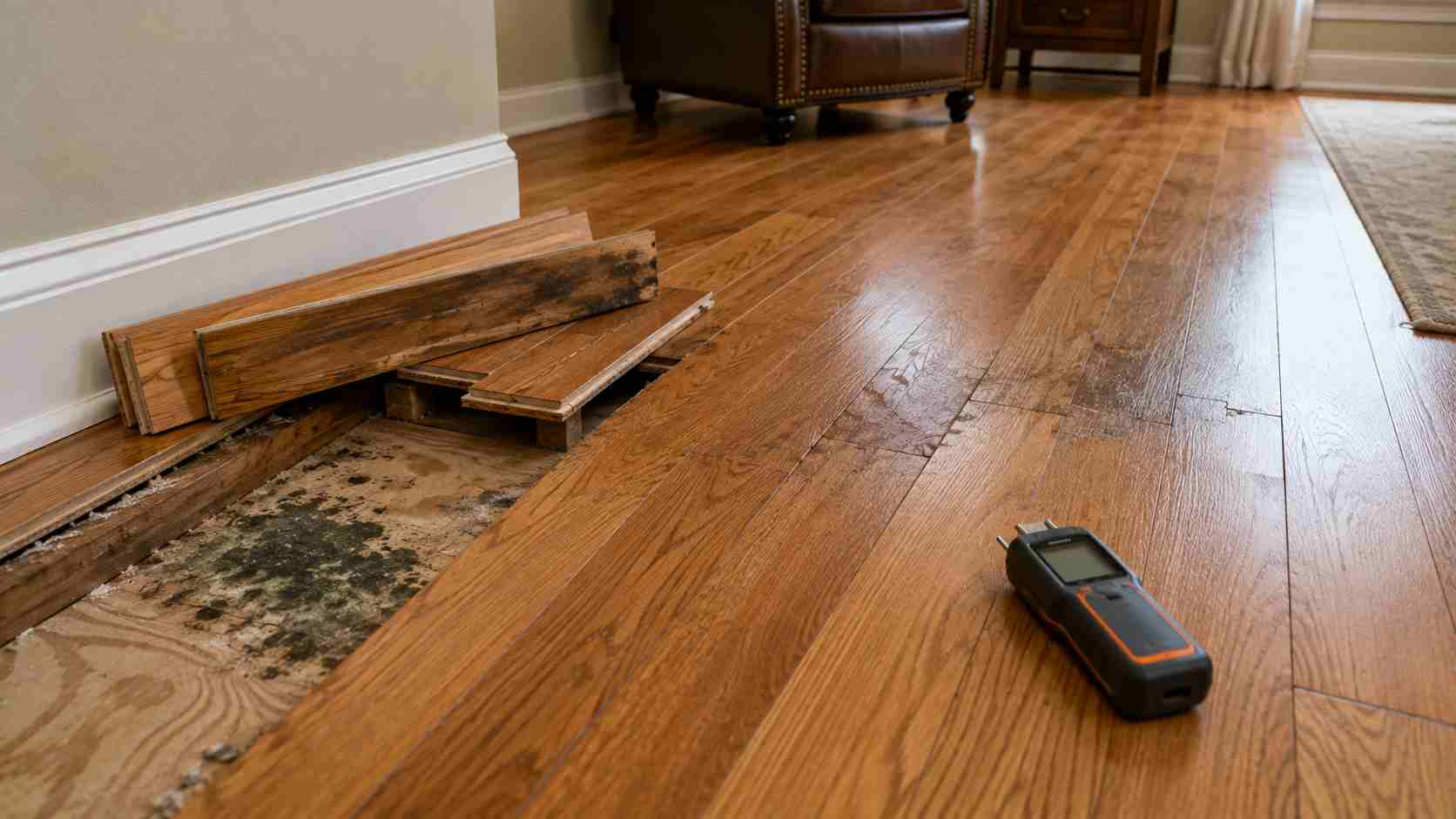
Odor, Discoloration, and Structural Changes
The first hint is a lingering musty odor that will not go away after cleaning. If there are dark streaks down seams or a grayish discoloration without a spot, it indicates that mold is growing in fibers underneath. Crowned edges, crowning in the center, and buckling as it separates from the subfloor indicate moisture problems that allow for mold growth, and a spongy area underfoot suggests that the subfloor may be damaged. If your symptoms of sneezing, cough, or eye irritation get better when you are away from home and worse when you come back, it could also indicate airborne spores.
| Sign | What It Suggests | Urgency |
| Musty odor, no cause | Mold under floor/subfloor | High |
| Cupping/buckling boards | Active moisture intrusion | High |
| Surface discoloration only | Early-stage surface mold | Moderate |
| Soft, spongy floor sections | Subfloor rot/mold risk | Critical |
| Recurring allergy symptoms | Airborne mold spores | High |
Is Mold on Hardwood Floors Dangerous?
In most healthy adults, exposure to a small area is not a medical emergency, but it is not something that can be ignored. According to the CDC, people with asthma, allergies, and compromised immune systems are the most vulnerable to health impacts from mold exposure and risk developing congestion, throat and eye irritation, coughing, and skin irritation. The actual threat that the spot poses is the fact that it’s a moisture issue that’s ongoing. When you leave mold untreated, it continues to grow beneath the floor, damages the subfloor, and may force you to remove and replace the affected materials instead of simply cleaning them. EPA does not recommend DIY remediation for growth of more than approximately 10 square feet. Children, older adults, pregnant women, and people with chronic lung diseases should avoid entering the room and should not perform mold treatment there.
Black Mold Spots vs. White Mold Spots on Hardwood Floor
Color is NOT a definitive species characteristic, but does help determine severity and approach. The most concerning black mold on the surface of hardwood floors is the spots of black mold, which are actually allergenic and should be removed, and are caused by Aspergillus or Cladosporium, rather than the actual toxic black mould Stachybotrys chartarum, which must be tested in a laboratory to confirm the presence of the mold. By contrast, homeowners often mistake white mold spots on hardwood surfaces for dust or mineral deposits and delay treatment. These powdery or thread-like spots grow quickly because they are difficult to detect, and they commonly appear in newly flooded areas or damp basements.
| Type | Appearance | Common Cause | Concern |
| Black mold spots | Dark, sooty, clustered | Chronic moisture | High |
| White mold spots | Powdery, thread-like | Fresh water damage | Moderate-High |
| Green/gray mold | Fuzzy, patchy | Localized damp spots | Moderate |
| Mold stain (no growth) | Flat, discolored | Killed but not cleaned | Low |
How to Treat and Get Rid of Mold Spots on Hardwood Floor
Steps 1–3: Protect, Vacuum, and Choose a Solution
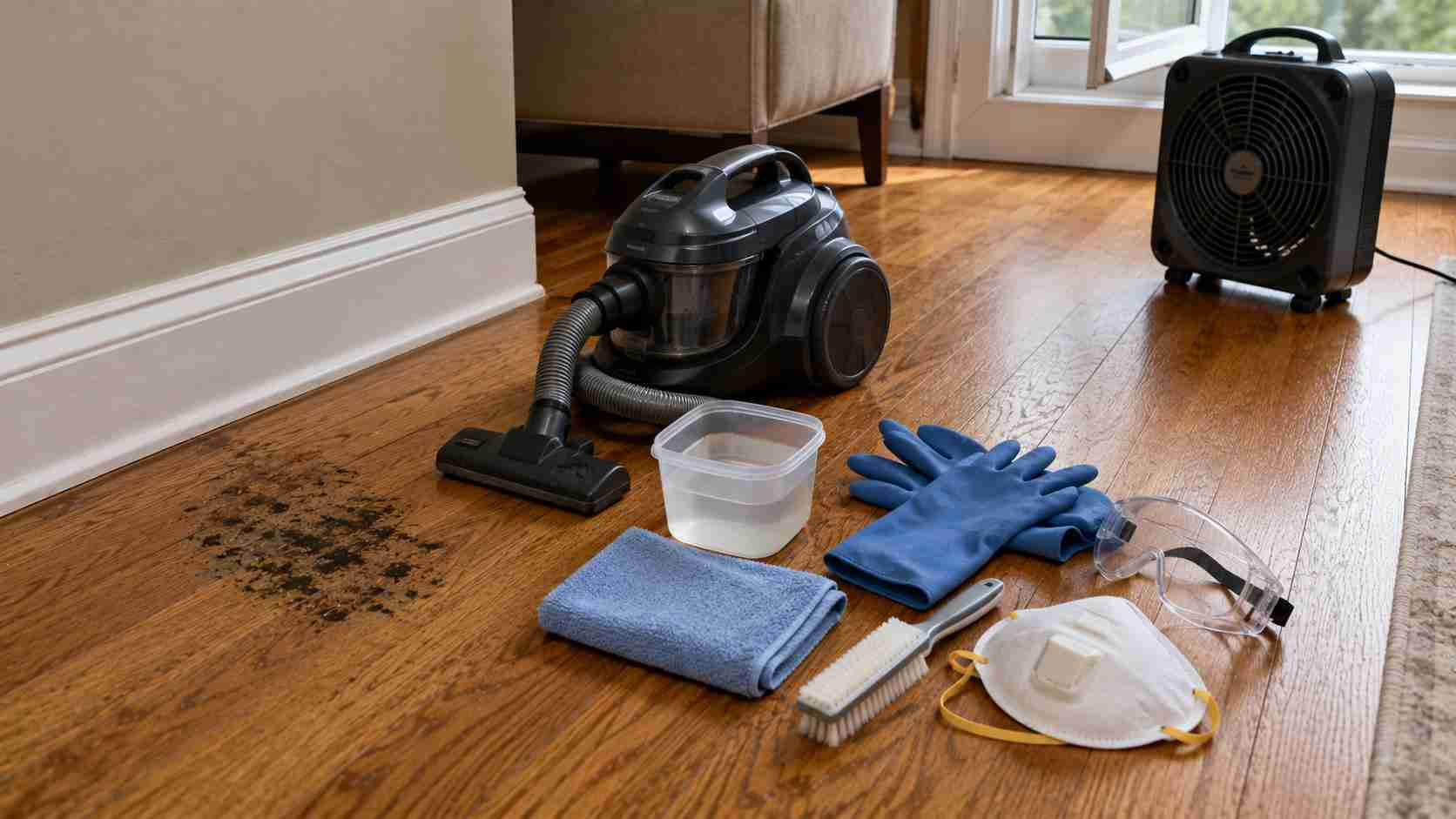
Use gloves, an N95+ respirator, goggles, open windows, and a fan. Use a HEPA-filtered vacuum before applying any liquid products to the area, and use a 2-foot perimeter to remove spores. A 1:1 ratio of white vinegar to water will be effective for light mold, and a cup of borax per gallon of hot water is more effective and will not regrow for heavier infestations.
Steps 4–5: Apply, Dry, and Check the Subfloor
Use a soft brush or microfiber cloth to gently brush or wipe the wood grain, but do not soak it, since standing liquid will penetrate seams. Wipe dry right away and let it air dry with a fan or dehumidifier for 24-48 hours; this is the most common route of mold recolonization. If mold keeps returning within a short time, or if you notice cupping or smell mold before treating the surface, lift a board (or ask a professional to lift one) to check for mold growing underneath.
When to Call a Professional
If the area covers more than 10 square feet, mold is under the floor covering, a member of the household has a weakened immune system or severe asthma, or the odor does not go away after cleaning, call a certified remediation specialist.
Does Bleach Kill Mold on Wood?
One of the most often asked and misinterpreted questions about hardwood mold removal. Bleach will kill mold on contact, but will not penetrate porous wood as it will non-porous tile or glass. It is primarily water and frequently will cause moisture to enter the grain in the process, which will stimulate regrowth. Bleach will also lighten the staining of black mold on wood at the root, but the mold’s hyphae will remain intact beneath the surface and emerge later.
Generally, vinegar, borax, 3% hydrogen peroxide, or an enzymatic wood-safe cleaner are more effective at killing black mold without the moisture risk. When bleaching wood that is to be replaced, dilute bleach 1:10, apply sparingly, and dry promptly.
Removing Mold Stains on Hardwood Floor After Treatment
Mold stains on hardwood floorboards may still be visible after the mold is dead, as mold pigments go down deep into the wood fibers, not just the finish. You can remove light discoloration by applying a baking-soda-and-water paste for 10–15 minutes. If the stain penetrates the finish, lightly sand the area with 220-grit or finer sandpaper, then apply matching stain and sealant to refinish the spot. Always test the repair method in an inconspicuous area first. In high-traffic areas, repeated refinishing can be more expensive than replacement of the entire board if staining has gone deep into the wood.
How to Stop Mold From Coming Back
Eliminating current mold is a good solution to the present problem, but preventing future mold growth requires tackling the moisture source.
Control Humidity, Fix Leaks, and Reseal
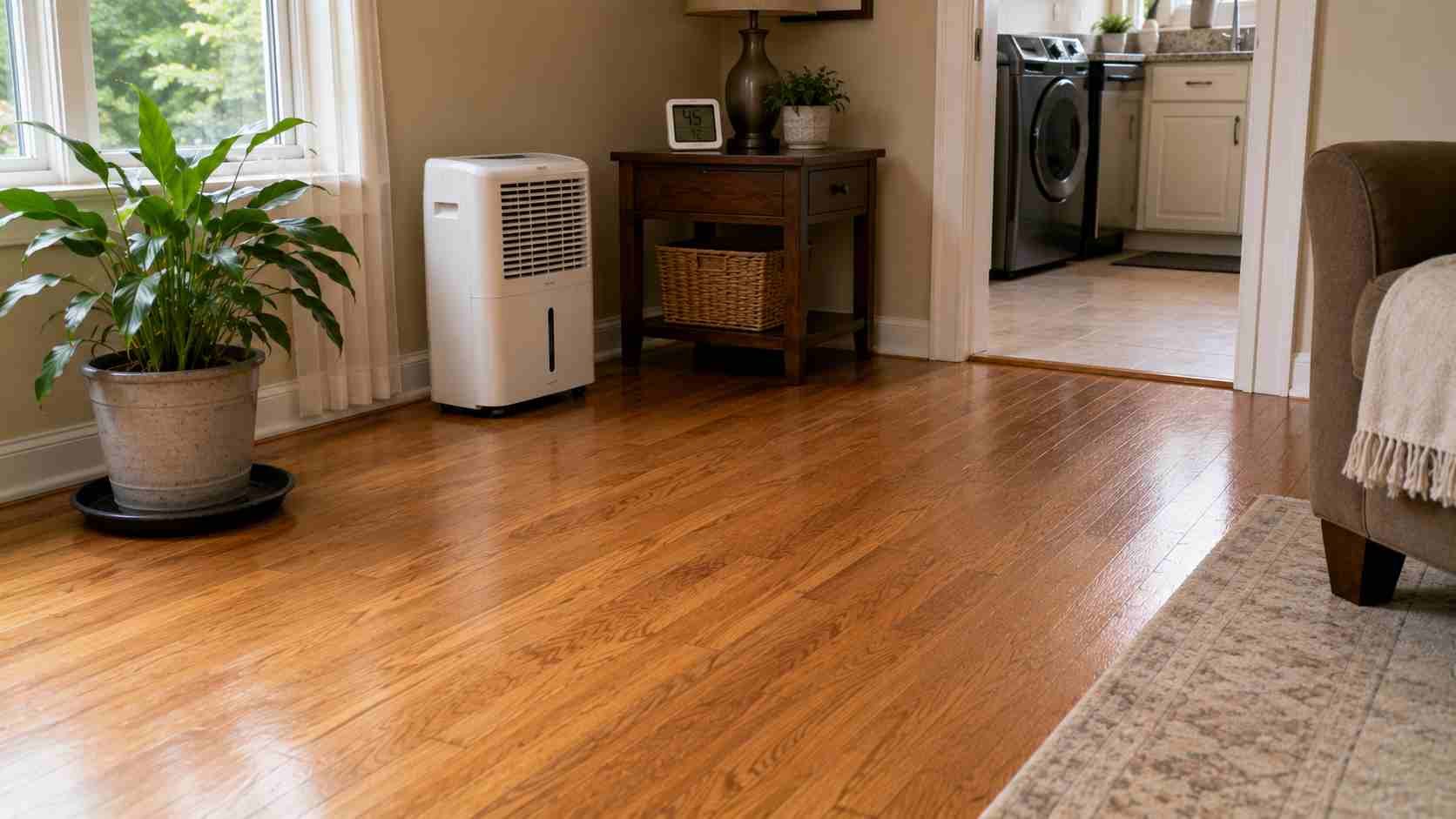
Monitor and control relative humidity in problem areas in the house with a hygrometer and dehumidifier, 30-50%. Check under sinks, around toilets, and around appliances every few months, fix all leaks as soon as possible, operate exhaust fans during and after showers, and reseal hardwood every 3-5 years (more frequently in humid climates).
Apply the Same Principles Elsewhere
To stop mold in the bathroom, and to stop mold from growing in bathroom spaces in general, depends on the same principles: control humidity, increase air circulation, and dry surfaces quickly. Mold-resistant paint, proper insulation gap repairs, and regular humidity monitoring protect the structure beneath your flooring, while wall and floor problems often affect each other.
Mold on Hardwood vs. Mold on Concrete Floors
It is important to understand how mold will react on hardwood and concrete floors if there are both surfaces in your home. Will black mold grow on cement? Yes, although concrete itself is not an organic food source, dust and debris on its surface can provide enough nutrients for black mold to grow on concrete floors, especially in damp basements. One of the most frequent misconceptions is that mold and mildew are the same thing; in fact, mildew is lighter and will remove easily, while mold is deeper and will reappear if not treated at its source. You can clean mold from concrete floors with stronger solutions than you would use on wood because concrete has a non-porous surface. Use diluted bleach (1:10) or a commercial concrete mold remover, scrub the affected area, and rinse it thoroughly. Unlike hardwood, concrete does not trap moisture in the same way when you use bleach.
FAQ: Frequently Asked Questions
What causes mold on hardwood floors?
Excess moisture combined with the wood’s organic material, typically from hidden leaks, high humidity, flooding, or poor subfloor ventilation. Consistent moisture above 60% relative humidity can trigger growth within 24–48 hours.
What kills black mold on wood most effectively?
Vinegar, 3% hydrogen peroxide, and borax solutions will effectively kill black mold on wood but do not damage the wood finish as bleach would. These solutions penetrate the mold without pushing additional moisture into the wood.
Is mold on hardwood floors dangerous to my health?
Mold exposure can lead to respiratory irritation, allergic reactions, and exacerbation of asthma in susceptible people. In small amounts, it’s not an emergency for healthy adults, but it’s a sign of a moisture issue that will get worse if not addressed.
Will bleach kill mold on wood permanently?
Bleach will kill visible mold on the surface, but will not be effective in permanently removing the mold under porous fibers. It may introduce moisture into the fibers that will promote regrowth.
How do I know if there’s mold under my hardwood floors?
Symptoms involve a frequent “musty” smell, cupping or buckling boards, soft spots under the feet, and allergy symptoms that get better when moving away from the house. It can be confirmed by a moisture meter or subfloor inspection.
Can I remove a mold stain on hardwood floor without sanding?
Light staining can be buffed off with a baking soda paste, but deeper, entrenched stains will typically need the use of light sanding and spot-refinishing; the stain has gone through the finish.
How is mold different from mildew on hardwood or concrete?
Mildew appears lighter and wipes away easily, while mold penetrates deeper and returns quickly if you do not correct the moisture source.
Conclusion
Mold on hardwood surfaces not only creates an eyesore but also signals a moisture problem that will keep causing mold until you fix the root cause. Follow these three tips: First, determine whether the mold sits only on the surface or indicates a deeper problem with the subfloor. Second, use vinegar, hydrogen peroxide, or borax instead of bleaching the hardwood. Finally, fix the humidity, leak, or ventilation issue to prevent the mold from returning.
If your mold infestation is larger than approximately 10 square feet, persistent, or you are experiencing soft spots and warping, reach out to a certified remediation or flooring expert. With the steps in this guide, most hardwood mold issues can be totally controlled if caught early and treated properly.