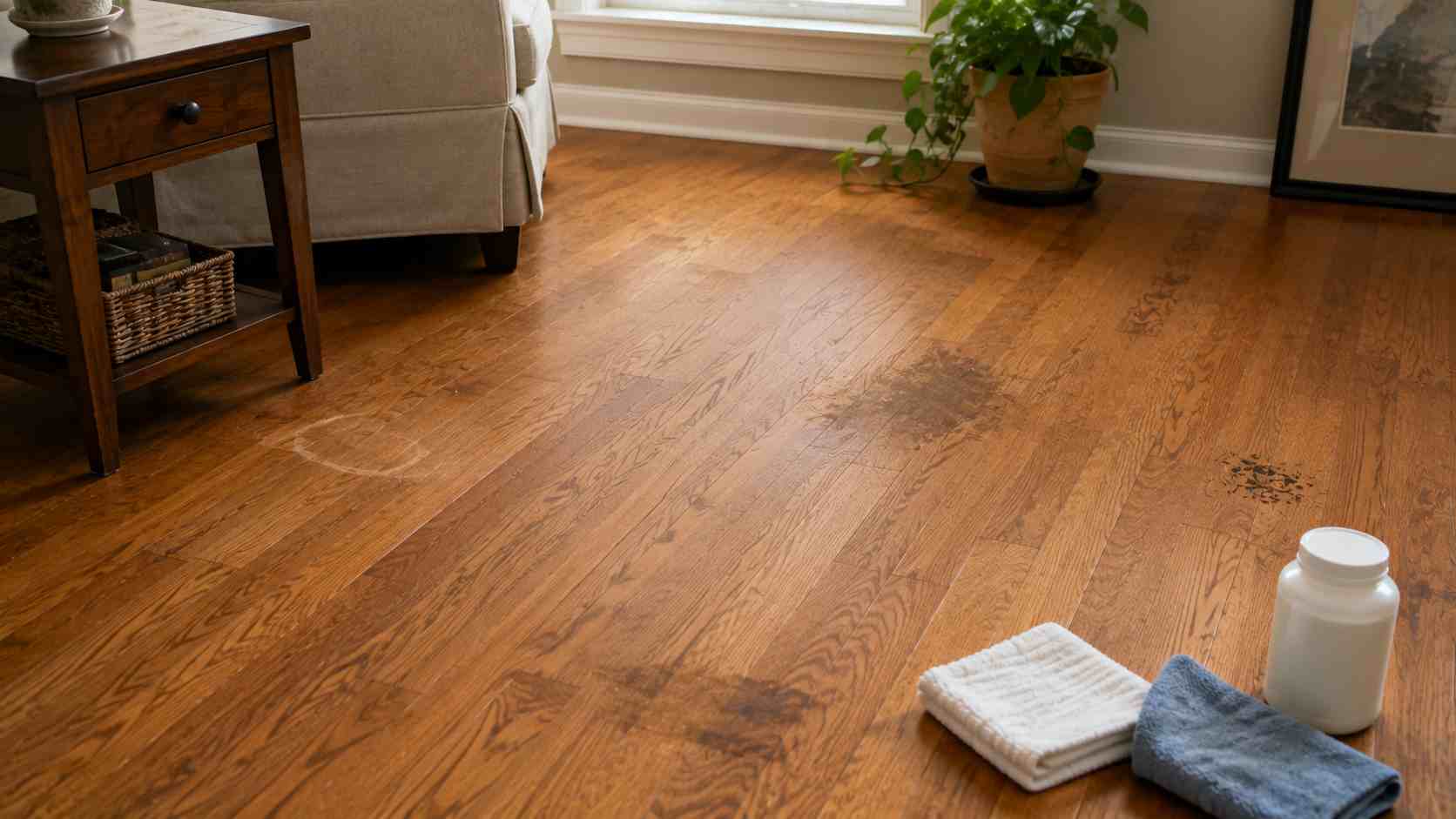
Almost one-third of homeowners who own hardwood floors have at least one unsightly stain that they can’t clean up with a store-bought cleaner, typically from pets, water, or spilled food. The happy news is that most of these marks can be removed without renting a sander or hiring a flooring company.
When you’re wondering how to remove stains from a wood floor, you probably have one of a few things to deal with: dark water rings, pet accidents, oil splatters, or old black stains that appear to be baked into the floor’s grain. They require different kinds of treatment, and if the wrong one is used, it can make the stain go deeper or ruin your finish.
You will discover what type of stain you have, the best way to remove each type, ways you can remove dark stains from hardwood floors without sanding, and when stains require a professional refinishing.
Why Wood Floors Stain
Wood is porous. A scratch or thinning of the sealed finish (polyurethane, wax, or oil) allows liquids and pigments to penetrate the wood fibers, as opposed to chemical or mechanical lifting.
The Three Layers a Stain Can Reach
A stain can be on the surface finish ( easiest to clean), inside finish scratches ( moisture or oil that lodges in a groove), or down in the wood fiber itself where it may turn black or gray (the most difficult), and what most people refer to when asking how to remove a dark stain from a hardwood floor.
What Causes Black Stains on Hardwood Floors
The color of the stain is caused by the moisture reacting with natural tannins in the wood, and, as in the case of tannic acid, the color will darken with time. Common causes: pet urine seeping through the finish, an unsaucered houseplant, a leaking appliance, or mineral buildup when mopping with a soaking-wet mop. These stains are typically not treated with soap and water and are usually treated with an acid-based or oxidizing treatment because these stains are a chemical reaction.
How to Get Water Stains Out of Wood Floors
These white spots on hardwood floors are actually a water-stain variety; water is trapped in the finish and fogs it up, like a foggy window that clears up when the water evaporates.
Iron and Cloth (Best for White/Light Stains)
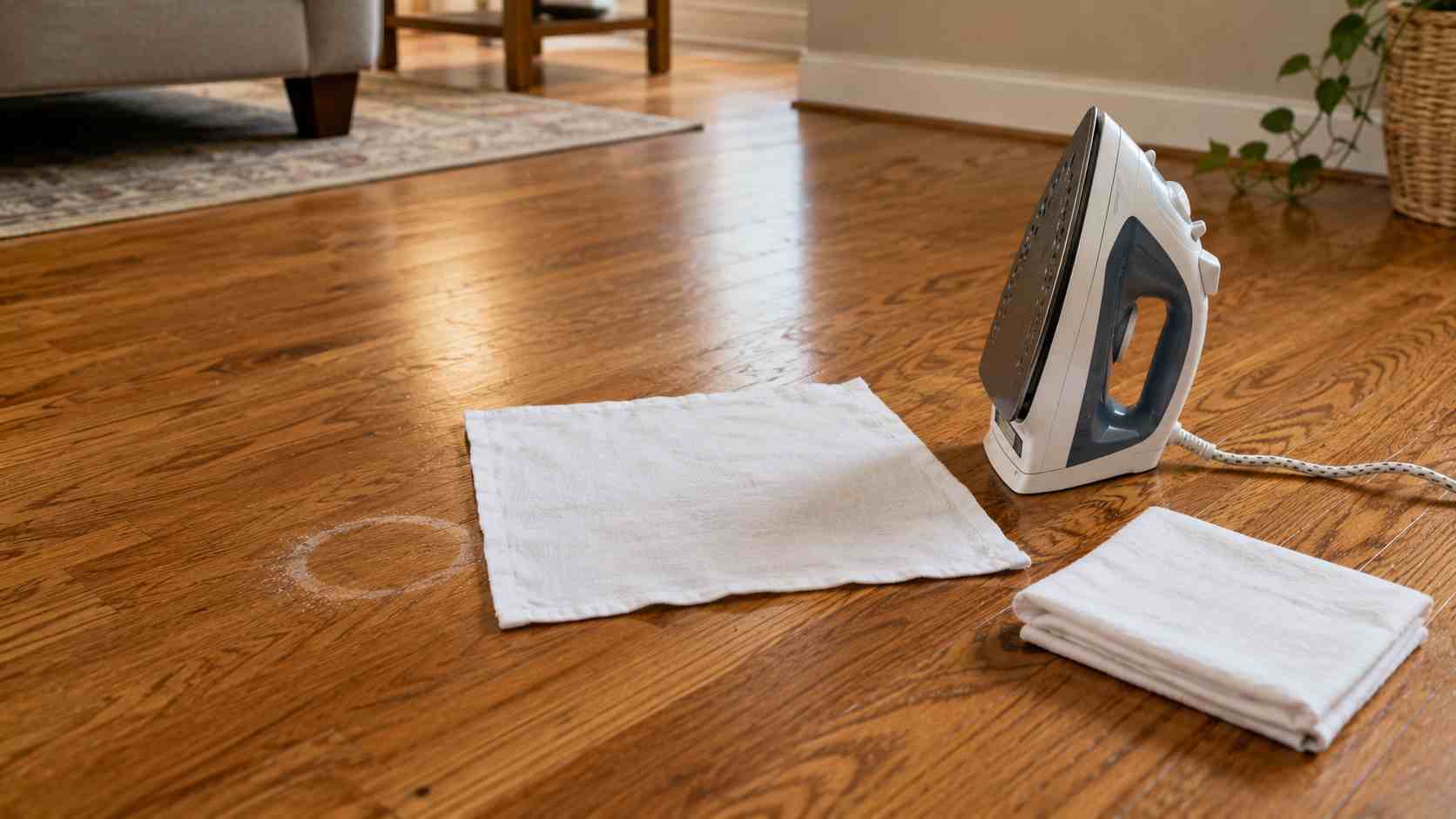
To remove white spots on hardwood floors, cover the stain with a dry cotton cloth, then press a low-heat iron (without steam) over it for 10–15 seconds. Move to a dry section of the cloth and repeat until the white haze disappears. The gentle heat helps release trapped moisture without softening the surrounding finish.
Mayonnaise or Petroleum Jelly (Overnight Method)
Apply a thin layer to the stain, cover it with plastic wrap, and leave it for 8-12 hours. The oils gradually replace the moisture that has become trapped in the wood, one of the most effective methods for removing stains from wood floors overnight.
Baking Soda Paste (Deeper Rings)
Apply a paste of baking soda and water, wait 15 minutes, wipe it off with a wet cloth, and buff with a dry cloth. Useful for rings that have gone just under the surface.
How to Get Pet Stains Out of Wood Floors
Pet urine has an acidity and ammonia content that reacts with wood tannins, a mix of chemical stains and smell. Treat it by neutralizing, then lifting.
Fresh Accidents
Blot (do not rub), then apply 1:1 white vinegar and water and blot. This prevents the ammonia reaction from going deeper.
Old or Set-In Stains
Apply a thick paste of hydrogen peroxide and baking soda (about 2:1) and leave for 6-8 hours. Vinegar alone is not as effective as peroxide, as it will not oxidize the compounds that cause both the discoloration and the odor. If the smell or discoloration comes back after cleaning, the accident was more than likely into the subfloor and requires a board-level repair.
How to Get Dark and Black Stains Out of Hardwood Floors
This is the most common question people ask about removing stains from hardwood floors without sanding an entire room, which is typically just a spot treatment.
Oxalic Acid (Wood Bleach)
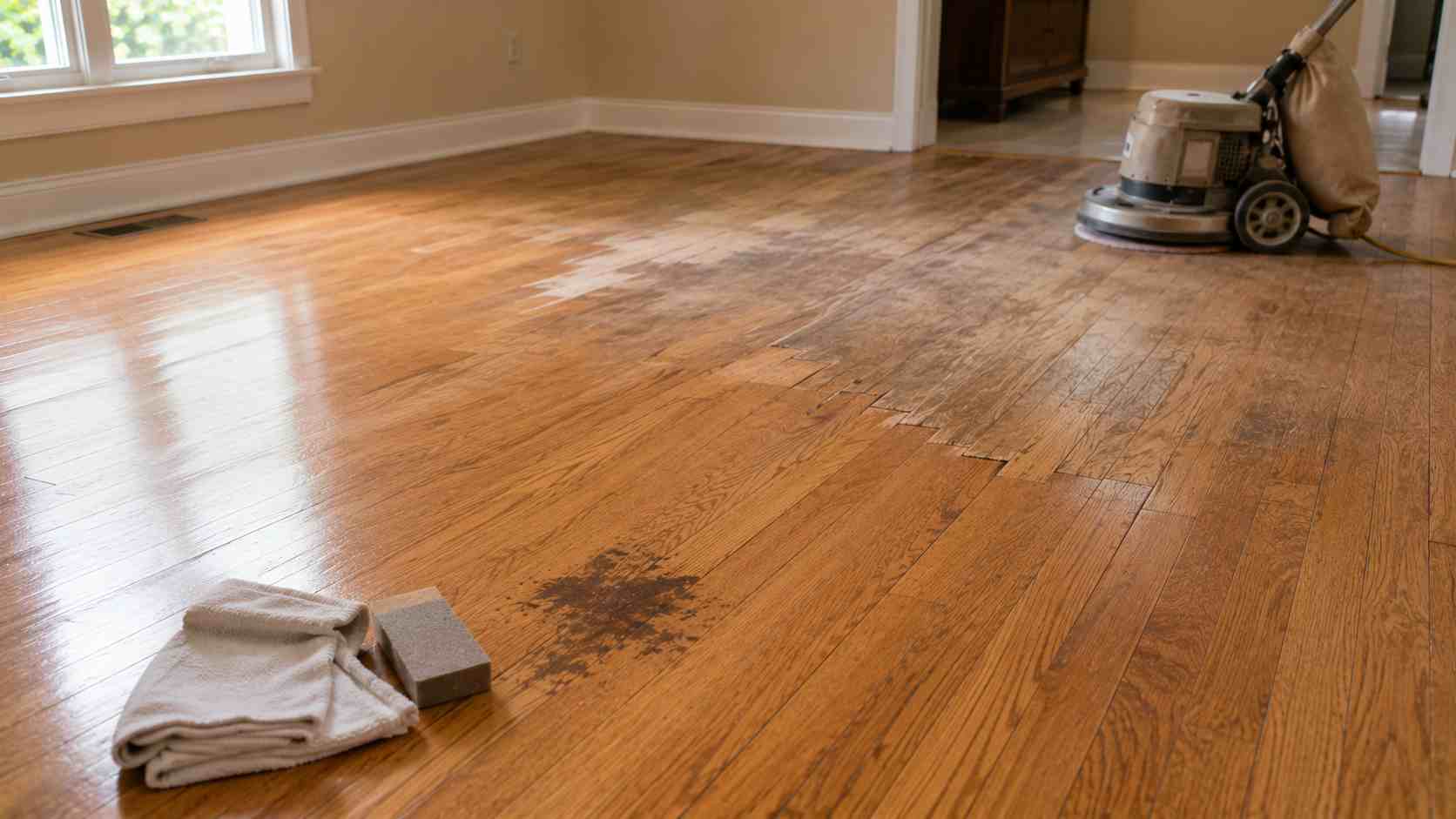
Sand the finish lightly only on the stained area with a 220-grit sanding sponge, mix oxalic acid crystals with warm water according to the label, and brush the area for 20-30 minutes with the solution, keeping the area wet. Rinse well and dry for 24 hours; repeat if necessary; then re-stain and re-seal to match.
Vinegar and Steel Wool
Use extra-fine (0000) steel wool and a drop of mineral oil to lift light scorch marks, working with the grain. For deeper burns, scrape away the char with a sharp blade, sand the area from 120 to 220 grit, then restain and reseal it.
The entire finish is removed from a whole board or room with full chemical stripping, or it can be spot bleached with oxalic acid, preventing the need to sand the rest of the room.
Oil, Burn, and Bleach Stains
How to Get Oil Stains Out of Wood Floors
Water-based cleaners will only spread the oil. For a fresh spill, cover it with cornstarch or baking soda, let it absorb the oil for 12 hours, and then vacuum it up; never wipe it wet. For oil stains that are set in and old and have already blackened the wood, the above oxalic acid treatment is usually the answer.
How to Get Burn Marks Out of Wood Floor
Use extra-fine (0000) steel wool and a drop of mineral oil to lift light scorch marks, working with the grain. For deeper burns, scrape away the char with a sharp blade, sand the area from 120 to 220 grit, then restain and reseal it.
How to Get Bleach Stain Out of Wood Floor
Bleach removes pigment, creating a light spot. Clean and dry the area, then apply a wood stain color that is a little lighter than your floor (you can darken it, don’t lighten it), brush the edges with a foam brush, and seal when dry.
Comparison: Best Method by Stain Type
| Stain Type | Best Method | Cure Time | Risk to Finish |
| White haze / light water mark | Iron + cloth | Immediate | Low |
| Dark water ring | Mayonnaise or baking soda paste | 8–12 hrs | Low |
| Fresh pet stain | Vinegar + water blot | Immediate | Low |
| Old pet stain | Hydrogen peroxide + baking soda | 6–8 hrs | Low–Moderate |
| Black/tannin stain | Oxalic acid (wood bleach) | 24 hrs | Moderate |
| Fresh oil stain | Cornstarch draw-out | 12 hrs | Low |
| Burn mark | Steel wool or scrape-and-sand | Immediate–24 hrs | Low–Moderate |
| Bleach stain | Re-stain + feather blend | 24 hrs | Moderate |
| Hair dye stain | Rubbing alcohol dab | Immediate | Low–Moderate |
To remove hair dye stains from wood floors, quickly dab with rubbing alcohol with a cloth, and then test it in an inconspicuous area, as alcohol will darken some finishes.
Sanitizing and Disinfecting Hardwood Floors
What to Use for Cleaning
A floor cleaner that is pH neutral and is formulated for sealed wood and used with a microfiber mop is the best solution for sanitizing hardwood floors. A budget option is ¼ cup white vinegar in every gallon of warm water, but avoid using vinegar on unsealed or waxed floors, and do not use it every day on sealed floors,s as it dulls the finish with repeated acid use. Avoid ammonia cleaners and steam mops.
How to Disinfect Hardwood Floors
To sanitize hardwood floors safely, use a 1:1 rubbing alcohol and water solution to disinfect the surface. Apply it lightly with a microfiber cloth or mop and wipe it off immediately to reduce bacteria without leaving standing moisture. Avoid bleach-based disinfectants on wood because they can discolor the finish and damage the protective layer. Lightly damp-mop sealed hardwood floors, but dry-mop unsealed or oiled floors or use a cleaning product specifically designed for their finish type.
When to Sand or Refinish Instead
Spot treatments clear most stains, but you should consider refinishing the entire room if a stain covers several continuous square feet, repeated oxalic acid treatments fail to remove a black stain, the wood feels cupped or soft underfoot, or the finish shows extensive wear. In these cases, hire a professional to assess the floor because refinishing can seal an unresolved subfloor moisture problem beneath the new finish.
FAQ: People Also Ask
How do you get old set-in stains out of hardwood floors?
After sanding the finish lightly off the spot, use an oxalic acid (wood bleach) solution. Apply, let it sit for 20-30 minutes, rinse, and dry for 24 hours. Repeat as necessary, then re-stain and re-seal.
Can you remove a stain without sanding?
Yes, if stains are limited to the finish layer only; light water marks and surface grime can be treated with iron and a cloth or baking soda. If there are true black stains in the wood fiber, some light spot sanding is required.
What causes black stains on hardwood floors?
Moisture, usually from pet urine or a slow leak, chemically changes the natural tannins in the wood, soiling it from the inside.
Is vinegar safe on hardwood floors?
Sealed floors can be cleaned with diluted vinegar on an occasional basis, but should not be used regularly, as repeated exposure to acid will dull the finish. Do not use on unsealed or waxed wood.
How do you get pet urine stains and smell out?
Blot spills right away and treat with a hydrogen peroxide and baking soda paste that will lift stains and odor in 6–8 hours after application. If there is still a strong odor after the cleaning, it’s likely that it got to the subfloor.
Why do white spots appear on my hardwood floor?
They are moisture vapor stains, usually caused by a wet glass or a humidifier being left out for too long, and can be the easiest stains to correct, often with the iron-and-cloth method.
Conclusion
Many stains on wood floors can be addressed without sanding an entire room or engaging a professional. Water, pet, oil, or old spills are the most common types that can be fixed without a professional or sanding the entire room. The keys are to understand the type of stain before treating it, use the right treatment for the depth of stain penetration, and provide chemical treatments (such as oxalic acid or hydrogen peroxide) with adequate contact time.
Three takeaways:
- Determine the type of stain before attempting treatment; it can cause the stain to spread.
- Use chemicals and light spot sanding to treat deep, dark stains, while simple cleaning can remove surface stains.
- Overnight pantry staple techniques are both safe and effective and do not demand much effort.
Begin with the technique that is appropriate to the stain today. If it does not lift after two tries, the stain will likely be deeper, and it’s time to have a professional evaluation.