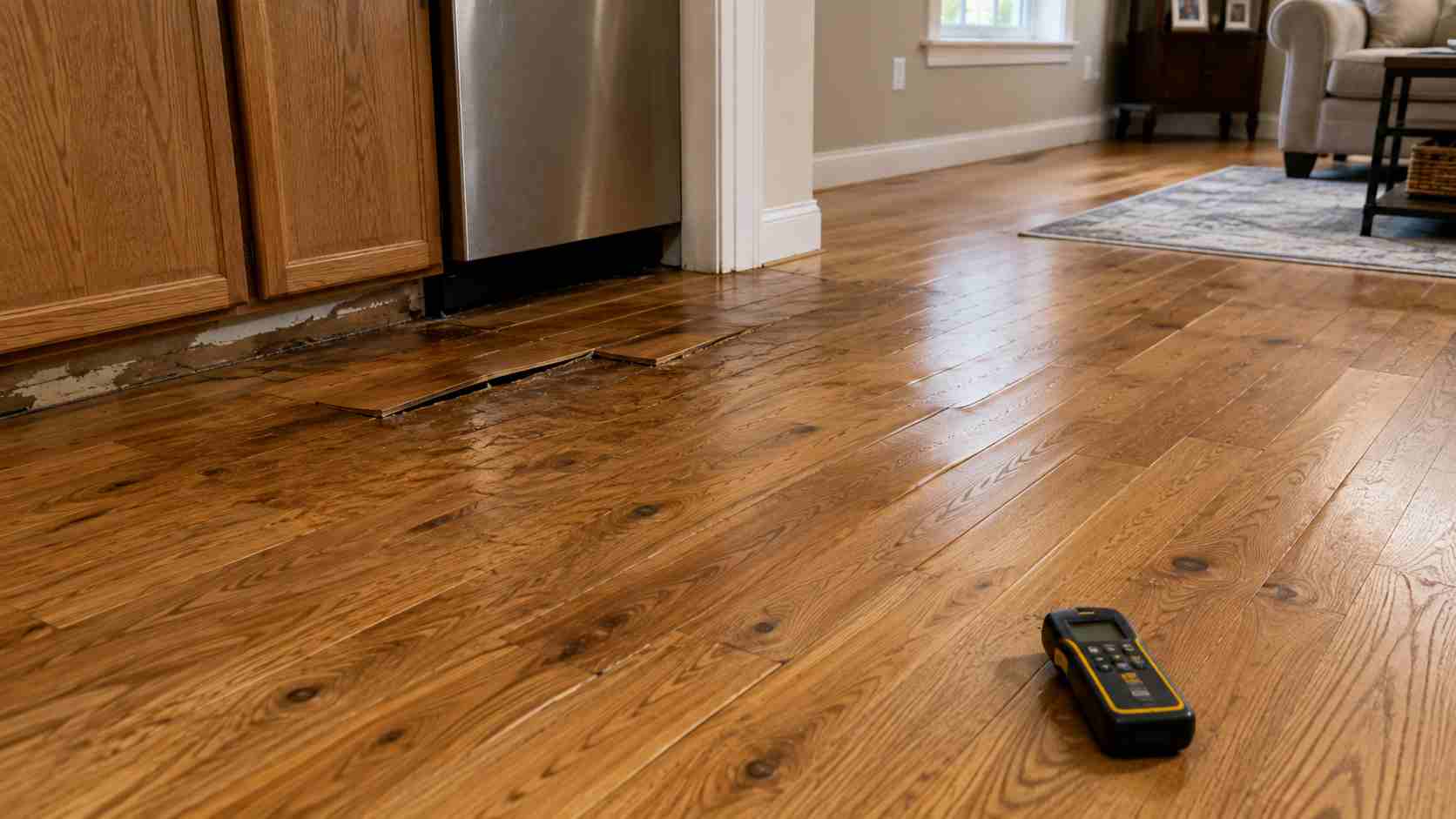
Just 24 hours on a hardwood floor can cause water to exceed the threshold for permanent cupping. That’s why so many homeowners lose their floors that should have been saved.
When you’re looking at a dark stain, a rippled board, or a swollen edge right now, you need a plan, not theory.
You’ll discover the methods to identify all the stages of water damage, the correct way to dry a water-damaged wood floor, approximate water damage floor repair costs, how to find and eliminate mold beneath laminate and engineered wood floors, and what changes for engineered wood and laminate.
How Water Damages Wood Floors
Wood is hygroscopic, meaning it continuously exchanges moisture with the air. A board absorbs water faster than it can release it, causing the swelling, warping, and other issues homeowners associate with water damage. Maintaining proper humidity levels, fixing leaks quickly, and sealing wood surfaces regularly can help protect wood floors from moisture-related damage.
The Three Common Sources
Most cases happen because of surface spills (which homeowners can recover from if they discover them quickly), slow leaks from dishwashers and supply lines (which often cause the most damage because they can go unnoticed for weeks), or flooding and burst pipes (which create the most serious problems when water remains standing for hours).
Why Speed Beats Volume
A large spill cleaned up in minutes will cause less damage than a small leak left for a month. It is important to note that if the water damage is minor, it is a hardwood floor issue rather than a subfloor issue, and the duration of the water damage will be the determining factor. The flow of moisture is more rapid to board joints than down, and damage is more noticeable further away from its source. Floors are also stressed if indoor humidity levels are above 55% or below 30%, even if there is no leak.
Signs of Water Damage on Hardwood Floors
When these signs of water damage appear on hardwood floors, it is time to decide whether to sand or tear up the floor.
Cupping and Buckling
Hardwood floor cupping is the most frequent early sign of water damage (where the edges of the wood are up and above the center). Minor cupping (less than 1/8 inch) will straighten when the cause is removed and humidity returns to normal. Buckling water-damaged hardwood floors are more serious: the floor rises up from the subfloor, typically by an inch or more, and tears fasteners out of the subfloor. This indicates that the bond is non-existent and will nearly always need to be replaced.
Discoloration and Soft Spots
Dark staining indicates that the water has flowed into the wood fibers, not only onto the surface. Spots that are soft and spongy are a sign of a weak or broken core or subfloor and may require deeper repair when trying to get stains out of wood floors.
| Sign | What’s Happening | Typical Fix |
| Slight cupping (<1/8″) | Moisture below the board | Remove source, dry slowly, reassess |
| Severe cupping (>1/4″) | Sustained exposure | Dry fully, sand and refinish |
| Buckling | Fastener/adhesive failure | Replace affected boards |
| Dark staining | Moisture reached wood fibers | Sand out or replace |
| Musty smell | Mold or trapped moisture | Investigate subfloor, treat for mold |
How to Dry Wood Floor After Damage
Stop the Source, Then Remove Standing Water
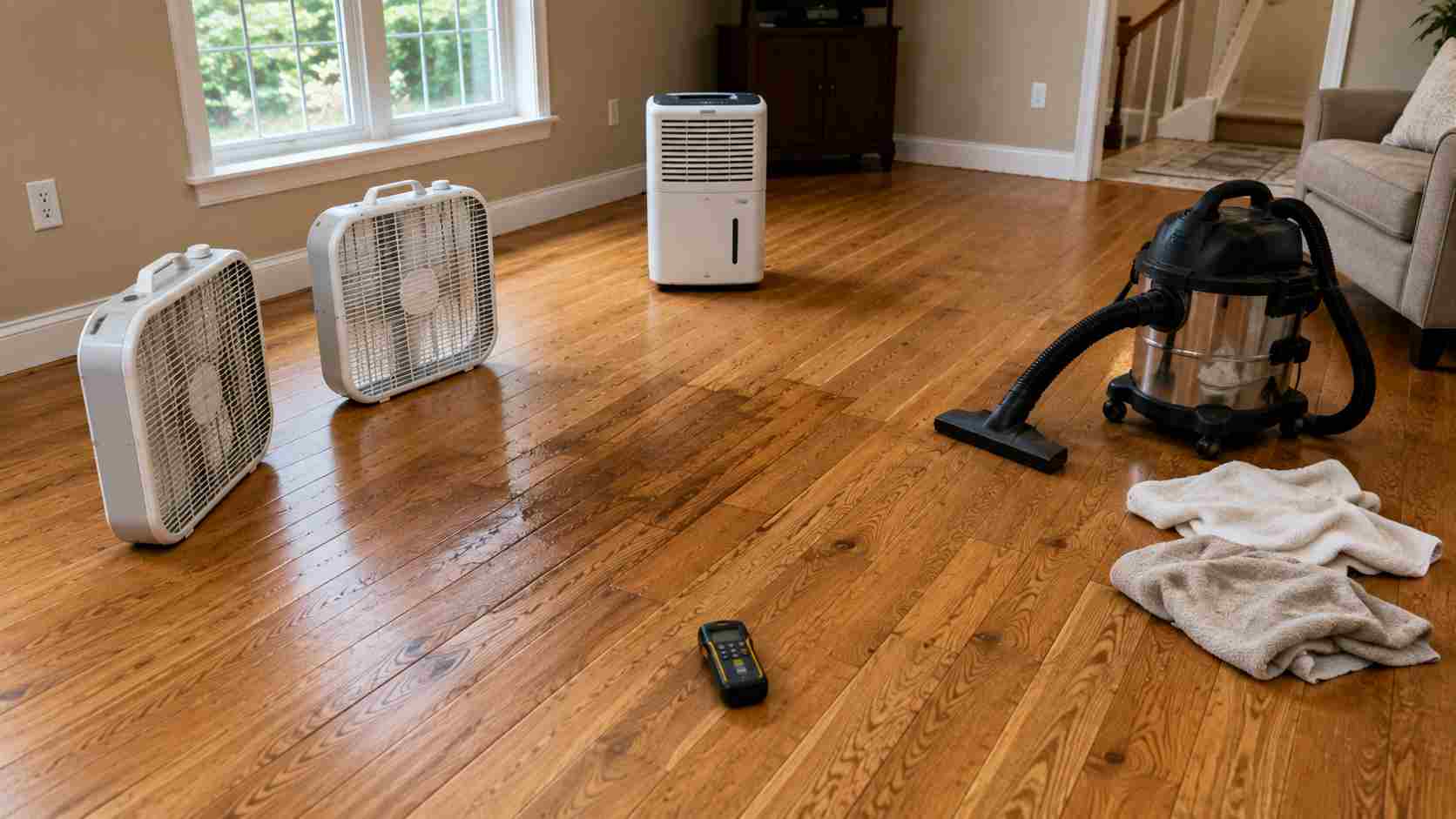
Turn off the leak before you attempt to repair the floor; no need to fix a floor when water is still leaking. After one hour, pull up all visible drops using towels or a wet/dry vacuum to avoid the most severe cupping.
How to Dry Water Under Flooring
Drying up the surface is not sufficient after water has infiltrated under boards. To dry water under flooring without removing boards, box fans angled across the floor combined with an ongoing dehumidifier are the best way. If the subfloor becomes saturated, professionals can drill small, discreet holes between the boards to improve airflow and prevent the need to remove the entire subfloor.
Avoid using space heaters; wood shrinks quickly when dry, causing cupping. Do not sand until moisture is within 2-4% of an undisturbed area, and do not use rugs until it is verified that the floor is dry. Allow 1-3 weeks drying time for moderate exposure, as well as 6 weeks or more for subfloor saturation.
How to Fix Water Damage to Wood Floor
Minor to Moderate Damage
Board Replacement
If boards are still buckled, delaminated, or spongy after drying, they should be removed and replaced instead of sanded. The most difficult part will be matching species and finish sheen, so if you have any spares of the original install, keep them as well.
Engineered Wood and Laminate Floors
Engineered Wood vs. Laminate
Engineered planks have a plywood core with a thin real-wood veneer. Engineered wood floors resist warping better than solid wood floors, but they are more likely to delaminate when water sits at the seams for hours. Note: It is possible to sand a veneer 2mm or thicker once, and recoat a thinner veneer. Laminate uses compressed fiberboard as its core, and this material swells permanently when wet, making it impossible to dry back into shape. Press against a seam and hear a “squishing” sound. Water has gotten to the core of that plank; it should be replaced, not dried. Water resistance doesn’t protect the core of the laminate; even water-resistant floors can have water-damage laminate issues.
Black Marks, Stains, and Mold
Cleaning and Removing Black Marks
Surface discoloration requires you to use a pH-neutral cleaner to remove stains from wood floors. You can lighten mineral stains with diluted hydrogen peroxide. For mold spots on hardwood floors, identify and address the moisture source before treating the affected area to prevent the growth from returning. To remove black marks from hardwood floors, apply oxalic acid (wood bleach) to bare, sanded wood surfaces. The acid reaches the tannin and iron compounds that cause black stains, while household bleach can help treat these affected areas.
Detecting and Removing Mold
The best way to identify mold under flooring is to look for signs like a lingering musty odor, dark speckling along seams, unexplained warping, or moisture readings above 20%. If you find black mold beneath flooring, avoid sanding or disturbing the area because it can spread spores and create health risks. Start the mold cleanup by containing the affected area, removing excess moisture, and following safe cleaning practices. Small areas of surface mold may be treated with proper cleaning methods, such as scrubbing the surface and drying it completely. However, large mold growth or mold embedded deep inside wood requires professional remediation to ensure complete removal.
Water Damage Floor Repair Cost
| Repair Type | Typical Cost | Timeframe |
| Professional drying | $500–$1,500 | 3–7 days |
| Screen and recoat | $1–$3/sq ft | 1–2 days |
| Sand and refinish | $3–$8/sq ft | 2–4 days |
| Board replacement | $5–$10/board + labor | 1–3 days |
| Full replacement | $8–$25+/sq ft | 1–2 weeks |
| Mold remediation | $1,500–$5,000+ | 3–10 days |
Some insurance policies cover sudden leaks, such as burst pipes, but not gradual leaks; make sure to read your insurance policy carefully before assuming coverage for a leak.
FAQ: Frequently Asked Questions
Can water-damaged wood floors be saved?
Often yes. Mild cupping with no structural damage usually recovers once dried slowly. Buckled, delaminated, or moldy boards typically can’t be saved; how long the wood sat wet is the deciding factor.
How long before water damages a wood floor?
Cupping can start within 24 hours of sustained contact. Buckling or subfloor saturation develops after days of standing water, or weeks of an undetected slow leak.
Should I sand a cupped floor right away?
No. Sand only after moisture readings stabilize, usually 2–4 weeks in. Sanding a swollen board removes wood you’ll need once it contracts, leaving permanent dips.
Is engineered wood more water-resistant than solid hardwood?
Its core resists warping slightly better, but engineered wood is more prone to seam delamination if water sits for hours. None of them is waterproof.
What humidity level protects wood floors?
Keep indoor humidity between 30% and 50% year-round. A hygrometer near the floor helps you catch drift before it causes cupping or gaps.
Can I use a fan to dry a wet wood floor?
Yes, fans with a dehumidifier are the safest DIY method. Avoid space heaters, which dry the surface too fast and cause uneven shrinkage.
Does a musty smell always mean mold?
Not always, but it’s the most common sign of trapped moisture or early mold beneath boards. A lingering odor after a floor looks dry signals a moisture check.
Is it cheaper to repair or replace a water-damaged floor?
Repair costs less when the damage stays localized; homeowners can use screening or board replacement instead of full replacement, which only makes sense for widespread damage.
Conclusion
Three things decide the outcome of any water damage to a wood floor situation: how fast you stop the source, how patiently you dry the floor before sanding, and whether you honestly assess cosmetic versus structural damage. Minor cupping usually recovers on its own with time and airflow, while buckled, delaminated, or mold-affected boards need replacement.
If you’re dealing with active damage now, stop the source, remove standing water, and begin controlled drying. When you’re in doubt about musty odors or seam separation, bring in a professional to test moisture before committing to a repair path.