Did you know hardwood floors can hold more bacteria per square inch than a kitchen countertop when they are only swept and never properly sanitized? Wood is naturally porous, and daily foot traffic, pet paws, and accidental spills can leave behind bacteria and residue that a dry mop simply moves around instead of removing.
Finding the best way to sanitize hardwood floors requires getting the balance right: you need enough cleaning power to reduce bacteria and viruses while still protecting the finish, seams, and wood fibers from excess moisture, dullness, or discoloration. Many cleaning guides focus only on one side of the process, either how to kill germs or how to avoid damaging wood, but hardwood care requires both.
This guide explains how to disinfect hardwood floors without damaging them, which natural sanitizing methods are effective, whether steam mops are safe for sealed or engineered wood, how to remove stubborn pet urine stains, and how to buff and polish floors after cleaning. Each method is organized around floor type, potential risks, and common situations so you can quickly find the approach that fits your home.
Why Sanitizing Hardwood Floors Is Different From Regular Cleaning
There’s a difference between cleaning and sanitizing. Cleaning removes visible dirt and debris, while sanitizing lowers the number of bacteria and germs on a surface to a level considered safe by public health standards. Disinfecting goes further by killing nearly all germs and viruses present on the surface.
Many homeowners use these terms interchangeably, but with hardwood floors, the difference affects which products and techniques are safe. A cleaner that works on tile or other hard surfaces may damage a wood finish.
The Real Risks of Bacteria and Germs on Wood Floors
Hardwood floors are not completely sealed barriers. Wood contains tiny pores that can hold moisture, skin cells, pet dander, and food particles under the protective finish. Research on household environments shows that floors can support diverse microbial communities, especially in areas exposed to frequent foot traffic, outdoor contaminants, spills, and pet-related bacteria brought inside by animals.
This becomes more concerning in homes with crawling babies, immunocompromised family members, or several pets that regularly bring outdoor bacteria inside.
Why Harsh Chemicals Backfire on Hardwood
Reaching for bleach, ammonia, or a general disinfectant spray may seem like the quickest solution, but many of these products are designed for tile, stone, and other non-porous surfaces rather than finished wood. Proper hardwood care requires products and methods that protect the protective finish while still removing germs effectively.
Bleach and ammonia can damage polyurethane or wax finishes, leaving the wood underneath more vulnerable to moisture. Vinegar-based “natural” cleaners can also affect the finish’s shine when used too frequently or in high concentrations. The safest sanitizers for hardwood are properly diluted, used in small amounts, and removed quickly instead of being allowed to sit on the floor.
The Best Way to Sanitize Hardwood Floors: Step-by-Step Method
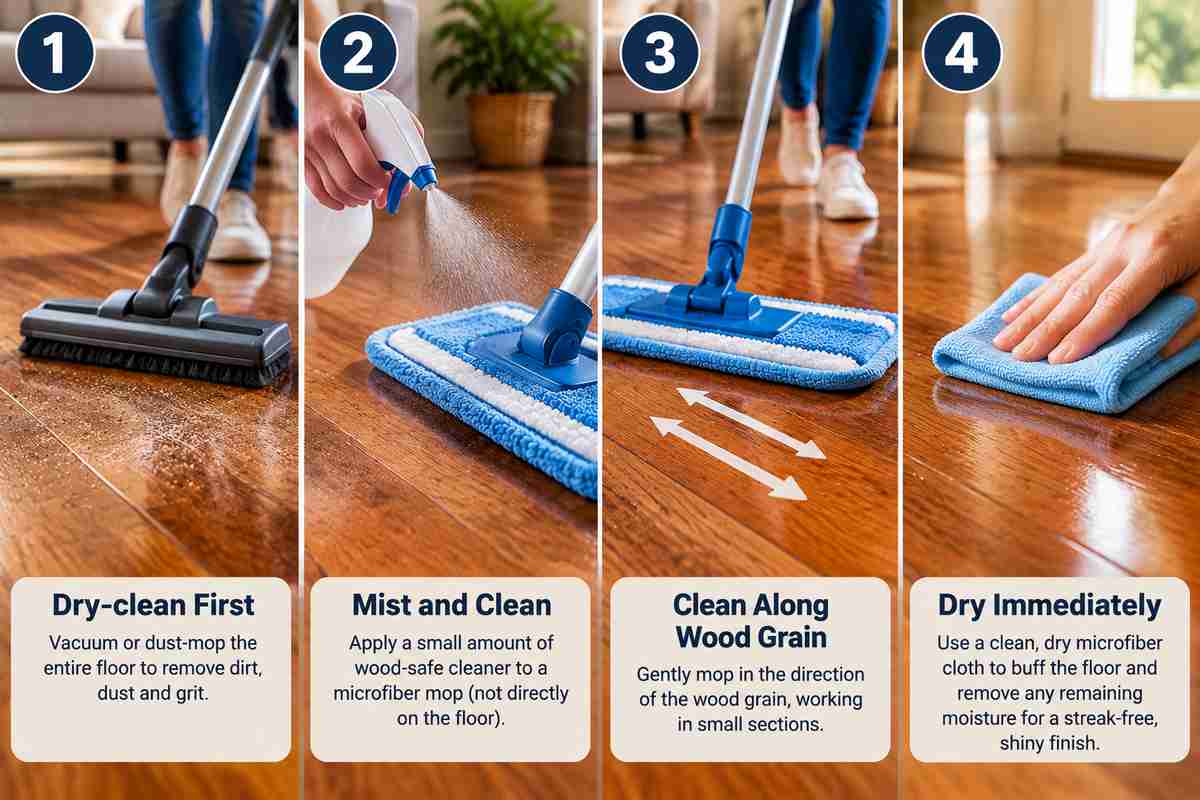
This method is commonly recommended by flooring manufacturers and professional cleaners as the best way to sanitize hardwood floors while protecting the finish.
What You’ll Need
- A microfiber dust mop or vacuum with a hard-floor/hardwood attachment (never the beater-bar brush setting)
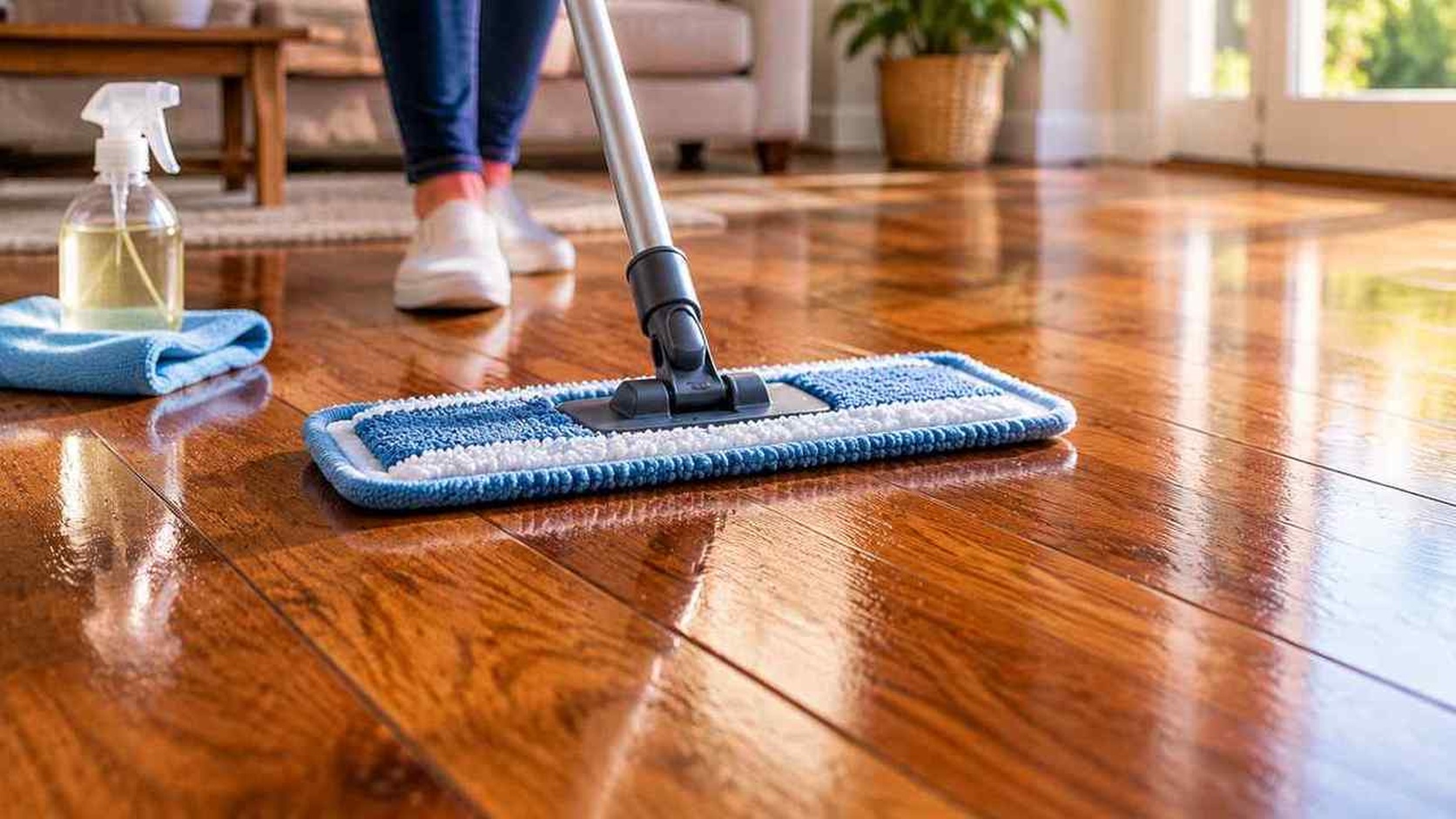
- A well-wrung microfiber flat mop
- A pH-neutral, wood-safe cleaner or an EPA-registered disinfectant labeled safe for sealed wood
- Two clean, dry microfiber cloths for buffing dry immediately after mopping
- A soft-bristle brush for grooves, baseboards, and corners
Step-by-Step Sanitizing Process
- Dry-clean first. Vacuum or dust-mop the entire floor before using any liquid cleaner. Grit left behind can scratch the surface when moved around by a wet mop.
- Spot-test the solution. Apply a small amount of the cleaner in a hidden area and wait 10 minutes to check for cloudiness or color changes.
- Mist, don’t soak. Spray the wood-safe cleaner or diluted disinfectant onto the mop head instead of directly onto the floor. This reduces the chance of liquid collecting in seams.
- Work in small sections. Clean a 3-by-3-foot area at a time while moving along the direction of the wood grain.
- Dry immediately. Use a dry microfiber cloth on each section within 30–60 seconds so moisture does not remain on the surface.
- Let it fully cure. Keep pets and foot traffic away from the floor for at least 20–30 minutes.
How Often You Should Sanitize
Areas that receive heavy use, such as kitchens and entryways, usually benefit from light sanitizing one to two times per week. Bedrooms and formal living spaces generally need sanitizing every two to three weeks, with regular dry-dusting between deeper cleanings to prevent grit buildup.
Best Way to Sanitize Hardwood Floors: Step-by-Step Method
Comparison Table: Sanitizing Methods for Hardwood Floors
| Method | Kills Bacteria/Viruses | Safe for Sealed Wood | Best For |
| Diluted white vinegar spray | Moderate | Yes, if diluted and dried fast | Weekly light sanitizing |
| EPA-registered wood-safe disinfectant | High | Yes, if labeled for wood | Cold/flu season, illness in home |
| Steam mop (proper technique) | High | Conditional — see steam section | Deep sanitizing, allergy control |
| Bleach or ammonia cleaner | High | No — damages finish | Not recommended for hardwood |
| Dry microfiber dusting only | Low | Yes | Daily maintenance between deep cleans |
Best Way to Sanitize Hardwood Floors Naturally at Home
If you’re looking for the best way to sanitize hardwood floors naturally, the focus is on lowering germs while avoiding harsh residues that may come into contact with children, pets, or the people living in the home.
Vinegar and Water Solution
A mixture of ¼ cup white vinegar with one gallon of warm water is one of the most common natural methods to disinfect wood floors naturally. Vinegar’s acidity can disrupt many common household bacteria, but it is not classified as an EPA-registered disinfectant, so it does not provide the same level of pathogen removal as a registered product.
Drying the floor immediately is important because repeated exposure to standing vinegar solution can dull a wax finish over time.
Essential Oil Disinfectant Blends
Adding 10–15 drops of tea tree oil or thyme oil to the vinegar-water mixture increases its antimicrobial properties. Tea tree oil contains terpinen-4-ol, while thyme oil contains thymol, and laboratory studies have shown that these compounds can interfere with bacterial cell membranes.
For households trying to avoid synthetic cleaners around babies or pets, these blends are among the stronger natural options.
When Natural Isn’t Enough
Natural cleaners work well for regular maintenance, but they may not be enough after a pet accident, during flu season, or when someone in the home is sick. In those situations, an EPA-registered disinfectant labeled safe for finished wood provides a level of germ reduction that vinegar alone cannot guarantee.
Use natural solutions for routine cleaning and consider registered disinfectants when the risk of contamination is higher.
Is It Safe to Steam Clean Wood Floors? A Complete Steam Mop Guide
This is one of the most common questions in hardwood care, but the answer depends on the type of flooring and the condition of the finish.
Steam Mop on Sealed vs. Unsealed Hardwood Floors
Is it safe to steam clean wood floors? For solid hardwood with an intact polyurethane or urethane seal, occasional steam mopping with a low-moisture, adjustable-steam model is generally considered safe by many flooring manufacturers when used correctly. The mop should never stay in one place for too long.
Steam is not recommended for unsealed, waxed, or oiled hardwood floors. Without a protective barrier, heat and moisture can move directly into the wood grain and contribute to swelling, warping, or graying over time.
Steam Mop on Engineered Hardwood Floors
A steam mop on engineered hardwood carries additional risk because engineered wood uses a thin veneer layer attached to plywood layers underneath. Repeated exposure to heat and moisture can weaken the adhesive connection and may cause lifting or bubbling around the seams.
Many engineered flooring warranties exclude damage caused by steam mops, so checking the manufacturer’s warranty before using steam on engineered wood floors is important.
Steam Cleaning Safety Rules
- Use the lowest steam setting available and avoid “turbo” or continuous-blast settings
- Keep the mop moving at all times and never leave it resting in one area for more than a second
- Choose a triangular, low-moisture microfiber pad instead of a heavily soaked terry pad
- Test the mop in a closet or hidden area first and check for cloudiness after 24 hours
How to Remove Urine Stains and Odors From Hardwood Floors
Pet accidents can quickly damage hardwood floors because urine is acidic and can move through small cracks in the finish before reaching deeper layers of the wood.
Fresh Pee Stains: Immediate Action
Blot the area with paper towels instead of rubbing it. Rubbing pushes the acidic liquid further into the wood grain and between floorboard seams.
After removing the excess moisture, apply a 50/50 mixture of water and 3% hydrogen peroxide to a cloth rather than pouring it directly onto the floor. Dry the area completely using a fan or clean, dry towel.
How to Remove Dark, Set-In Urine Stains
Dark urine stains on hardwood floors develop when acidic urine reacts with tannins and iron naturally found in wood. The reaction creates black or gray discoloration that sits beneath the finish layer. To get stains out of wood floors naturally, you need methods that target the discoloration without damaging the wood, such as gentle cleaning solutions and natural stain-lifting techniques.
For deeper stains:
- Lightly sand the stained area with fine (220-grit) sandpaper to expose the bare wood.
- Apply an oxalic acid–based wood bleach specifically made for mineral stains. Regular household bleach will not remove this type of discoloration.
- Allow the area to dry for 24 hours, then sand it smooth and refinish it with matching stain and topcoat.
When stains have reached the subfloor, surface treatments usually cannot solve the problem. In those cases, professional board replacement may be required.
Preventing Future Pet Accidents From Damaging Floors
Washable absorbent mats placed in accident-prone areas can help protect flooring. Addressing house-training problems or senior-pet medical concerns quickly also reduces repeated accidents.
After each accident, use an enzyme-based odor neutralizer rather than a fragrance spray. Enzyme cleaners target lingering scent markers that may encourage pets to return to the same location.
How to Buff and Polish Hardwood Floors for a Sanitized Shine
After sanitizing hardwood floors, buffing can restore the protective layer and bring back the shine of the surface while keeping the floor looking clean and well-maintained.
How to Buff a Wooden Floor by Hand
To buff a wooden floor by hand, apply a small amount of hardwood floor polish that matches your finish type, whether it is oil-based, water-based, or wax. Use a soft cloth and work the polish into the floor with firm circular motions while following the direction of the wood grain.
Hand buffing works best for smaller rooms, worn areas, or quick touch-ups between larger polishing sessions.
Machine Buffing and Polishing
Can you buff hardwood floors with a machine? Yes. A low-speed buffer (175–300 RPM) with a white or natural-fiber pad is commonly used for hardwood floor buffing and polishing because it creates enough movement to restore shine without producing excessive friction heat that can damage the finish.
Move the buffer slowly across the floor using overlapping passes while following the wood grain. Vacuum the surface afterward to remove any leftover polish dust.
How Often to Buff
Light hand-buffing after sanitizing can be done weekly. For homes with heavy foot traffic, a full machine buff-and-recoat is generally recommended every 1–2 years. Complete refinishing, which involves sanding down to bare wood, is typically needed every 7–10 years depending on foot traffic and finish quality.
Frequently Asked Questions
What is the best way to sanitize hardwood floors at home without special equipment?
A microfiber mop lightly misted with a wood-safe, diluted disinfectant or vinegar solution, followed by immediate hand-drying, is the best way to sanitize hardwood floors at home. No special equipment is required. The process depends on using the correct amount of moisture and drying the surface quickly to protect the finish.
How do you disinfect hardwood floors without damaging them?
Use a pH-neutral or EPA-registered wood-safe product, apply it to the mop instead of directly onto the floor, clean in small sections, and dry each area within 60 seconds. Avoid bleach, ammonia, and standing water because they can damage the finish.
Is vinegar a true disinfectant for hardwood floors?
No. Vinegar can reduce many common bacteria, but it is not EPA-registered as a disinfectant and does not guarantee the removal of all pathogens. It works as a natural sanitizing option for regular cleaning but should not replace a registered disinfectant during illness.
Can you use a steam mop on sealed hardwood floors?
Generally yes. Solid hardwood with an intact seal can usually handle occasional steam cleaning when using low steam settings and keeping the mop moving continuously. Steam mops are not recommended for unsealed, waxed, or oiled floors because moisture can enter the exposed wood.
Is a steam mop safe for engineered hardwood floors?
It can be risky. Engineered wood contains glued veneer layers that may loosen after repeated exposure to heat and moisture. Many manufacturer warranties exclude steam-related damage, so checking the warranty before use is recommended.
How do you get old, dark urine stains out of a wood floor?
Sand the finish in the stained area to expose the bare wood, apply an oxalic-acid wood bleach designed for mineral stains, allow the area to dry fully, then sand and refinish it to match. Regular bleach does not remove dark tannin-based stains.
Can you buff hardwood floors yourself, or do you need a professional?
Homeowners can hand-buff floors or use a rented low-speed buffer for regular shine restoration. Deep scratches, damage that reaches through the finish, or heavy discoloration usually require professional refinishing.
How often should real hardwood floors be sanitized?
High-traffic areas such as kitchens and entryways should be sanitized one to two times weekly. Rooms with less foot traffic generally need sanitizing every two to three weeks, along with regular dry-dusting to reduce grit buildup.
Conclusion
Sanitizing hardwood floors properly comes down to using a product that matches the floor’s finish, avoiding excess moisture, and choosing the right cleaning method for the situation. Natural solutions may work well for routine upkeep, while steam cleaning and registered disinfectants require more attention to floor type and risk level.
Start with the step-by-step sanitizing method in one room, then maintain the routine with dry dusting and occasional buffing. Consistent care keeps hardwood floors clean while protecting the finish that gives them their long-term appearance.