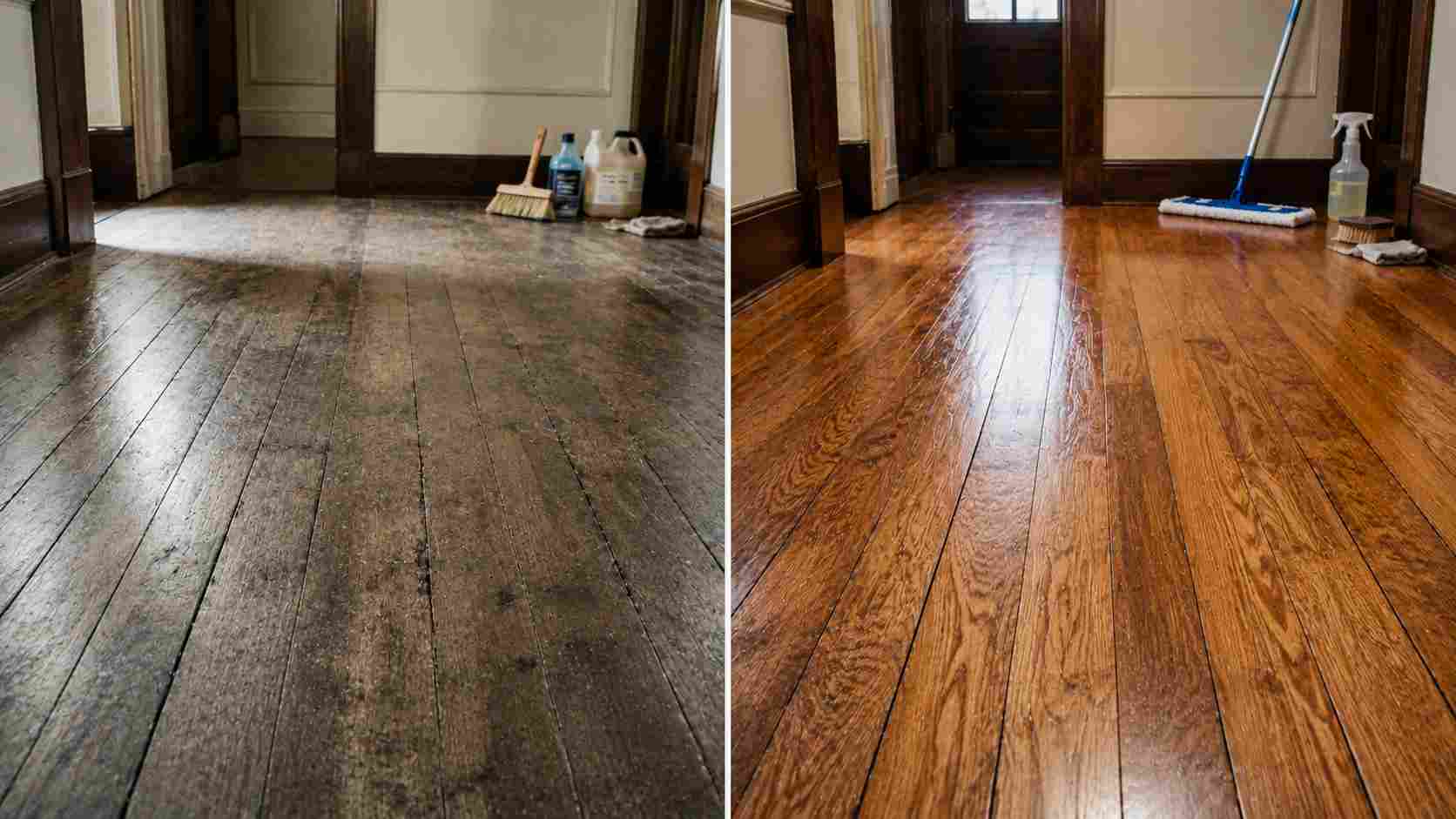
If you have a mop that turns grey immediately after you put it down on the floor, you have decades of grime trapped under old wax and under foot traffic film, which weekly mopping won’t fix.
A floor installed five years ago is a different floor to clean compared to an old hardwood floor. Thinner, more porous, and with products worn away over time in high-traffic paths, old wood is the result. If you use the wrong method (too much water, the wrong chemical, an abrasive pad), you can remove the remaining finish or warp the boards.
Here, you’ll learn how to determine the type of floor finish before you start the cleaning process, the complete deep cleaning process, how to handle stains and grime in the cracks, which times are right for using vinegar and natural cleaning methods, and how to restore shine without sanding or refinishing.
Why Old Hardwood Floors Need a Different Cleaning Approach
Two floors, one installed in 1920 and one in 2020, are not made of the same material, even if they’re both oak. As the age of wood changes, its water absorption properties, chemical reactions, and amount of original finish remaining to protect it also change.
How Old Hardwood Differs From New Prefinished Floors
Older floors (pre-1960s) typically had original hardwood floors finished with shellac, varnish, or penetrating oil, followed by a paste wax, none of which is like polyurethane. Another factor with older boards is that they are often thinner, as the early mills used to cut strip floors at 5/16 to 3/4 inch, which meant there were fewer sandings before reaching the tongue-and-groove joint. This is why cleaning old hardwood floors without sanding matters so much. The newer prefinished floors have a factory-cured, water- and chemical-resistant finish, so the same recommendations that apply to new floors do not apply to these floors.
Identifying Your Floor’s Finish Before You Start
In an inconspicuous corner, do a simple water-drop test: drop a few drops of water onto the wood and wait for two minutes. If it beads up and remains on the surface, it is still protected by a film finish (polyurethane, varnish, or shellac). If it penetrates and stains the wood in less than a minute, the finish is worn, or the floor was oil-finished or waxed.
This test is to decide your approach. A sealed floor will allow a damp mop and mild cleaner. A nearly dry method is required for a bare or oil-finished floor, as water entering unprotected wood will swell, cup, and stain the wood gray, which no scrubber will remove.
How to Deep Clean Old Hardwood Floors Step by Step
Here’s how to safely get rid of all the dirt that has been buried beneath the floor for years, such as when you’re trying to clean years of ground-in dirt that you haven’t cleaned before, or you’re tackling one after removing carpet, while also learning how to sanitize hardwood floors without damaging the finish.
What You’ll Need
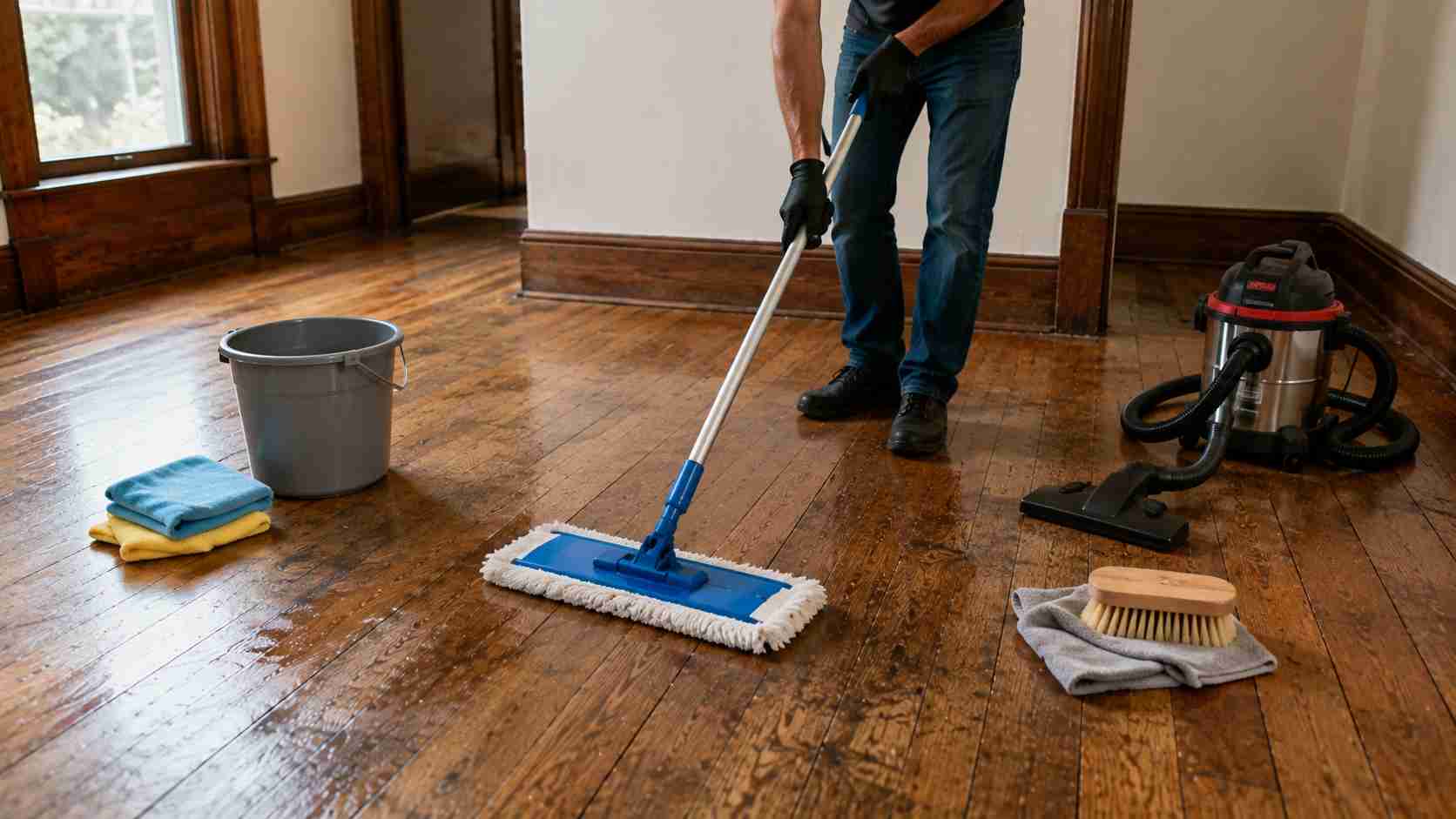
Two microfiber mop heads, two buckets, a pH-neutral wood floor cleaner or homemade product, soft cloths, a soft-bristle broom or vacuum with hardwood attachment (no beater bar), old soft-bristle toothbrush for use in grooves.
The Deep-Clean Process
- Dry-clean first. When using a vacuum or sweeping with the grain, be sure to remove the grit; otherwise, it drags sandpaper-like grit across the finish.
- Mix a mild solution. Use one teaspoon of pH-neutral dish soap in every gallon of warm water or a special wood floor cleaner as directed by the label.
- Clean small areas with a damp mop. Wring the mop so it will barely drip when held to its side and work in 4- to 6-foot sections, along the grain.
- Rinse with a second mop and clean water. This is the part where most DIY cleanings go wrong because of the soap residue left behind, which is what causes floors to appear streaky or grey days later.
- Dry immediately using a microfiber cloth, one section at a time.
How to Clean Really Old Hardwood Floors With Decades of Buildup
One pass is usually not enough for floors that have not been deep cleaned in 10 years or more. Professional restorers usually estimate that two or three passes will be needed on very dirty original floors, as the first pass will clear surface dirt, and subsequent passes will remove dirt bonded by old wax layers.
When the water in the bucket becomes gray or brown almost immediately, it is most likely due to old wax buildup and not dirty wood. A special wax and grime remover (not an oil soap), which is buffed by hand using fine 0000-grade steel wool, can often lift what a mop solution can’t. Test in a secret corner first, as it can make a worn finish even worse.
Cleaning Old Hardwood Floors Naturally: Vinegar, Dawn, and What Actually Works
This is the most controversial hardwood care advice you’ll find, and you’ll hear contradictory information everywhere! Both sides have a point to them.
Cleaning Old Hardwood Floors With Vinegar: The Real Rules
Many older homeowners have been using an 8th cup of dish soap and white vinegar per gallon of water for years; it’s inexpensive, and it works! Flooring workers resist because vinegar is corrosive and will gradually wear away the polyurethane and lacquer finishes over time when repeatedly used. The answer is, of course, the middle ground: If the floor is worn or unfinished, occasional use of vinegar is unlikely to cause problems; if the floor is shiny and intact, weekly use of vinegar is where the damage comes from. Keep it for periodic deep cleaning, use it in heavy dilution, and pass it over a floor refinished within the past 30 days.
Natural Alternatives That Are Gentler on Finish
- Isopropyl alcohol solution: 70% isopropyl alcohol solution with a few drops of dish soap per gallon of water, pH neutral, and evaporates quickly.
- Plain hot water with a splash of dish soap: Often covers all weekly cleaning needs, with less risk to an aging finish.
- Black tea rinse: Boil two to three tea bags in a quart of hot water, cool, and mop lightly; the tannins give some warmth to dark, dull wood.
Products to Avoid on Old Hardwood
Avoid oil soaps and products that are promoted as “feed” for wood; once a floor has been sealed, you are cleaning a layer of finish, not wood; oil leaves a sticky film on the floor that will trap dirt. Avoid ammonia-based glass cleaners and bleach, as these can stain finishes when they come in contact.
| Method | Best For | Avoid If |
| Vinegar + soap + water | Occasional deep clean, worn/no finish | Freshly refinished or glossy sealed floors |
| Isopropyl alcohol + soap | Weekly cleaning, antique/original floors | N/A — safe for most finishes |
| pH-neutral wood cleaner | Sealed, prefinished floors | Bare or heavily worn wood |
| Steam mop | Never recommended for old hardwood | Any floor with visible gaps or seams |
| Oil soap/furniture polish | Not recommended | Any sealed hardwood finish |
How to Get Dirt Out of Wood: Cracks, Grooves, and Floorboard Gaps
Dust, pet hair, and grit a mop can’t get to are a problem over the years as old hardwood floors develop, with seasonal humidity causing boards to shrink and swell, causing gaps.
How to Clean the Cracks in Hardwood Floorboards
Use a vacuum crevice attachment to remove any debris by running it gently along the seams. A soft, dry toothbrush or a wooden coffee stir stick wrapped in a microfiber cloth will work the gap without scratching the wood with compacted material. Don’t use a metal tool, screwdriver, or knife to drive in the grooves; it is a quick way to chip the edge of a board.
After debris is removed, a slightly moistened cotton swab collects any remaining fine dust, which should be dried as soon as possible. Avoid this rinse step if there is substantial gapping on the floor, as water in the seam will have no place but to sink down into the subfloor.
Cleaning Old Hardwood Floors After Removing Carpet
When you remove old carpet, you will find staples, tack strip nails, old adhesive, and dust. Do it for safety reasons, not cosmetic ones, so remove all the staples and nails from the surface of the floor first using needle-nose pliers. Use a plastic putty knife to scrape away adhesive (metal gouges wood), and for hard-to-remove adhesive, use an adhesive remover that contains citrus oil, which is less hazardous than solvent oil. Vacuum the floor thoroughly, then perform a full deep clean before you assess the floor’s condition. Carpeted wood usually remains in better shape because the carpet protects it from UV fading and heavy foot traffic
Removing Stains From Old Hardwood Floors Without Sanding
The first step to successfully cleaning old hardwood floors and learning how to get stains out of wood floor is identifying what type of stain you are dealing with; water stains, pet stains, and old rug stains all require different treatment methods.
Water Rings, Cloudy Spots, and White Haze
These are usually located in the finish, not the wood, and can be easily fixed without sanding. Gently rub with a cloth soaked in mineral spirits or baking soda with a few drops of water, wipe clean, and buff dry. Non-gel white toothpaste is used for finish-level haze that will be left on the spot for 15 minutes, which will gently remove moisture from the clouded finish and wipe clean.
Dark Stains, Pet Stains, and Old Rug Marks
Dark stains, blackish in color, typically indicate moisture has worked under the finish and into the wood fibers, most likely from pet urine or a forgotten rug that retained moisture. A wood bleach (oxalic acid, available specifically for wood stain) applied to the stain, dried, neutralized, and rinsed as directed can remove the discoloration from surface fibers. Test in a concealed area first, as results differ in various species.
How to Clean Old Hardwood Floors Without Refinishing
A screen-and-recoat is a compromise between cleaning and refinishing, and involves a skilled professional lightly sanding the top finish layer and recoating with a new layer of polyurethane, rather than sanding to bare wood. Usually 40-60% cheaper than full refinishing, but can only be used if the original finish is still in good enough condition to adhere to a new coat.
When You Actually Need Sanding
When the water-drop test shows that water quickly absorbs into most areas of the floor, the boards show visible cupping, or heavy-use areas expose bare wood, you cannot solve the damage with cleaning or screen-and-recoating. You need DIY floor refinishing or professional restoration instead.
Restoring Shine: Polishing Dull Hardwood Floors Without Refinishing
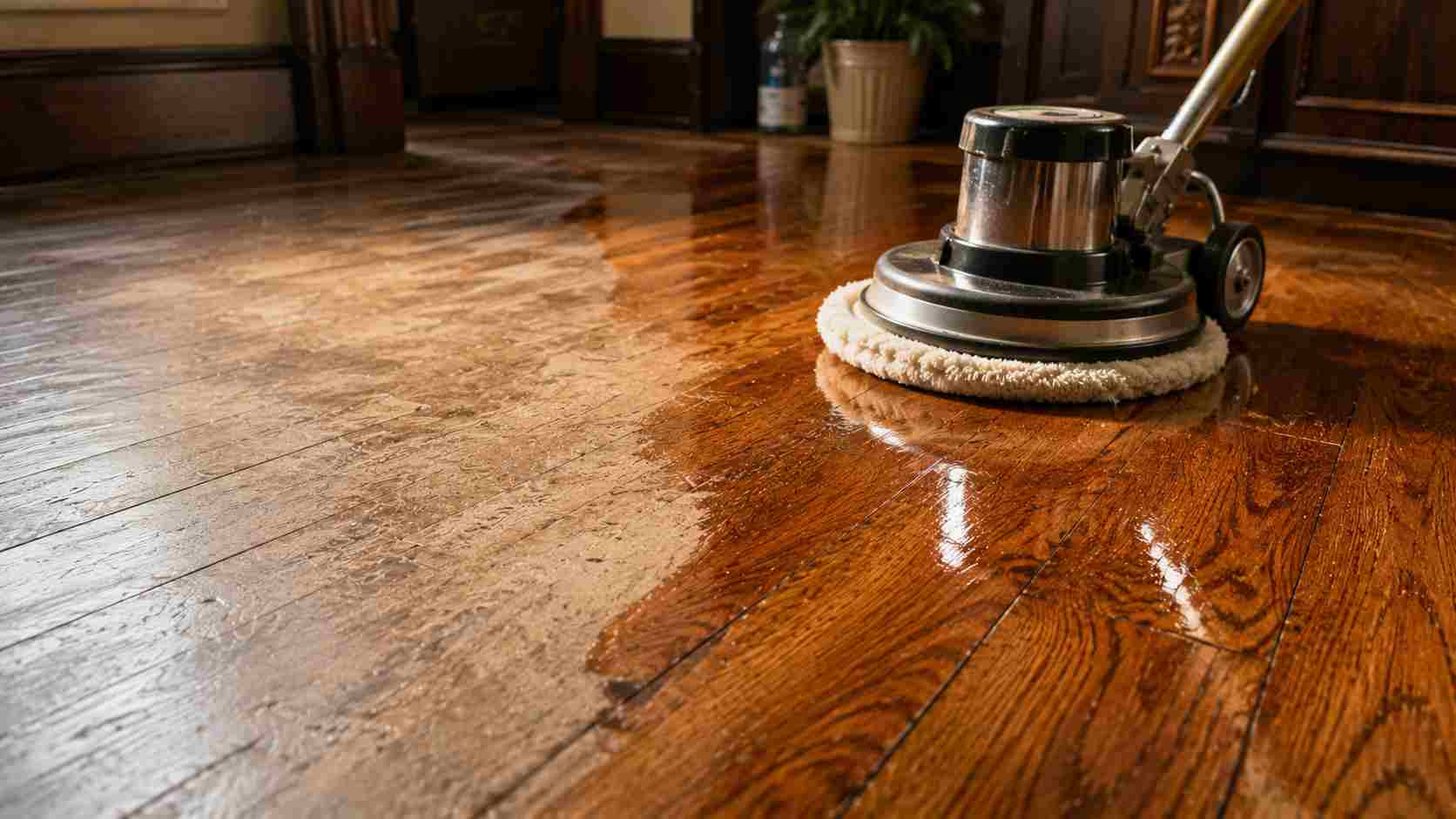
If the floor is deep cleaned correctly, there is a high chance that it will regain the shine it had without any additional finish, as most dullness is a reflection of the film of dirt and old cleaner residue that diffuses light and isn’t actually a problem with the wood.
How to Get Hardwood Floors to Shine Again
When the floor is clean and dry, buff it by hand or on a floor buffer (with a soft cloth) to restore real shine by smoothing micro-scratches and even light reflection. A polish designed for your particular finish type (oil and polyurethane products are not interchangeable) will provide a thin, protective, glossy layer if there is still a flat appearance.
DIY Floor Refinishing vs. Simple Restoration Methods
When hardwood floors become dull, people think it’s time to stain them again, but that is the most costly and disruptive approach and often not required.
| Approach | Cost (avg.) | Time | Best For |
| Deep clean + buff | $0-$40 in supplies | 2-4 hours | Dull floors with intact finish |
| Screen and recoat | $1-$2 per sq ft | 1 day | Worn finish, no bare wood |
| DIY sand and refinish | $1-$3 per sq ft in materials | 3-5 days | Bare wood, deep scratches, gaps |
| Professional refinishing | $3-$8 per sq ft | 2-4 days | Extensive damage, structural repairs needed |
A Maintenance Routine to Keep Floors From Going Dull Again
Grit will dull the finish, so sweep or vacuum at least twice or three times a day to clear it off and wipe spills up as soon as possible without allowing them to dry. Apply furniture pads under chair and table legs, replace them when they wear down, and maintain indoor humidity between 35–55% whenever possible. These steps help prevent extreme humidity changes from causing hardwood boards to gap and cup. Deep clean every 4-6 weeks and avoid ‘polish,’ which will create residue at a higher rate than it will provide protection.
FAQ: Frequently Asked Questions
How do I deep clean old hardwood floors without damaging them?
Vacuum first to remove grit, then use a damp mop with a pH-neutral cleaner and rinse with clean water immediately after drying each area. Minimal water is the key, not a stronger cleaner.
Is vinegar safe for cleaning old hardwood floors?
Sometimes, when the water content is high and applied to a worn or unsealed floor. If it is used regularly on a glossy, undamaged surface, it will dull over time, so use it sparingly for deep cleaning, not for weekly mopping.
How do I clean a really old hardwood floor with years of grime buildup?
Don’t expect a single pass for cleaning, but rather two or three. The first pass removes surface dirt; later passes remove the grime that has bonded into old wax layers, which may need a wax remover and fine steel wool.
Can I clean old hardwood floors without sanding them?
Yes, in most cases. Most dull or dirty floors can be deep cleaned, screened and recoated, and treated for specific stains. Sanding is only required if the finish has worn off or boards are structurally cupped.
How do I get dirt out of the cracks and grooves in hardwood floors?
First, use a vacuum crevice tool, then a soft toothbrush or cloth-wrapped stir stick for tough grime. Do not use metal tools, as chipping the edge causes the tool to become dull; do not moisten the grooves with water.
What’s the best way to clean old hardwood floors after removing carpet?
Remove all staples and nails, use a plastic putty knife to scrape any adhesive, use a citrus-based adhesive remover to remove stubborn glue, and vacuum and do a complete pass deep clean.
How do I bring the shine back to dull hardwood floors?
Thoroughly dust and clean the floor, then buff by hand or with a soft buffing pad, working the buffing motion in the direction of the grain. Most dullness is light diffused by the residue, not by damage to the wood, so buffing will bring real shine.
Should I use Murphy Oil Soap or Dawn dish soap on old hardwood?
Diluted Dawn is generally safer, as repeated usage will create a film of oil soaps that will dull the finish. In either case, dilute heavily, and rinse with another clean mop pass.
Conclusion
The key to cleaning old hardwood floors is three-fold: first, know what type of finish the wood has before you start cleaning; second, use as little water as you can at each step of the floor cleaning process; and third, rinse the cleaner residue off of the floor rather than letting it dry on. Avoid the shortcut methods of steam mops, straight vinegar, and oil soaps, and choose a deep clean that will be done one section at a time.
When the surface of an original hardwood floor is dull and gray, most of it has much longer life than it appears, and it can be restored to its original sheen without sanding. First, perform the water-drop test; then, one by one, do the deep-cleaning process; finally, clean stains and grooves after the base layer of grime has been removed. If the floor still looks tired, it’s a red flag that it may be time for a screen and recoat or professional floor refinishing.