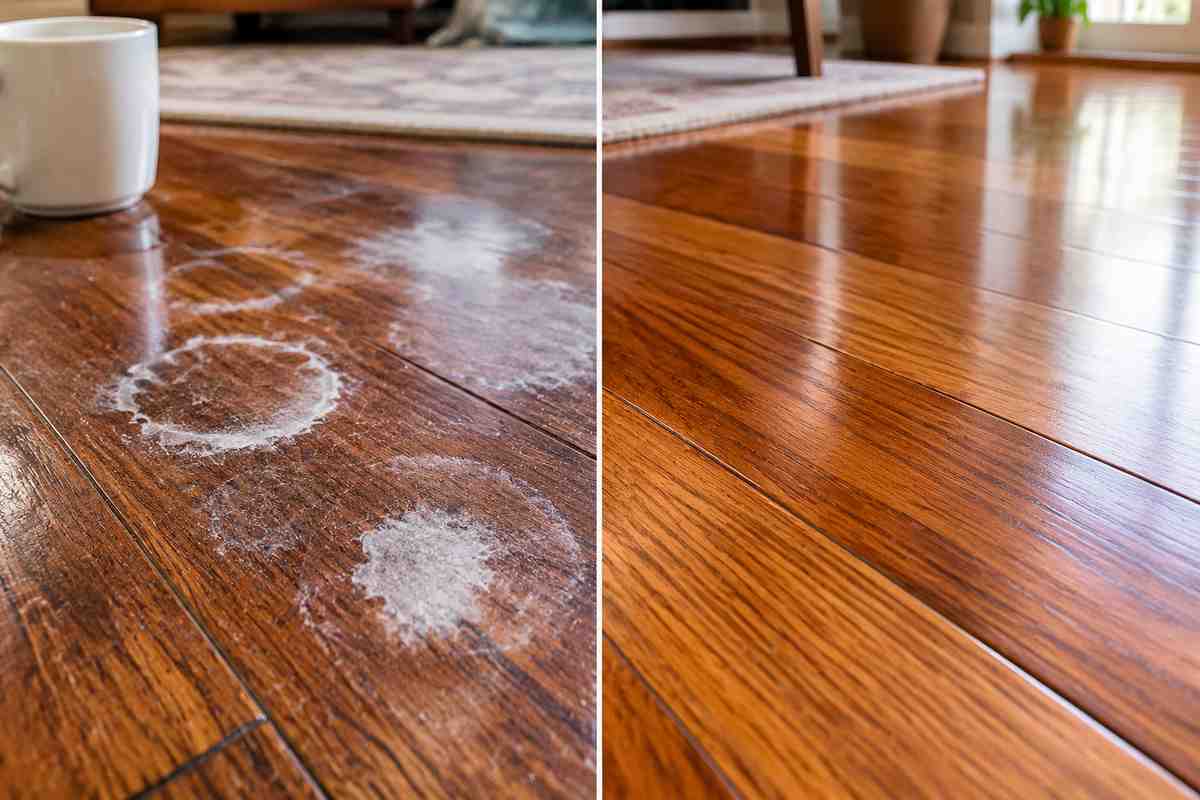
Nearly 60% of hardwood floor damage calls received by flooring professionals involve some type of surface discoloration, and white spots on hardwood floors are among the most common complaints. That cloudy circle left behind by a coffee mug or the pale mark beside a pet’s water bowl is more than a cosmetic issue; it usually means the floor’s finish has reacted to moisture, heat, or residue.
Most white spots on wood floors are surface-level problems rather than permanent damage. In many cases, they can be removed in less than an hour using simple items already available at home. The risk comes from choosing the wrong solution. Applying excessive heat, harsh cleaners, or unnecessary sanding can turn a minor haze into damage that requires repair.
This guide explains what causes white spots on hardwood floors, how to identify whether the problem comes from moisture, heat, wax buildup, or pests, and how to remove different types of spots step by step. It also covers engineered hardwood, white spots that appear after polyurethane, and stubborn pet urine stains.
What Causes White Spots on Hardwood Floors?
White spots usually appear when the protective layer on hardwood floors, such as polyurethane, wax, or shellac, reacts with moisture, heat, or leftover cleaning residue. In most cases, the wood underneath has not changed color. The cloudy appearance happens because moisture becomes trapped or tiny cracks develop in the finish, changing how light reflects from the surface.
Moisture and Water-Based White Spots
Water is the most common cause of white spots. A white water stain on wood floor surfaces develops when liquid enters the finish and becomes trapped between the coating and the wood underneath.
Common causes include spilled drinks, wet umbrellas, leaking plant containers, or any moisture that remains on the floor longer than it should. If you notice white spots on the floor after mopping, the problem is often caused by using too much water or failing to properly wring out the mop. Excess moisture can settle into tiny openings in the finish before it dries completely.
Heat Damage and Finish Reactions
Heat can also create white discoloration. Hot plates, coffee mugs without coasters, and strong sunlight coming through windows may cause the finish to “blush.”
This cloudy white haze forms when heat pushes moisture inside the coating into vapor. As the finish cools, that vapor can become trapped and leave behind a pale mark.
Wax Buildup and Cleaning Product Residue
Too much wax polish or the use of incompatible cleaning products can leave behind a cloudy layer on the floor surface.
This is a common reason behind white spots on a wood floor after cleaning. The floor may appear dirty even after cleaning because a layer of dried product residue remains on top of the finish.
Bugs, Insects, and Pests
Not every white spot comes from the floor finish. Some marks are caused by insects or biological residue, so knowing the best ways to sanitize hardwood floors can help you remove these marks safely.
White spots on the floor from bugs are often linked to carpet beetle larvae casings, silverfish droppings, or shed insect skins. These materials dry into small, pale specks that can look similar to finish damage.
White spots on the floor from spiders are usually caused by egg sacs or leftover silk. They often appear as small cotton-like patches or webby deposits in corners and underneath furniture. These stains have different causes than white spots from moisture or finish problems.
How to Identify the Type of White Spot on Your Floor
Correct identification saves time and prevents unnecessary damage. Different white spots come from different causes, so the same treatment will not work for every situation.
White Marks vs. White Stains vs. White Patches
- White marks on hardwood floors are generally small spots with clear edges, such as the ring left by a drinking glass. They usually affect the surface finish and can often be removed with simple buffing.
- White stains on hardwood floors are usually larger and less defined. They may indicate that moisture has moved deeper into the finish or possibly into the wood itself.
- White patches on hardwood floors cover wider sections and may be linked to long-term humidity exposure, finish failure, or sun-related fading.
Small White Spots vs. Widespread Discoloration
Small white spots on hardwood floors are usually limited to the finish layer. Heat marks and minor moisture issues often respond well to simple home treatments.
When white spots appear across several boards, the cause is more likely related to moisture imbalance, an aging finish, or reduced protection from the coating.
Comparison Table: Diagnosing White Spots by Symptom
| Symptom | Likely Cause | Depth of Damage | DIY Fixable? |
| Small ring under a glass or mug | Heat or light moisture (finish blush) | Surface only | Yes — easy |
| Cloudy film after mopping | Excess water or residue buildup | Surface only | Yes — easy |
| Chalky, granular specks | Insect casings or droppings | Surface only | Yes — clean + pest control |
| Cottony patches in corners | Spider egg sacs or webbing | Surface only | Yes — vacuum + clean |
| Gray-white patch that won’t buff out | Deep moisture penetration | Finish + wood surface | Moderate — spot refinish |
| Large soft, discolored patch with odor | Urine or long-standing liquid | Wood fibers | Difficult — may need refinishing |
| Whitish haze after new polyurethane cured | Trapped moisture during application | Finish layer | Yes — light buffing |
How to Remove White Spots on Hardwood Floors (Step-by-Step)
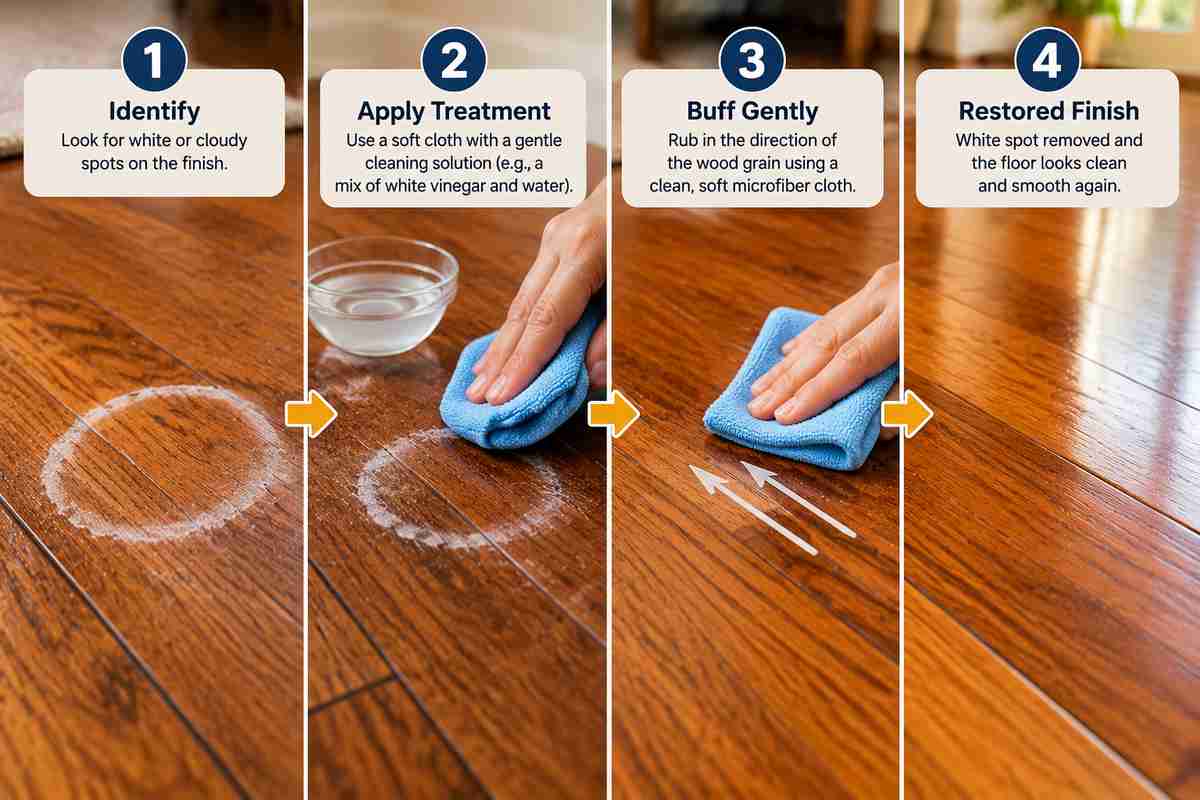
The right removal method depends on what caused the white spot. A water ring, heat mark, wax buildup, and deeper moisture stain may look similar, but each one needs a different approach. Start with the gentlest option first to avoid damaging the finish.
For Light Water Rings and Surface Haze
For minor white rings caused by moisture trapped in the finish:
- Dry the affected area completely with a clean cloth.
- Apply a small amount of mineral oil or mayonnaise directly over the spot. Both methods work by helping release trapped moisture from the finish.
- Leave it in place for 15–20 minutes, then gently buff the area with a soft cloth following the direction of the wood grain.
- If the haze remains, repeat the process after 24 hours.
For Heat Marks
Heat-related white marks often respond to gentle warmth because the problem is usually moisture trapped inside the finish.
- Place a clean cotton cloth over the affected area.
- Set an iron to low heat without steam and press it over the cloth for 5–10 seconds at a time.
- Check the spot frequently while working. The controlled heat can soften the finish slightly and help release trapped vapor.
- Once the area cools, buff it gently with a dry cloth.
For Wax and Product Buildup
Cloudy marks caused by cleaning products or excess wax need careful removal without soaking the floor.
- Mix a small amount of white vinegar with warm water (roughly a capful per liter).
- Lightly dampen a microfiber cloth with the mixture. Do not saturate the floor.
- Wipe the affected area and dry it immediately with another clean cloth.
- Avoid using all-purpose sprays in the future because they are a common reason haze returns after cleaning.
For White Spots on Engineered Hardwood Floors
Engineered hardwood requires more caution because it has a thinner real-wood veneer placed over plywood layers. Aggressive sanding can remove too much of that surface layer.
Use the mineral-oil method mentioned above first, and avoid iron or heat treatments because excess heat may weaken the adhesive bond holding the veneer in place.
If the spot does not improve, a specialized engineered-floor finish restorer from a flooring retailer is a safer option than sanding.
White Spots After Cleaning, Polyurethane, or Water Exposure
White Spots on Wood Floor After Polyurethane
If white spots appear soon after refinishing, trapped moisture during the application process is often the cause. This can happen when a new coat is applied before the previous layer has fully cured or when the room has high humidity.
Light buffing with a fine synthetic pad (000 steel wool alternative), followed by a thin re-coat, usually resolves the issue. During future refinishing projects, keep the room between 60–80% relative humidity and maintain good ventilation.
White Spots on Wood Floor After Cleaning
White spots that appear after cleaning are usually related to residue or product reactions.
Common causes include using oil soap on a water-based polyurethane finish or allowing cleaning solutions to dry naturally instead of removing them with a cloth.
When you sanitize hardwood floors, always use a cleaner labeled safe for your specific finish type to avoid dullness, cloudiness, or residue buildup. After wet cleaning, dry-buff the floor to remove leftover moisture and product residue, leaving the surface clean, protected, and streak-free.
White Spot on Hardwood Floor After Water Sat on It
When water remains on hardwood for several hours, such as from a forgotten spill, leaking appliance, or wet pet bed, it has more time to move beyond the protective finish.
These spots may take longer to improve with mineral oil and can require two or three treatment cycles spread over several days. If there is no visible improvement after a week, the moisture has likely reached deeper into the wood. At that point, spot refinishing may be needed.
Urine Stains and Pet-Related White Marks
Why Pee Stains Turn Wood White or Gray
Pet urine can affect hardwood floors because its acidity gradually breaks down the protective finish and reacts with natural compounds in the wood.
Fresh pee stains on hardwood floors may first appear as pale or white marks. As the urine continues penetrating deeper, the discoloration can change into gray or black staining.
How to Get Urine Stain Out of Wood Floor
- Absorb fresh urine immediately using paper towels. Avoid rubbing because it can spread the liquid further.
- Clean the area using a mixture of one part white vinegar and two parts water.
- For older urine stain problems on hardwood floors, apply a wood-floor-safe 3% hydrogen peroxide solution and leave it for 30–60 minutes before wiping.
- Deep stains that have reached the wood grain usually need sanding down to bare wood, followed by a stain-blocking primer and refinishing. Regular cleaning cannot completely remove stains that have penetrated this deeply.
Preventing Future Pet Stains
Use washable mats beneath water bowls, clean accidents as soon as they happen, and consider satin or matte finishes in homes with pets. These finishes tend to hide small surface marks better than high-gloss coatings.
Spot Refinishing and Restoring Shine to Hardwood Floors
How to Fix Worn Spots on Hardwood Floors
When the protective finish has completely worn away, simple cleaning methods will not restore the area. This type of damage commonly appears in high-use locations such as doorways, hallways, or areas under rolling chairs.
For these spots, light sanding with 220-grit sandpaper down to bare wood can prepare the surface for repair. After sanding, apply a matching stain and two coats of polyurethane to blend the repaired section with the surrounding floor.
Spot Refinishing vs. Full Refinishing
Hardwood floor spot repair is usually the better choice when only a small number of boards have damage. It allows you to target the affected areas without refinishing the entire floor.
Full refinishing becomes necessary when white spotting is spread across larger areas, the finish is more than 8–10 years old, or several rooms show similar signs of wear.
| Factor | Spot Refinishing | Full Refinishing |
| Best for | 1–3 isolated spots | Widespread wear or spotting |
| Cost | 50–200 (DIY) | 3–8 per sq. ft. (professional) |
| Time | 2–4 hours | 2–4 days |
| Skill level | Beginner-friendly | Moderate to professional |
| Visible seam risk | Low if blended carefully | None (uniform finish) |
How to Clean and Shine Hardwood Floors (and Why They Look Dull After Cleaning)
If your hardwood floors look dull after cleaning, the cause is usually leftover cleaner residue or a microfiber mop that spreads dirty water instead of removing it.
To properly shine hardwood floors, use a pH-neutral hardwood cleaner in small amounts, clean with a nearly dry cloth, and buff the surface immediately after washing.
Avoid steam mops completely. The combination of heat and moisture can damage the finish and is a frequent cause of new white spots.
Prevention: Keeping Hardwood Floors Spot-Free Long Term
- Place felt pads beneath furniture legs and use coasters under drinks.
- Clean spills within minutes instead of allowing them to sit.
- Keep indoor humidity between 35–55% throughout the year by adjusting with a humidifier or dehumidifier as seasons change.
- Apply a maintenance coat of finish every 3–5 years, even if the floor still appears to be in good condition.
- Use satin or matte finishes in high-traffic, pet-heavy, or family homes because they hide minor spotting better than glossy finishes.
- Arrange a quarterly pest inspection in older homes to identify insect-related spotting before it spreads.
FAQ / People Also Ask
What causes white spots on hardwood floors?
White spots are usually caused by trapped moisture, heat, or residue that remains between the floor finish and the wood. Water rings, hot dishes without coasters, wax buildup, and insect debris can all create a similar cloudy appearance.
How do I remove white spots on hardwood floors at home?
Apply mineral oil or mayonnaise to the affected area, leave it for 15–20 minutes, and then buff gently with a soft cloth following the wood grain. Heat marks can often be treated by placing a cloth over the spot and using a warm iron carefully. Repeat the treatment if necessary for stubborn marks.
Are white spots on engineered hardwood floors treated differently?
Yes. Engineered floors have a thinner veneer layer, so avoid aggressive sanding and heat-based methods. Gentle oil treatments or a specialized engineered-floor restorer are safer options because they reduce the risk of damaging the veneer’s adhesive bond.
Why do white spots appear on my floor after mopping?
Too much moisture left on the surface can seep into the finish before it evaporates, creating a cloudy white mark. Keep the mop nearly dry and buff the floor immediately after cleaning to reduce this problem.
Can bugs or spiders really cause white spots on floors?
Yes. Carpet beetle larvae casings, silverfish droppings, and spider egg sacs can dry into small pale deposits that look similar to finish damage. These marks usually disappear with simple cleaning or vacuuming.
How do I get urine stains out of a wood floor?
Blot fresh urine immediately and clean the area with diluted white vinegar. For older stains, a 3% hydrogen peroxide solution may help reduce discoloration. Stains that have deeply entered the wood usually require sanding and refinishing.
Why do my hardwood floors look dull after cleaning instead of shiny?
Dullness after cleaning is commonly caused by excess product buildup or a mop that spreads dirty water across the surface. Use a pH-neutral cleaner sparingly and dry-buff the floor afterward to restore shine.
When should I choose spot refinishing over full refinishing?
Spot refinishing is suitable for one to three isolated damaged areas. If the spotting covers larger sections or the finish is more than 8–10 years old, full refinishing provides a more consistent surface.
Conclusion
White spots on hardwood floors are usually caused by moisture, heat, or residue trapped in the finish layer rather than permanent damage to the wood itself.
The first step is identifying the type of spot. Water rings, heat marks, cleaning residue, and pest-related deposits all require different treatments. In many cases, simple solutions such as mineral oil, careful heat treatment, or diluted vinegar can remove the problem without professional repair.
Keeping humidity levels stable, using coasters, and cleaning spills quickly can prevent many future issues. When white patches remain after treatment, spot refinishing may be necessary to restore the damaged area.