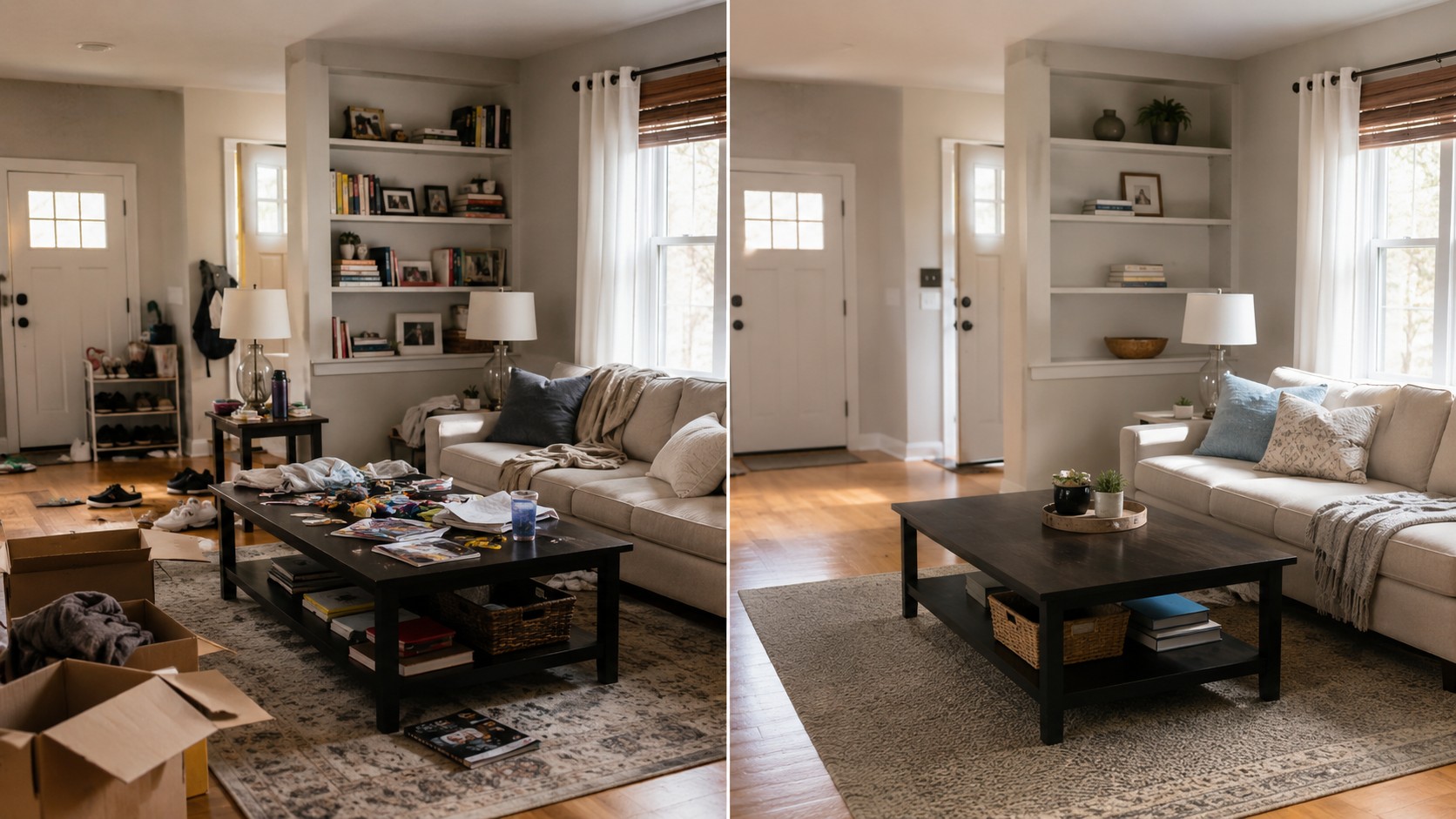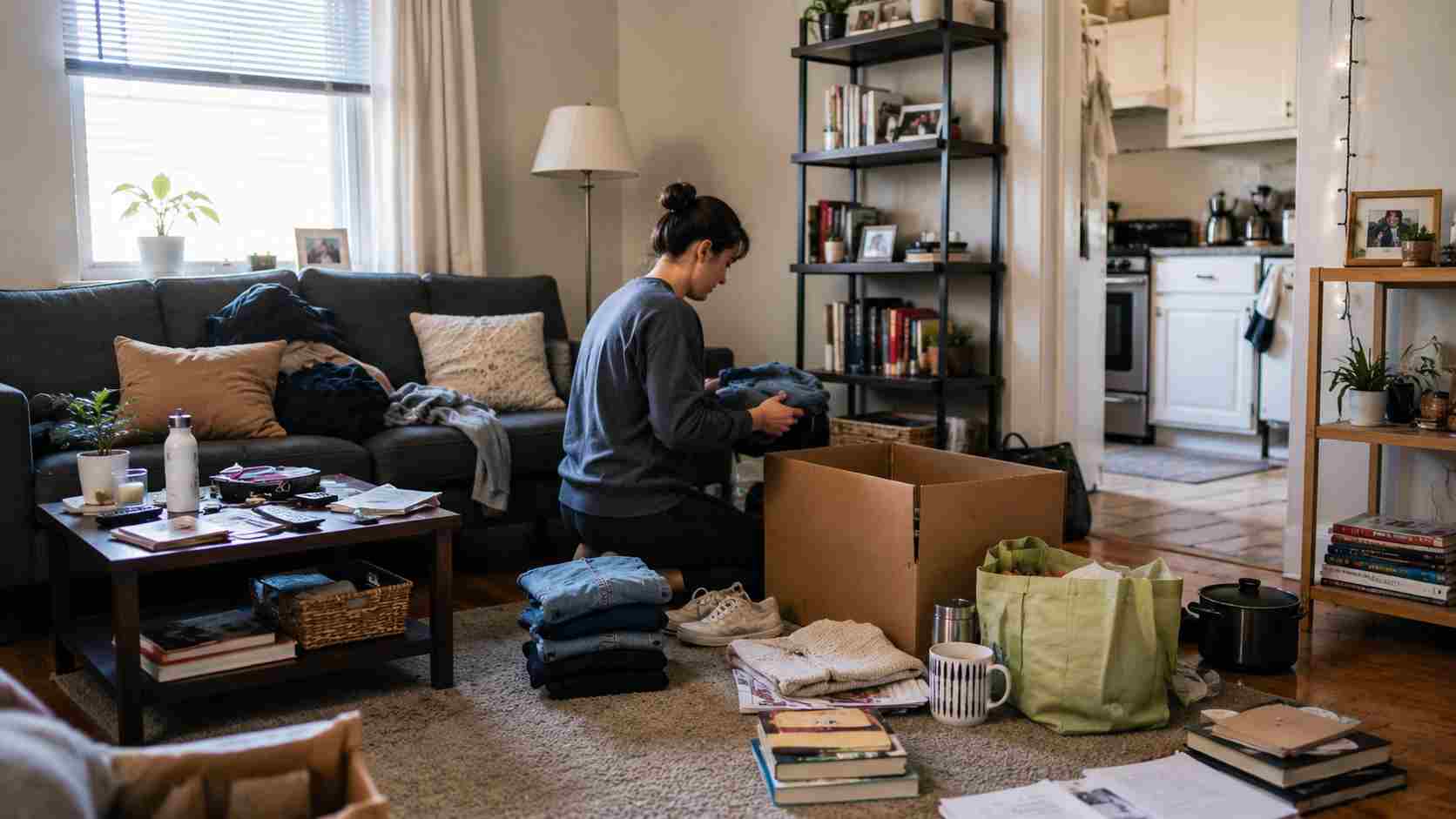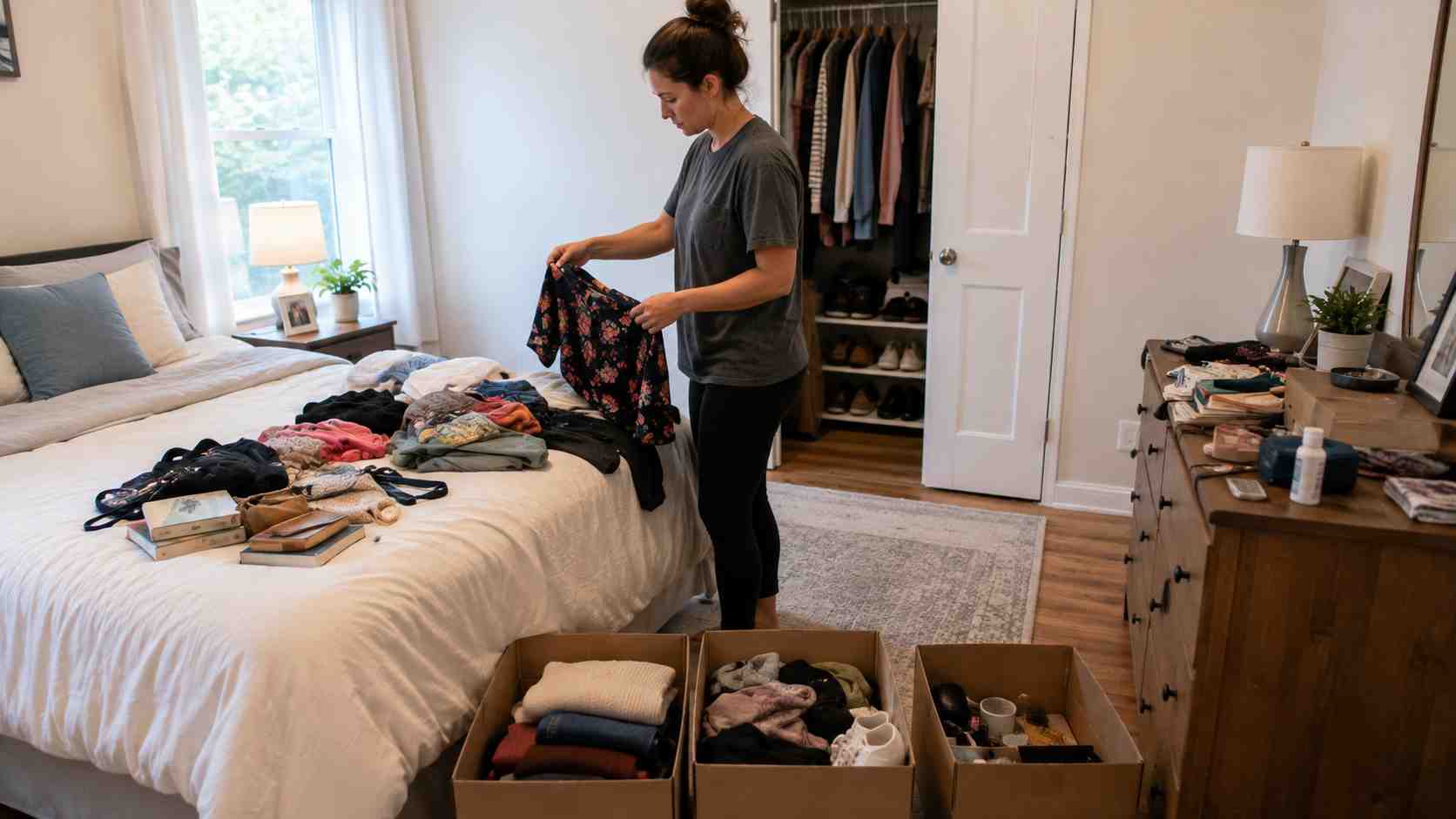
Knowing that clutter is a problem in many homes across America, bedrooms are one of the largest problem areas. You’re not the only one if you are waking up to a closet that you are afraid to open, piles of clothes, and overflowing nightstands.
One of the most productive house projects you can do is to declutter your bedroom. Your bedroom has an impact on your sleep and your morning routine, and your mental clarity is affected every single day, unlike any other room!
In this guide, you’ll learn:
Clear your room without feeling overwhelmed
- Organize even small or crowded bedrooms.
- Use storage ideas that actually make sense in real life.
- Keep things tidy without constant effort.
Let’s make your bedroom the organized and peaceful haven it should be.
Before You Start: The Right Declutter Mindset
Majority of the guides don’t even cover this part, and that’s where many people give up halfway. Before taking anything off a shelf, have a simple system to declutter and organize your belongings, along with a clear decision framework for what stays, what goes, and where everything should be kept.
The Three-Box Method (Better Than You Think)
All items touched are placed in one of three boxes: Keep, Donate/Sell, or Discard. The beauty of this technique is that it makes a binary choice. There’s no such thing as putting something “to the side” for later decision. That pile turns into the new “clutter”.
An expanded version includes a fourth box: Relocate. This is for things that you need in your home, but not in your bedroom. Not just moved around in the room, but completely out of the room should be a set of tools, a stack of mail, or your kids’ toys.
Use a Time Limit to prevent Decision Fatigue.
Decluttering your bedroom in one overwhelming marathon session leads to burnout. Rather, get to work in 45-minute concentrated bursts. Use a timer, pick one area (under bed, dresser, closet), and end when the timer goes off. This is especially helpful for those who live in apartments or small spaces where there may be more items per square foot.
The 12-month rule for clothes and linens.
If it hasn’t been used in 12 months, don’t use it. This is for seasonal clothing, additional bedding, and accessories. The exception: true sentimentals, which need a special place to be stored and not in your everyday places.
How to Declutter Your Bedroom Quickly
To declutter your bedroom, think of it as a series of tasks rather than one big task. This helps things to seem manageable and provides you with visible progress following every session.
The Floor: Start here. Remove all items from the floor, including those that “always are there. Collect clothes, shoes, bags, books, and miscellaneous items that have been accumulated. Sort them into the right box (Keep, Donate, Discard, or Relocate).
The fastest visual prize in a bedroom is a clear floor. Simply clearing the floor will make your room look a lot bigger even if you don’t do anything else.
Flat Surfaces (Dresser Tops, Nightstands, Windowsills): Flat surfaces are clutter magnets. All of it will come off—all of it! Then you make the decision on what really deserves its place back.
The rule of thumb is that there shouldn’t be more than three intentional items on each flat surface. A surface that is curated is a lamp, a plant, and a framed photo. Receipts, half-full water glasses, and a box of tissues are a mess.
Dresser Drawers: Take one drawer at a time. Empty it, clean it, and only put things back in it that you use and belong in it. Now is the time to get rid of the worn-out socks, the underwear you’ve been wanting to replace, and the 2-worn-in-3-years pajamas.
For each drawer, the goal is to be able to reach the object you need without digging. When you have to fish to the bottom of a drawer every morning, it needs to be reorganized.
Under the Bed: This is the area most tours consider to be an optional storage area. It’s a huge source of mental junk. Many people don’t even know what’s under their bed. Pull everything out. Assess it honestly.
When storing items under the bed, only store items that were planned and organized to be stored under the bed, not items that were put anywhere else because they were not known to anyone else.
Wall and Decor: Excessive hanging frames, mirrors, and decorative shelves add a lot of visual clutter to a neat room. Take a step back and take a look at your walls. Take out what doesn’t make you happy or serve a function. Minimizing visual stimuli in the bedroom promotes sleep.
Cleaning Out Your Bedroom Closet
The most stressful aspect for most people is the closet itself. It’s also the part of the area that is the least covered by the guides of competing teams. Here is a comprehensive system.
Step 1: The Full Empty
Empty the closet. Every item, every shelf, every hidden corner. It might sound extreme, but it is the only way to know what you have and make honest decisions. Empty and vacuum inside.
Step 2: Sort Before You Rehang
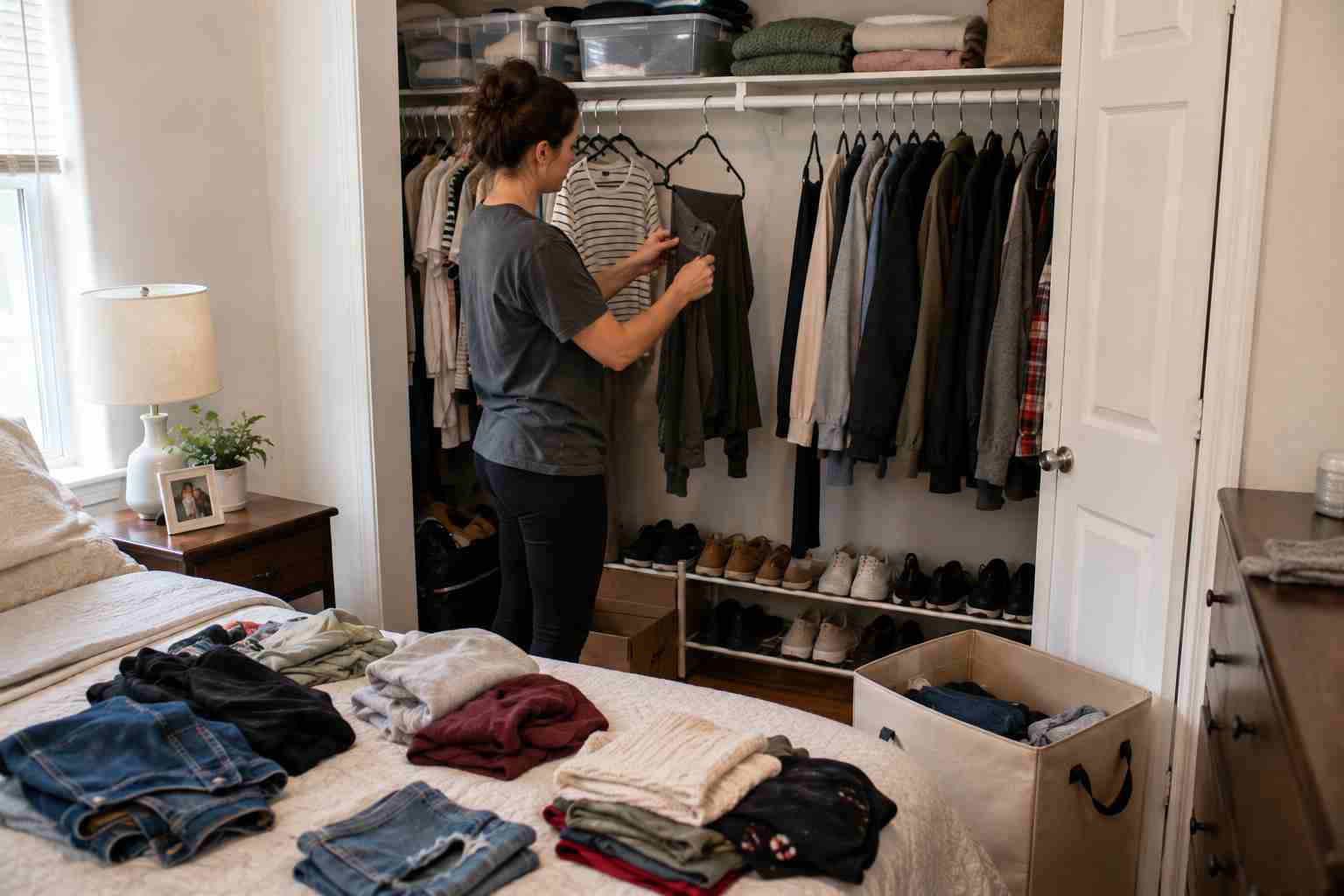
Label each section of your clothes in your bedroom: tops, bottoms, dresses, outerwear, work clothes, casual clothes, formal clothes, etc. This will immediately show duplication. How many t-shirts in total will you need? Probably not.
Be strict with the 12-month rule. Then test for fit, condition, and how it feels. If you are wearing clothes you don’t enjoy because they’re still in good condition, they are not serving you.
Step 3: Create a Logical Hanging System
Return objects in the same order as you used them. A practical system:
- Hang clothes by type (all shirts together, all pants together)
- Place items in each category in order from light to dark.
- Position frequently used items at hand and eye level
- Keep seasonal, formal, and rarely worn clothing in the back or high shelves.
Step 4: Organize Your Bedroom Closet with Smart Accessories
When the clothes are just the right size, the right organizing tools can make all the difference:
- Slim velvet hangers are an alternative to bulky plastic hangers and will double your hanging space.
- Folded piles are prevented from falling over using shelf dividers.
- Over-the-door organizers provide extra space for shoes, accessories, or small items without taking up floor space.
- Seasonal items are stored on upper shelves with clear stackable bins, so they can be seen and are contained.
- Drawer organizers or small bins on shelves organize accessories, belts, scarves, and jewelry.
Organizing tips for small closets.
When your closet is actually small (typical in older homes and apartments), make use of vertical space. For short hangers such as shirts and jackets, hang on a second hanging rod below. Make use of the bottom of the closet for a shoe rack or a single storage bin. All inches must be planned.
Smart Storage Ideas That Save Space
Good storage makes it easier to stay organized without thinking too much about it.
The space under your bed is more useful than it looks. It can hold seasonal clothes, extra bedding, or things you don’t need every day.
Storage beds are also helpful if you want to reduce visible clutter without adding more furniture.
Tall dressers and wall shelves are great for small rooms because they use vertical space instead of taking up the floor.
The goal isn’t to hide clutter; it’s to give everything a proper place so it doesn’t end up everywhere.
Cleaning and Resetting Your Room
Once the clutter is gone, cleaning becomes much easier and even satisfying.
Start by wiping surfaces, dusting furniture, and cleaning mirrors or switches. Then vacuum or mop the floor, including areas you usually ignore.
Fresh bedding also makes a big difference. It instantly makes the room feel new.
To keep things from getting messy again, small habits help more than big cleaning days:
- Make your bed in the morning
- Put clothes away right away.
- Spend 5 minutes resetting your room at night.
These tiny actions prevent clutter from building up again.
Decluttering a Bedroom Apartment
Decluttering a bedroom apartment helps create a cleaner, more comfortable space. Remove things you no longer use, then organize and declutter clothing, surfaces, and storage areas. Keep daily essentials accessible and give everything else a proper place.
Small Bedroom Tips
Small spaces need smarter choices, not more effort.
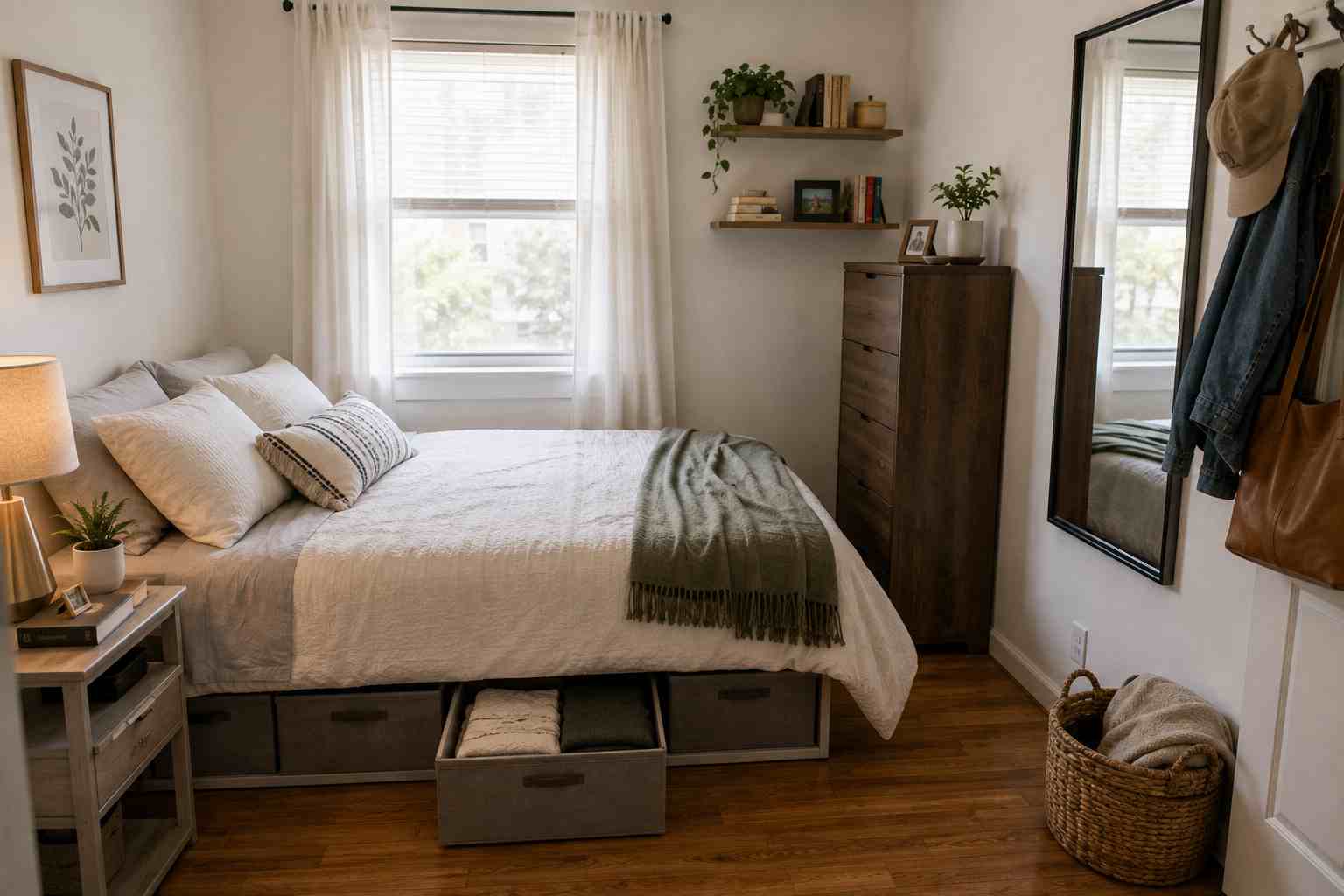
Furniture that does more than one job is very helpful. For example, a bench with storage or a bed with drawers saves space without adding clutter.
Try using wall space instead of floor space. Shelves, hooks, and hanging storage are especially useful storage ideas for apartments without closets, as they keep clothes and belongings organized without taking up valuable floor space.
Also, reducing physical items helps a lot. Go digital where possible—like photos, documents, or notes.
Even simple things like light-colored bedding or a mirror can make a small room feel more open.
FAQ: People Also Ask
What is the easiest way to declutter your bedroom?
The most effective way to declutter your bedroom is to do it one zone at a time (floor, surfaces, dresser, closet, under-bed) and to use a Keep/Donate/Discard/Relocate system. Set a 45-minute timer to finish what you started. Begin on the ground for quick visual reward.
How long does it take to declutter a bedroom?
The first step to decluttering your bedroom is to reduce the volume of items: grab a donation bag and a trash bag and spend 20 minutes filling both without giving too much thought to the items. If it is broken, duplicated, or not worn in 12+ months, it goes straight to the bin! Save detailed organizing (drawer dividers, closet systems) for a second pass, when excess has been removed.
What do I do if my room closet is too cluttered?
Empty the closet first, then categorize and re-hang. Follow the 12-month rule. Utilize space by adding slim hangers, a second rod for shorter items, and clear bins on upper shelves.
What are my options for under-bed storage?
The best under-bed storage will rely on your needs. Wooden under-bed storage drawers are the most hard-wearing and appealing for adults. Children’s under-bed storage is best suited to low-profile storage bins or rolling carts with labels. Bed dresser drawers with casters work well for apartments with limited floor space. Use covered containers to avoid dust buildup.
What are the best tips for organizing a small bedroom with lots of items?
Pay attention to vertical space and multi-purpose furniture. Install tall, narrow dressers, shelves against the wall, organizers over the door, and headboards with storage. Buy space-saving bedroom furniture, such as storage ottomans and platform beds with drawers. Follow the one-in, one-out rule to avoid the build-up of re-accumulations in confined areas.
When should I deep clean my bedroom?
Bedroom deep cleaning should be performed every 3 months: under-bed vacuuming, washing all bedding, wiping all surfaces, and cleaning furniture interiors. Lighter cleaning (making bed, cleaning surfaces, vacuuming floors) should be done once a week. Always do a full deep clean after a declutter session before items are returned.
Which of the following is not something you should have in your bedroom?
Work documents, exercise equipment that creates visual stimulation, excess technology, children’s toys (unless it’s a children’s room), and anything that belongs in another room but ended up there by default. Only sleep, dressing, and quiet relaxation items should be allowed in the bedroom.
What can I do to keep my bedroom from getting cluttered once more?
The two habits that are important for prevention are to have a place for everything and to implement the one-in, one-out rule for new items that enter the room. Take 5 minutes before going to bed each night to put things away. Refresh every month for 20 minutes to prevent the buildup.
Final Thoughts
Cleaning up your bedroom is not a one-afternoon task; it’s the start of a new relationship with your personal space. The three key things to remember from this guide:
- Do not work in the entire zone. Divide the process into floor, surfaces, dresser, closet, and under-bed areas to keep it manageable and provide consistent wins.
- Storage solutions are only effective when you clean out the clutter. Purchasing organizers before eliminating unnecessary objects is merely rearranging clutter. Limit first, then invest in smart storage such as wooden under-bed storage, space-saving bedroom furniture, and closet systems.
- The maintenance habits are more important than the initial purge. If everything has a place and you take 5-10 minutes a day to put it away, your bedroom will remain organized.
A calmer, more organized bedroom isn’t something far away; it starts with a single small step today.