
The average American house has more than 300,000 objects, yet most people feel they don’t have enough of them. You’re not the only one who has tried to get rid of things and found yourself more frustrated after the process than before. It’s not about your house. It’s those little mistakes you’re making that are holding you back every time you try.
Many guides do not mention that there are some common decluttering mistakes that should be avoided. These pitfalls cost you time, money, and motivation, from going into the wrong room first to investing in the storage bins before everything is out of the way.
In this guide, you will discover the most harmful decluttering blunders people make room by room, how minimalism decluttering mistakes are different from common tidying mistakes, learn how to clean a cluttered home without burning out, and the best tips for decluttering that stick around for good.
The #1 Decluttering Mistake: Starting Without a Plan
You may be making the worst decluttering error of all: diving in blind if you don’t know where to begin. Most people take things out of many places at once and become overwhelmed halfway through, leaving the space looking worse than they’d hoped.
The reason why a Vague Start Kills Momentum
If you don’t have a room-by-room plan, you’re just taking things from room to room, instead of choosing what to keep and what to let go. It’s one of the most frequent decluttering pitfalls that they see, and they call it the “shuffling trap. You feel as if you’re working hard, but nothing is leaving your house.
The remedy: Record, before you pick up a single object, the exact areas that you will work on, in order. Begin with the smallest area to be cleared, which is one drawer, one shelf, or one counter. This will allow you to see a win quickly, sustaining momentum.
Decluttering Too Much Too Fast
The first decluttering mistake is attempting to go through your whole house in one weekend. It causes decision fatigue, untouched piles, and a never-ending project that remains unfinished for weeks.
Rather, divide the task into 30–60 minute periods. Work on one micro-zone each session: one kitchen cabinet, one closet, or one under the bathroom sink. When cleaning a cluttered house, it is best to get through the small zones over and over.
Skipping the “Why”
This is an angle that most decluttering guides don’t mention: before you begin, imagine how you want the space to look when you’re finished. Do you wish your kitchen to be functional and serene? Would you like to treat your bedroom like a sanctuary? When you don’t have a vision in mind, all decisions are difficult,t and you’ll be tempted to stick with “just in case.”
Room-by-Room Decluttering Mistakes to Avoid
There are varying failure points in different spaces. These are the top decluttering room-by-room mistakes, such as closet decluttering mistakes and serious decluttering mistakes in the kitchen.
Closet Decluttering Mistakes to Avoid
Decluttering takes a back seat in closets. The worst closet cleaning pitfalls to steer clear of are:
Maintaining the “someday” closet. The average person wears 20% of his or her wardrobe 80% of the time. If it has not been worn for one year and you do not have a particular event planned in the near future for it, it would be better to use something else.
Organizing before purging. Purchasing matching hangers and drawer dividers before you know what is going in them is a common mistake. You’ll be spending money to organise stuff that should be taken out. Be aware of the actual space you have available and understand exactly what you have stored before you buy any organizing products.
Decluttering in Low Light. Closet lighting is usually low, and this causes color to appear differently and helps to accentuate flaws. When checking clothing, always check under good lighting first to determine what to store.
The correct method: Remove all of it! Before any items are returned, divide them into four categories: Keep, Donate, Sell, and Discard.
Decluttering Do’s and Don’ts in the Kitchen
The kitchen tends to be a room that is used the most and is also one of the rooms that has the most challenging time being uncluttered. Here are some common kitchen cluttering pitfalls to avoid:
Keeping duplicate gadgets. Most homes have two or three of each tool: two or three spatulas, three can openers, four measuring cups, and so on. The first step in a kitchen tidy-up is to ruthlessly remove the duplicate items.
Ignoring cabinet depth. Deep cabinets are harder to access, and items placed in the back are virtually invisible. One of the items on a kitchen declutter checklist should be dedicated to removing all items from deep cabinets and determining what is actually being used.
Storing old food as “just in case”. Pantries become stocked with outdated spices, old grains, and canned items from years gone by. When cleaning out the kitchen, look at all dates and remove anything that is expired. A streamlined and efficient pantry makes meal preparation truly quick.
The cabinet-by-cabinet approach works best for decluttering a kitchen. When empty, wipe it thoroughly and then put only those things back that are used. This is the most effective way to have a tidy kitchen without getting overwhelmed.
Bedroom Decluttering Mistakes
Many ask, “How do I keep my bedroom clean?” but the answer begins before the cleaning even starts.
Under-bed chaos. Sliding under the bed is a common avoidance technique, but not a storage solution. Under-bed space must be used for items out of season only, in labeled, sealed containers.
As a catch-all, use flat surfaces. Because they’re horizontal, dressers and nightstands attract clutter. The principle: If it can’t go in a specific place on a level surface, then it cannot.
Take out all the items that do not belong. Only return items that have a permanent assigned home. Consistent room tidying habits can only be developed by learning to put things back as soon as they have been used, not when you feel overwhelmed.
The Organizing Trap: Buying Storage Before Decluttering
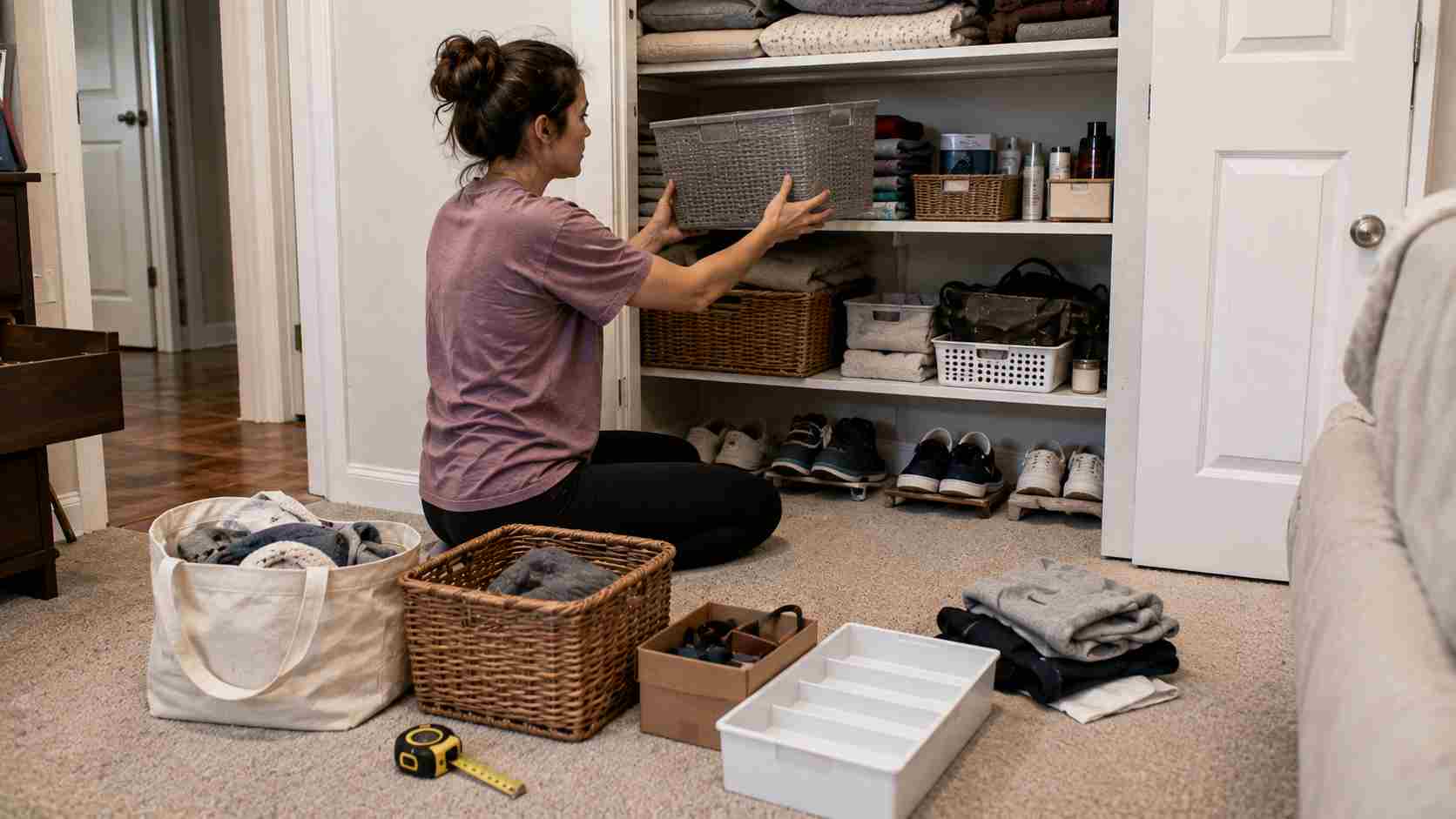
This is one of the most costly and unhelpful cluttering downfalls that people commit to minimalism’s cause. It’s productive to go to a home store and put bins and baskets in your cart. However, purchasing storage containers prior to decluttering is not cleaning up the clutter.
Why This Mistake Happens
Storage bins seem like solutions. They promise order. However, professional organizers say they receive dozens of empty organizing containers from their clients because when they get to work, there just isn’t enough left to fill them.
What Actually Goes Wrong
You end up spending money on containers that are the right size, wrong shape,e or wrong number for the space you have. You’re also cluttering your home, making the problem worse before you’ve solved it!
The right sequence:
- Clear out first — take away all that is not used, needed, or loved.
- Take measurements of the space.
- Determine what is missing and how it can be organized
Only after you’ve done that, buy storage solutions.
As professional organizers say, clear the area out completely and measure it first before purchasing anything, since you never know what will fit and function until you see the empty reality of the space you have to work with.
The Aesthetic Trap
Bin matching and labelled pantry jars are now made possible by social media! Trending aesthetics aren’t a decluttering plan, though. A nice system that doesn’t match your lifestyle will come to an end in weeks. Function is number one, form is number two; always.
Emotional and Psychological Declutter Mistakes
Clutter doesn’t always mean disorganized. It’s frequently because feeling and dealing with emotional items is one of the most ignored decluttering errors.
Making decisions based on Guilt.
If you have items that you don’t use because they were too costly, too generous to receive, or “just in case you need them someday,” then it’s clutter with guilt. Everything you store comes at a price. It takes up space, needs maintenance, and contributes to the visual noise your brain has to deal with daily.
Starting With Sentimental Items
One of the worst spring cleaning decluttering errors that novice declutterers make is this. The most difficult items to decide on are sentimental: photos, heirlooms, and gifts. Beginning with them means that you start off with decision fatigue before you’ve made a lot of progress.
Professional Approach: Keep the sentimental items last. Start with items that are easy to identify, such as old food, duplicate kitchen utensils, or worn clothes. Practice decision-making before the emotionally charged material.
Trying to Do It All Alone
There are a lot of people who don’t ask for help because they’re embarrassed by their clutter. However, when you get overwhelmed, working alone slows things down and makes it more lonely and difficult than it has to be. Having a friend, a professional organizer, or an accountability partner to sit with you during a session can make a huge difference in outcomes.
Not Letting Donations Actually Leave Your Home
It’s good to see the bags going, but only if they’re leaving your house soon. Items in donation bags that remain in a hallway or spare room for weeks can be put back in the same positions. Plan a time to drop off the donation, or have bags in the car right after they are filled with items.
Maintenance Mistakes That Bring Clutter Back
Cleaning up isn’t a single task. The worst long-term decluttering errors occur once the initial session is finished.
No “One In, One Out” Rule
As each object enters your home, remove one object from the home. If this rule is not followed, even the best tidied-up rooms will fall back into their original state in a matter of months. This is particularly important following spring cleaning activities when motivation is at its peak and purchasing items seems like a reward.
No Daily Reset
Clutter does not just ‘happen’ overnight; it is created in little bits and pieces over time. Returning items to their proper places after 10 minutes every night helps to avoid the gradual progression towards chaos. Cleaning a room is not just something you know how to do; it’s something you have to do.
No Regular Review
Spaces evolve. The utensils you used in your kitchen last year might not be the ones you use today. Hold a seasonal review, especially when you’ve made major changes in your life, such as moving, downsizing, or seasonal changes, to see if your current system still works for you.
Purchase of bulk items without assignment to storage.
One of the main reasons for clutter is buying in bulk. When you’re making a purchase in bulk repeatedly, designate a space for each bulk item beforehand. When there’s no place for a Costco run to settle in a newly organized home, it can quickly unwind.
Decluttering Mistakes vs. Best Practices: Quick Comparison
| Common Mistake | What Goes Wrong | Best Practice Instead |
| Starting with the hardest room | Overwhelm and burnout | Start small and easy |
| Buying storage first | Wasted money, wrong sizes | Declutter first, then buy |
| Keeping sentimental items early | Decision fatigue | Save for last |
| Moving items between rooms | Nothing actually removed | Sort: keep/donate/discard |
| Doing everything at once | Exhaustion | Short focused sessions |
| Not donating quickly | Items come back inside | Remove donations immediately |
| Organizing before purging | Organized clutter | Purge first |
| No maintenance routine | Clutter returns | Daily reset + seasonal review |
FAQ: People Also Ask
What is the biggest decluttering mistake?
Starting without a plan. Most people dive into the biggest, most overwhelming space without any sort of system, become overrun with decisions, and give up before they get through. Begin small, at first one drawer or one shelf, and then build up momentum.
My house is messy; where do I start?
The easiest and most obvious win is one kitchen counter, one nightstand, or one junk drawer. When you finish a small section, you have a sense of achievement that you can make progress. Once that’s done, move to the next smallest zone. The aim is to build momentum, not perfection.
How do I clean a cluttered house without getting overwhelmed?
Divide the task into 30-60 minute, micro-zone sessions. Avoid cleaning an overly cluttered home in one day. For each object, make four decisions that remain: ‘Keep’, ‘Donate’, ‘Sell’, ‘Discard ‘, and never bring an object to another room without a permanent home for it.
What are the most common kitchen decluttering mistakes?
Keeping duplicate tools, ignoring deep cabinets, letting food expire, and buying storage before sorting are the most common issues. Always make sure to use a kitchen declutter checklist and start with one cabinet at a time to build momentum.
How do I keep my bedroom clean after decluttering?
Give everything a proper place and return items right away after use. Keep surfaces like dressers and nightstands clear and do a short nightly tidy-up to avoid clutter buildup.
Should I buy storage bins before decluttering?
No. Buying storage bins before decluttering results in the wrong bin shapes and sizes, which you might not need later. Always declutter first. Then decide what storage, if any, is actually needed.
How often should I declutter my home?
A light seasonal check every few months works well. Daily small resets also help prevent clutter from building back up. After major life changes (a move, a new baby, a job change), a targeted declutter of the affected areas helps the space adapt to your new routine.
Conclusion
Decluttering rarely feels hard because of the space itself. More often, it’s the small habits and mistakes that build up over time.
If you want results that actually last, keep it simple:
- Start with a clear plan
- Declutter before organizing
- Build small daily habits
You don’t need a perfect system or a full weekend to fix everything. You just need to start with one small space and let that momentum carry you forward.