Most homeowners select the wrong species, thickness, or finish when first installing hardwood floors, but they can be refinished up to 10 times over their 100-year lifespan. This hardwood flooring guide remedies that. Whether you’re comparing solid versus engineered hardwood, planning a DIY wood floors project, or hunting for scratch-resistant hardwood flooring that survives dogs and kids, you’re in the right place.
You’ll discover how to know if a hardwood flooring guide is solid, engineered, or parquet, how to interpret hardwood flooring specifications such as “thickness” and “Janka hardness,” and what a realistic hardwood flooring installation guide really entails, as well as the exact hardwood flooring tips that will help keep your hardwood flooring scratch-free for decades. Knowing the different types of hardwood floors you can use is important.
Understanding Your Hardwood Flooring Options
The first step in following hardwood flooring guidelines is to know what’s under your feet. The market is dominated by three types, each of which acts differently. Learning how each option performs will help you choose the right flooring for your home.
Solid Hardwood
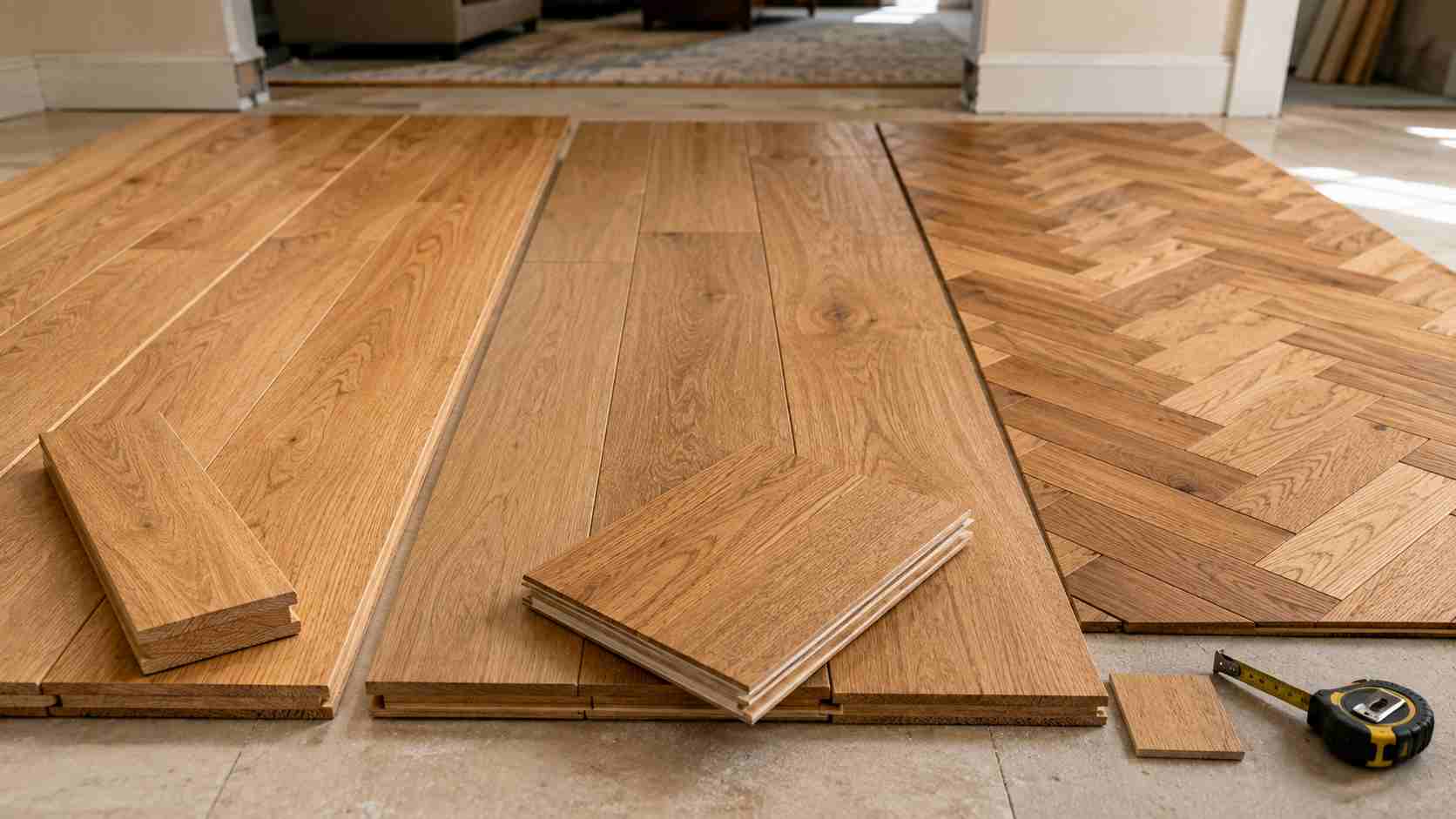
Solid hardwood can be sanded and refinished 5-10 times and is the most durable choice for above-grade rooms. Does not tolerate moisture, so bathrooms and basements are not recommended.
Engineered Hardwood Flooring Guide Basics
Engineered hardwood is a real wood veneer over a plywood or high-density fiberboard core, providing much higher dimensional stability. It is suitable for concrete subfloors, radiant heat, and humidity changes that would cause solid planks to warp. Engineered hardwood and dogs go hand-in-hand because many engineered lines are now available with water-resistant or waterproof cores that are not susceptible to mishaps.
Parquet and Timber Flooring
A parquet flooring guide covers small wood pieces arranged in geometric patterns such as herringbone and chevron and used in period houses and formal rooms. In many other parts of the world, the term “hardwood” is often synonymous with timber flooring, and it is generally used as such in North America when referring to solid-sawn wood (one layer milled from timber as opposed to engineered wood).
| Type | Moisture Resistance | Refinishing | Best Rooms | Typical Lifespan |
| Solid Hardwood | Low | 5–10 times | Living rooms, bedrooms | 50–100+ years |
| Engineered Hardwood | Moderate–High | 1–3 times | Kitchens, basements | 20–80 years |
| Parquet | Low–Moderate | 3–6 times | Dining rooms, entryways | 40–80 years |
Hardwood Flooring Specifications and Thickness Guide
Reading hardwood floor specifications correctly can avoid expensive mismatches with your subfloor and door frames.
Hardwood Floor Thickness Guide
Solid hardwood is usually ¾″ thick and can be sanded several times. The thickness of the engineered wood, from ⅜ inch to ⁹⁄₁₆ inch, and the thickness of the veneer (wear layer), 0.6 mm to 6mm determines the number of times it can be refinished. Thicker veneers (3mm+ or more) act much more like solid wood.
Janka Hardness and Durability
The Janka hardness scale is a measure of the resistance to embedding a steel ball into the wood. Red oak is around 1,290 lbf; hickory is near 1,820 lbf; and the Brazilian walnut tops 3,600 lbf. If you have kids or dogs around, scratch-resistant hardwoods are a must, and one of the species with the highest scratch resistance is above 1,300 lbf.
Grades and Finish Specs
Check for AC ratings (finish abrasion resistance) and ensure that the finish is aluminum oxide (it is more resistant to scuffing than standard polyurethane). Long-term durability is as important as species choice, but competing manufacturer guides seldom refer to AC ratings.
Hardwood Flooring Installation Guide
Nail-Down, Glue-Down, or Floating
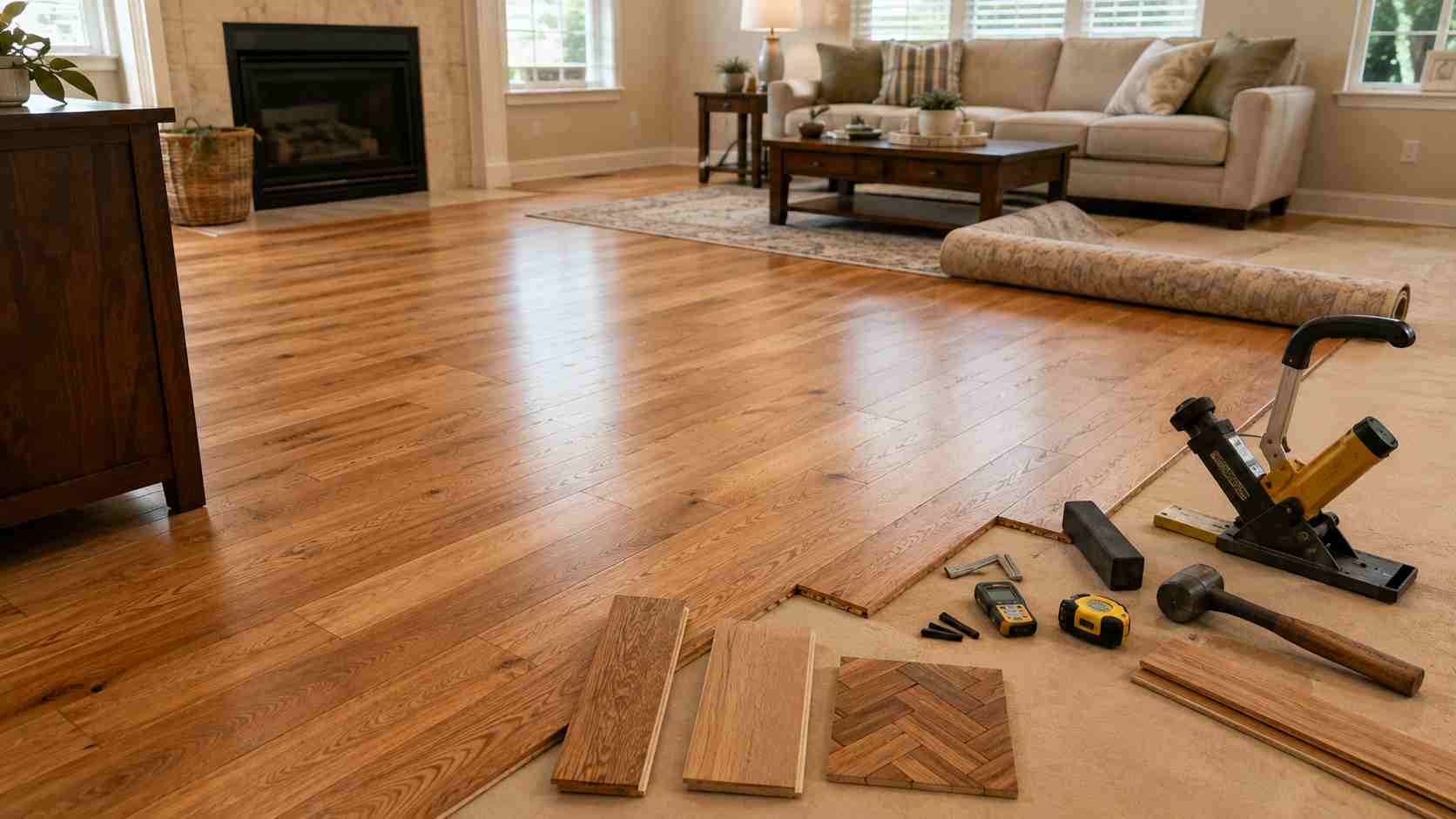
A wood subfloor is nearly always covered with solid hardwood. Engineered hardwood is available in all three types: nail-down, glue-down (often over concrete), or floating (with planks that click together without nails). Following proper wood flooring installation guidelines helps ensure correct subfloor preparation, moisture control, and long-term floor performance.
Can You Do DIY Hardwood Flooring?
With click-lock engineered wood flooring, it’s actually possible to create a hardwood floor yourself, which explains why search terms like “hardwood flooring easy install” are so prevalent. DIY hardwood flooring projects have become popular because floating floors require little in the way of specialty tools, just a saw, spacers, and a tapping block, with no glue or nail gun required. Solid nail-down hardwood flooring, on the other hand, requires a flooring nailer and proper subfloor skills, so most beginners should hire a professional for this option.
Hardwood Flooring Installation Tips and Tricks
- Install acclimated planks in the room for 3–5 days before installation to avoid post-install gaps.
- Allow a ¼-½” of expansion space at each wall, which will be covered with baseboard or shoe molding.
- Use a moisture meter to test moisture in the subfloor; if it is over 12%, moisture control should be done before installation.
- For a stronger and more natural-looking floor, stagger end joints 6 inches or more apart between rows.
- Don’t buy a flooring nailer for a one-room project; it’s the one most people don’t think of as a cost saver when they are doing their own work.
Hardwood Floor Protection and Dog-Proofing
Floor Protectors for Hardwood Floors
The minimum standards for protecting hardwood floors include felt pads under all the furniture legs, furniture coasters under heavier furniture, and rugs in high-traffic areas. If you need to cover a hardwood floor for a short time while renovating or moving, consider breathable rosin paper or a special floor protection film instead of plastic sheeting, which can cause moisture to become trapped in the finish.
Dog-Proof Hardwood Floors
The best way to dog-proof hardwood floors is to use three strategies: choose a hardwood that has a Janka rating above 1,500 lbf or an engineered hardwood that has been densified; keep your dog’s nails trimmed short; and install runners along your dog’s usual paths. Engineered hardwood and dogs are a perfect fit, as many dog-friendly hardwoods feature a scratch-resistant urethane finish that is 4–6x harder to scratch than traditional finishes.
General Protect Floors Habits
Rotate furniture and rugs every season from a south-facing window, install UV window film in south-facing rooms, and never drag heavy furniture; always lift.
Wood Floor Cleaning Guide
Daily and Weekly Care
Sweep or vacuum (soft-brush head only) to clear away grit, which can cause scratching to the finish. Use a slightly moistened cloth to clean up spills right away.
Parquet Floor Cleaning Tips
Dust and debris become trapped in the many seams in parquet floors, so vacuum weekly with a hardwood-safe attachment, and never steam mop, as moisture and heat can cause individual parquet blocks to lift.
What to Avoid
Avoid vinegar and water solutions, ammonia-based cleaners, and oil soaps unless the manufacturer recommends them; most polyurethane finishes fade over time. Clean with a pH-neutral hardwood cleaner and a microfiber mop, wrung almost dry.
FAQ: People Also Ask
How thick should hardwood flooring be?
The thickness of solid hardwood is generally ¾”, and engineered hardwood is in the range of ⅜” to ⁹⁄₁₆”. Choose thicker engineered planks with a 3mm+ veneer if you plan to resand the floor in the future, as they allow refinishing.
Is engineered hardwood good for dogs?
Yes, particularly pet-specific lines that have reinforced cores and anti-scratch finishes. Check for Janka ratings of 1,500 lbf or higher, and a urethane topcoat with a high-traffic rating.
Can I install hardwood flooring myself?
Floating engineered hardwood is easy to work with simple tools. Solid hardwood requires more complex installation, so professional installers should handle the process.
What’s the difference between hardwood and parquet flooring?
Always lift and never drag items across the floor; put a piece of felt under each leg of furniture; use furniture coasters under heavy furniture.
What’s the best way to clean hardwood floors?
Sweep or vacuum on a regular basis and then damp-mop with a hardwood floor cleaning spray that has a pH of 4.5 to 8.5. Do not use steam mops, vinegar, or too much water.
How long does hardwood flooring last?
When refinished periodically, solid hardwood can last 50-100+ years. The lifespan of engineered hardwood is 20-80 years, based on veneer thickness and maintenance.
Does hardwood flooring add home value?
Yes, Hardwood floors have always been a top return-on-investment flooring upgrade, as they will typically pay for themselves within 70–80% of the installation cost at resale.
Conclusion
There are three choices to make when selecting a wood floor: select a wood type that fits the rooms and lifestyle; educate yourself on wood floor thickness, wood Janka rating, and wood floor finish before making a purchase; and establish the above protection and cleaning routines. With this hardwood flooring guide, your floors will look beautiful, no matter how much foot traffic, kids, or dogs they get. Ready to start your project? Check species and thickness before ordering samples, and fully acclimate planks before installation day.