Flooring takes up more square footage in your home than any other surface, and most homeowners don’t spend as much time researching flooring as they do choosing a paint color. It’s an expensive error: A mismatched floor can shorten its life by years and cost thousands of dollars in resale value. Before the first plank is placed on the floor, you’ll need to know how to choose the right flooring, so you can consider durability, moisture resistance, budget, and style.
Here you’ll discover the relative cost and durability of the five major flooring types, how to choose the right flooring for each room in your home, and how to avoid the pitfalls that will have you back in the showroom in five years.
Why Choosing the Right Flooring Matters
Flooring is a decision that takes a decade and a project that takes a weekend. It’s not like paint or furniture; it affects each room differently depending on humidity and traffic. This hardwood flooring guide explains how wood flooring choices can impact comfort, durability, and long-term home value. Homes with hardwood floors often attract buyers, which is why many renovators consider hardwood for living spaces while avoiding unsuitable areas like bathrooms or basements.
The best option is not always the most popular option. It’s the one that matches your home’s foot traffic, moisture exposure, and budget over its entire life, not just on day one.
Most Popular Types of Flooring in 2026
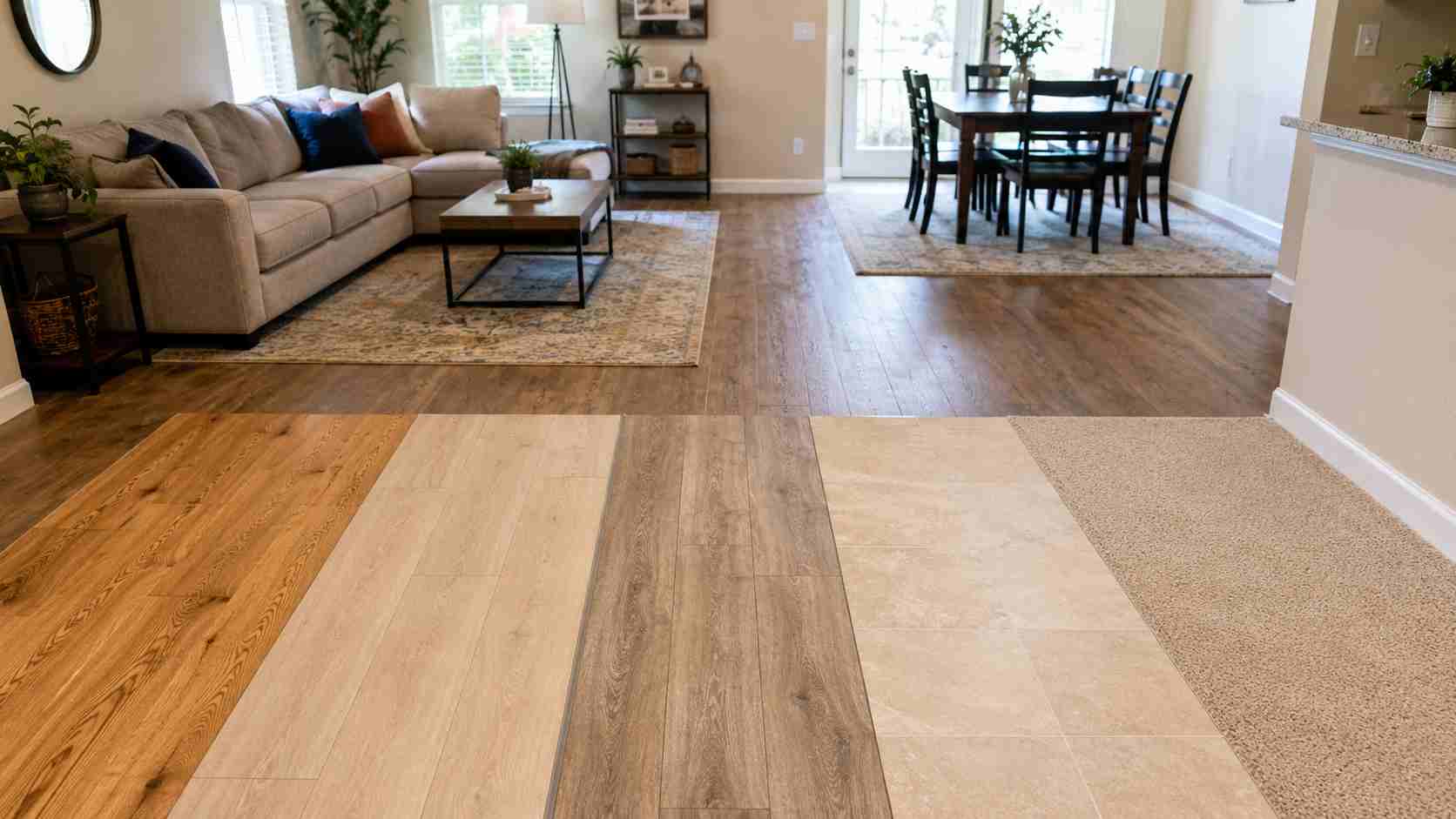
You can’t know how to select the ideal flooring until you have a clear understanding of what is available. These are the top five types of flooring installations that are taking place today.
Luxury Vinyl Plank (LVP)
Since 2020, LVP has been the leading type of residential flooring. It is 100% waterproof, scratch-resistant, and looks so natural that most house guests won’t know it’s not real wood. For pet homes, the best choice is commercial-grade LVP 20-mil or thicker, which is more resistant to claw marks, accidents, and standing water than nearly any other. It is suitable for most rooms, except for those where warmth underfoot is most important, such as bedrooms.
Hardwood
When people are house-hunting, they are most likely to seek out solid hardwood. It can be refinished 5-7 times during its life and will last 50-100+ years, longer than any other category on this list. The downside is the expense and the risk of moisture, so it is not suitable for bathrooms or basements.
Laminate
Laminate is the low-cost alternative to hardwood and may be partially recycled. It is scratch-resistant from pets and children, but not waterproof and will warp within months if exposed to water.
Tile
Tile is a ceramic or porcelain product.
For wet areas, tile is the ultimate in durability. Porcelain is denser and more water-resistant than ceramic, which is the preferred material for bathrooms, kitchens, and entryways. The past few years have seen a trend toward large format tile (24″x24″ and larger), and heated tile has become more prevalent in primary bathrooms.
Carpet
Carpet remains a significant percentage of new flooring installations and is popular for its comfort, warmth, and sound absorption properties when compared to hard flooring. The softest underfoot, but also the shortest-lasting, usually requiring replacement every 5-10 years in high-traffic homes.
Flooring Types at a Glance
| Flooring Type | Installed Cost (per sq ft) | Typical Lifespan | Water Resistance | Best For |
| Luxury Vinyl Plank (LVP) | $4–$11 | 15–25 years | Excellent (waterproof) | Kitchens, basements, pet households |
| Solid Hardwood | $8–$18 | 50–100+ years | Poor | Living rooms, dining rooms, resale value |
| Engineered Hardwood | $6–$16 | 30–50 years | Fair to Good | Main living areas, mild moisture zones |
| Laminate | $2.25–$8 | 15–25 years | Fair (water-resistant only) | Bedrooms, hallways, budget renovations |
| Porcelain/Ceramic Tile | $5–$20 | 50–75 years | Excellent (waterproof) | Bathrooms, kitchens, entryways |
| Carpet | $2–$8 | 5–15 years | Poor | Bedrooms, playrooms, cold climates |
What to Consider When Choosing Flooring
After knowing these categories, filter down the decision with five practical filters.
Household Traffic and Lifestyle
One professional in a condo will have completely different needs than a family of 3 children and a dog. For households with high-traffic areas, durability and scratch resistance should be considered more important than softness or cost.
Moisture Exposure
Moisture is a problem in bathrooms, kitchens, laundry rooms, and basements, where standard hardwood and laminate just will not do. Practicality of the room’s humidity level comes first, aesthetics second.
Budget Over the Full Lifespan
A low-cost floor that must be replaced in eight years may be more expensive per year than a more expensive floor that lasts thirty years. At $4 per sq.ft. with a 20-year life, laminate is estimated to cost approximately $0.20 per sq.ft. per year, while carpet, at the same install cost, has an 8-year life and costs around $0.50 per sq.ft. per year, nearly double the annual cost, even though the sticker price is the same.
Subfloor Condition
If your subfloor is uneven or damaged, you have fewer choices, and you have to pay more before you even decide on a material. The price of self-leveling compound for an uneven slab is usually $2 to $5 per square foot, and the price of replacing the subfloor is $3 to $8 per square foot, sometimes even more than the cost of the floor itself.
Maintenance Tolerance
Carpet should be deep cleaned periodically, hardwood should be refinished every 7–10 years, and grout lines should be sealed periodically. Be realistic about the maintenance you will perform to protect hardwood floors and keep them looking their best.
How to Choose Flooring for Each Room
In most situations, it is more important to make room-by-room decisions than to be consistent throughout the home.
How to Choose the Right Flooring for Your Kitchen
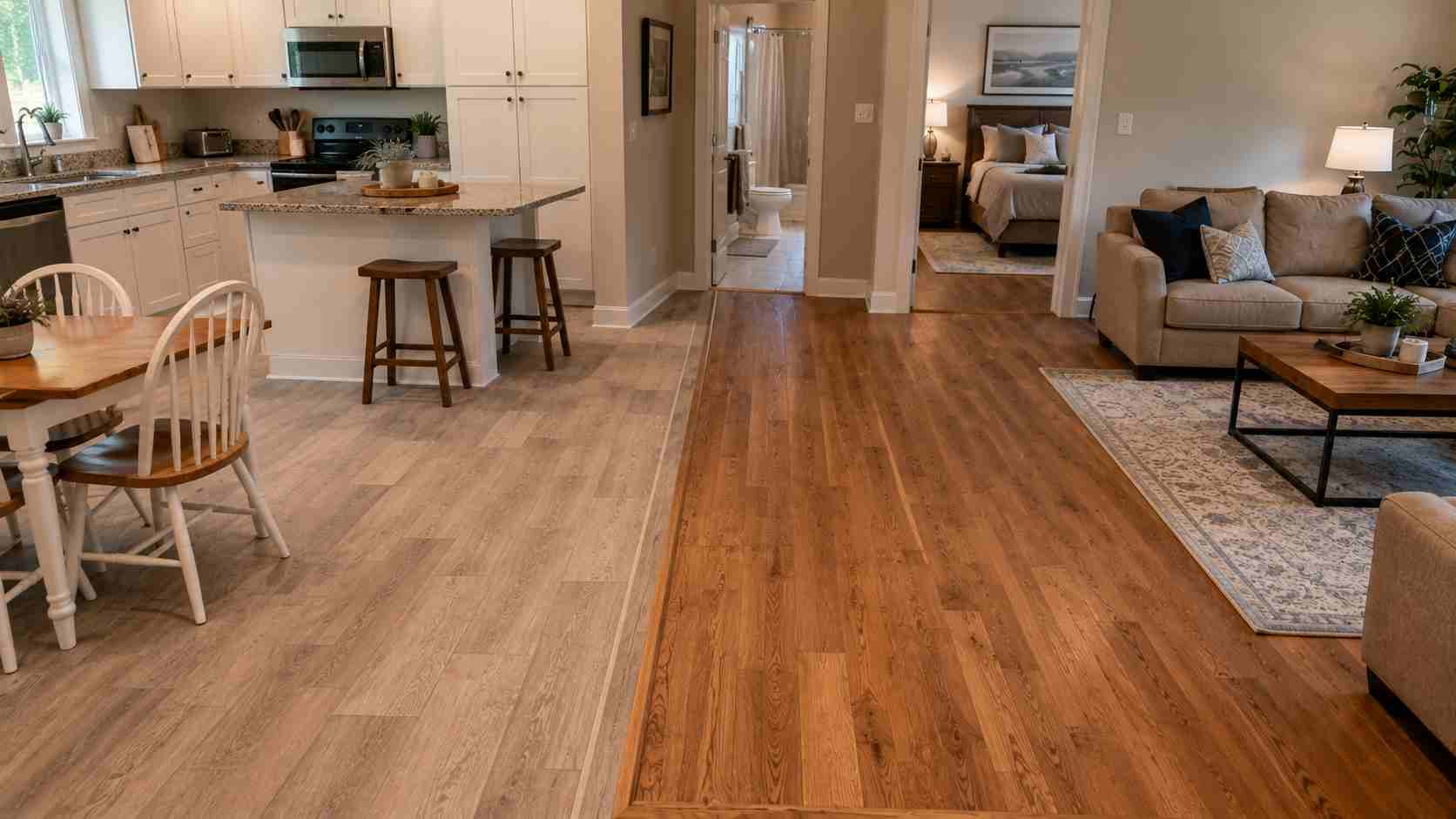
Selecting the best flooring for your kitchen can be a tricky task. Kitchens require a surface that is easy to clean and withstands spills, dropped dishes, and foot traffic. Both LVP and porcelain tile are very safe options; they’re fully waterproof and durable for heavy use. LVP is more forgiving when it comes to foot traffic if you’re cooking for a long time, whereas tile is more durable in direct heat areas around ovens and stovetops.
How to Choose the Right Bathroom Flooring
Selecting the right bathroom flooring is an important choice to make. Avoid using regular hardwood or laminate flooring in a bathroom, as it will warp, swell, and develop mold in mere months. In this case, only porcelain tile or waterproof LVP are viable choices, and heated tile is a popular addition to primary bathrooms.
Ideas for Flooring in Bedrooms
Bedrooms are not about durability but comfort. While carpet is still the traditional option for a warm floor, hardwood or engineered hardwood with an area rug is a growing trend for a more luxurious feel. If you’re worried about allergens, a plush area rug is a good compromise for LVP.
Living Rooms, Basements, and Beyond
Hardwood or LVP is a popular choice in living rooms because it is durable and will hold up well for resale. Solid hardwood and traditional laminate are not the best choices for basements due to the moisture and temperature fluctuations.
How to Choose the Right Flooring Color
Most homeowners will fall into the trap of chasing trends rather than strategy when it comes to color choices, and it deserves its own framework.
Match Your Natural Light
Lighter shades are ideal for rooms that don’t get much natural light, as they help to make the space feel larger, while darker shades are perfect for rooms with lots of natural light, as they don’t make the room feel cramped.
Long-Term Resale Neutrality
Wood is the most popular floor color these days, but cool-gray is being surpassed by brown shades, and warm neutrals like honey, cream, and sand are catching up with cool-gray. For resale value, mid-tone warm neutrals are the best long-term investment: bold or ultra-dark floors are a greater investment and may limit your market.
How to Choose the Right Hardwood Floor Color
Selecting the best hardwood floor stain color is a difficult task. Its clean grain and ability to be used in a variety of design styles have made white oak the predominant choice in the current light, warm-toned trend. Mid-tone honey and warm chestnut colors are better at holding up their appearance for a decade or more than either a white-washed or near-black floor, which will show dust, scratches, and pet hair more clearly.
How to Choose the Right Laminate Flooring Color and Vinyl Flooring Color
Selecting the appropriate color for laminate or vinyl flooring is a crucial step in the installation process. Choosing the right color for laminate or vinyl flooring is an important part of the installation process.
Both laminate and vinyl plank simulate wood grain, and the same neutrality rules apply. A small extra cost is justified for textured, embossed finishes, which better conceal the everyday scuffs and scratches than smooth, uniform finishes.
Flooring Durability: What Actually Holds Up
When it comes to flooring, durability claims can be misleading, so it’s good to understand what makes a floor durable.
Wear Layer Thickness (Vinyl and Laminate)
The most important durability factor for LVP is the thickness of the wear layer; entry-level 6-mil wear layers last about 5 to 10 years, mid-range 12-mil layers will last 10 to 15 years, and commercial-grade 20-mil-plus layers can last 15 to 20 years or longer. Never purchase a product without the wear layer spec. It’s more important than the brand name.
Hardness and Refinishing Capacity (Hardwood)
The hardness and Refinishing Capacity (Hardwood) are also recorded. One of the main reasons for the durability of hardwood is that it can be sanded and refinished several times, allowing for the replacement of just the surface rather than the entire floor. That’s why, despite its high initial cost, solid hardwood floors are the cheapest per year.
Best Flooring for Durability by Household Type
It is a comparison of the durability of various types of flooring by household type.
Any household that has pets: LVP with a thick wear layer, or porcelain tile.
Families with young kids: LVP or laminate with a scratch-resistant surface layer
Long-term homeowners (10+ years): Hardwood or porcelain tile is the lowest cost option per year.
Long-term owners: Laminate or entry-level LVP for the lowest upfront investment
Some common flooring mistakes to avoid
Here are some common mistakes that should be avoided.
- Selecting color first, and then the material. Choose the appropriate material for the room’s purpose first and then choose from the colors within that material.
- Ignoring the subfloor. When you are removing old flooring, you might discover water damage or even unevenness, which can alter your entire budget. Always check before purchasing materials.
- Installing hardwood or laminate in wet areas. It’s the most frequent and costly flooring error homeowners make.
- Purchasing the lowest-priced wear layer. A thin wear layer on vinyl can wear out in less than five years, negating any initial savings.
- Creating identical rooms. While seamless flooring is suitable for open floor plans, it isn’t always the best choice for bedrooms and bathrooms, where a more appropriate material may be better suited for the room.
FAQ: Frequently Asked Questions
Which type of flooring is the most popular these days?
Today, Luxury vinyl plank (LVP) is the most installed type of residential flooring. Its waterproofing, scratch resistance, and realistic wood appearance at a mid-range price have been the reason why it has been the leader in this category since 2020.
What are some tips for selecting flooring on a budget?
The two least expensive installed floorings are laminate and builder-grade carpet, which can cost less than $6 per square foot. If you want the most value for your money over the years, consider LVP with a mid-range wear layer, rather than the cheapest material.
Which floorings have the longest lifespan?
Solid hardwood is the longest-lasting and can last for 50 to 100+ years with refinishing every so often. Porcelain tile is a close second and can typically last 50 to 75 years because it does not have a wear layer to wear out.
Can I install the same flooring in my entire home?
For open-concept designs, you can, and many homeowners do, for visual flow. But bathrooms and basements are almost always constructed from a different material that is resistant to moisture, regardless of what is used in the rest of the house.
What’s the best flooring for pets?
LVP with a 20-mil or thicker wear layer is the top choice for pet households, since it resists scratches and moisture from accidents. Hardwood and laminate are the least pet-friendly options due to scratching risk.
How do I choose a flooring color that won’t go out of style?
Warm, mid-tone neutrals like honey, sand, and light brown are currently the safest long-term choice, replacing the cool-gray trend. Avoid extreme light or dark finishes if resale neutrality is a priority.
Is engineered hardwood as good as solid hardwood?
Engineered hardwood offers better moisture tolerance than solid hardwood at a lower price, but it can only be refinished a few times compared to solid hardwood’s five to seven refinishes, giving it a shorter overall lifespan.
Do I need professional installation, or can I DIY?
Click-lock LVP and laminate are the most DIY-friendly options and can save $2 to $4 per square foot in labor. Nail-down or glue-down hardwood, and most tile installations, generally require professional tools and experience.
Conclusion
Choosing the right flooring comes down to three decisions: match the material to each room’s moisture and traffic level, calculate cost per year of ownership instead of just the upfront price, and pick a color that will still feel intentional a decade from now. Whether you’re comparing hardwood against LVP for a living room or selecting tile options for a bathroom, the way the room is used should always determine your flooring choice; style comes second.
Ready to narrow down your options? Start by listing your home’s highest-moisture and highest-traffic rooms, then match each one against the comparison table above before you set foot in a showroom.